
The purpose of this text is to discuss the following tests on concrete structures:
-
- Sclerometry;
-
- Extensometry;
-
- Accelerometry;
-
- Resistance to axial compression;
-
- Carbonation.
Sclerometry
Namely, sclerometry is a non-destructive test that measures the surface hardness of concrete, providing elements for assessing the quality of hardened concrete. The equipment used is a reflection sclerometer.
According to the procedure, the evaluation of surface hardness by the reflection sclerometer consists of measuring and correlating the energy elastically conserved after the impact of a semi-spherical tip rod against the test area. This energy is usually presented in terms of the sclerometric index.
Sclerometry in practice
In practice, the various values measured during concrete tests are recorded, tabulated and used to calculate the final sclerometric index. With the appropriate statistical treatment, the final sclerometric index is used to correlate the characteristic compressive strength of the test pieces.
In this regard, as mentioned earlier, in conjunction with concrete ultrasonography , sclerometry is particularly interesting for the commissioning of large and/or high-risk structures, such as:
-
- Bridges;
-
- Viaducts;
-
- Tunnels;
-
- Support for equipment such as crushers, silos, mills, etc...
Due to its simplicity and speed of execution, pacometry can also be used to determine parts or regions to be investigated using more precise response methods.
Extensometry and Accelerometry
Furthermore, extensometry and accelerometry are commonly used to monitor the structural response to the set of actions to which they are subjected.
In Structural Calculation, stresses and deformations can be obtained by idealizing certain structural behaviors, estimating the acting loads, and knowing the material under analysis. These and other assumptions are also adopted for the computational representation of structures using the finite element method.
In this context, when needs arise regarding one of these factors, extensometry and accelerometry are some of the tools available for evaluating the actual structural response of the asset. In general, they are applicable in concrete tests when:
-
- We want to evaluate the structural behavior under a given load;
-
- You want to know the magnitude and behavior of a load over a given period of time;
-
- The structural response to a special or exceptional action needs to be monitored;
-
- It is desirable to monitor the structural response to actions arising from its operation, as occurs in SHM.
In addition to the cases mentioned above, the possibility of monitoring velocities, displacements and structural defects, such as cracks, makes it possible to find out about changes in structural behavior and warn of non-compliance with normative ultimate or service limit states. This last case is particularly interesting for
-
- Structures that support vibratory processes where the dynamic response of the whole (equipment and structure) impairs mechanical performance or causes damage to the structure;
-
- Bridges, viaducts, footbridges and structures where user discomfort is particularly relevant and needs to be monitored.
Figure 7 shows an example of the application of these methodologies for monitoring a large-scale structure.
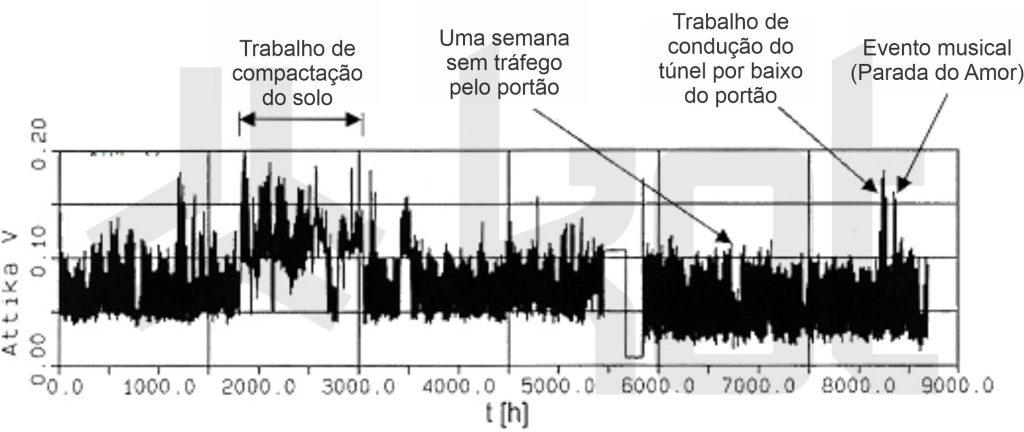
Figure 7: Example of monitoring loading effects at the Brandenburg Gate - Germany. Adapted from: SAMCO F08a.
In relation to other structural materials, extensometry on concrete parts must be evaluated according to the inhomogeneity of the material, the mechanical behavior of the reinforced parts and the type of action or phenomenon to be investigated.
If you'd like to learn more about these methods and their applications, be sure to check out our blog series on extensometry and accelerometry:
Resistance to axial compression in specimens
Although estimated by non-destructive testing methods non-destructive testing, the characteristic compressive strength of concrete in service is determined by directly extracting samples from the concrete structure. To do this, a piece of concrete with a standardized cross-section is broken in a press, allowing the stress at which the studied body fails to be obtained directly.
According to the applicable set of Brazilian standards, the definition of axial compressive strength in specimens is useful in concrete tests for:
-
- Final acceptance of the concrete in the event of non-conformity of the concrete's compressive strength;
-
- Evaluation of the structural safety of works in progress;
-
- Verification of structural safety in existing works, in view of changes in use, accidents, partial collapses and other situations in which the concrete's compressive strength must be known.
Ideally, in addition to the results of non-destructive concrete tests, compressive strength results are desirable to improve overall understanding of the structure. Another advantage associated with core sampling is the availability of material for carbonation, contamination, and concrete durability tests.One of the risks associated with this process is the embrittlement of parts due to the loss of section or cutting of the reinforcing bars. Thus, in order to prevent irrecoverable embrittlement of the parts, it is necessary to understand the structural behavior, supplemented by pacometry testing. Figure 8 illustrates the core extraction procedure.
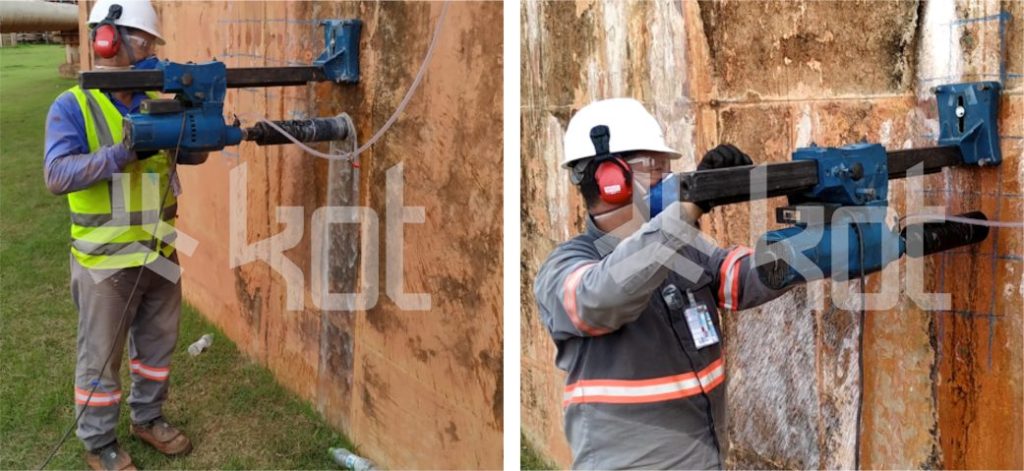
Figure 8: Procedure for extracting cores from concrete structures. Source: Kot Engenharia.
Depth of carbonation front
Concrete carbonation is the result of atmospheric carbon dioxide (CO2) acting on hydrated cement. Among other factors, this phenomenon culminates in a reduction in the pH of the concrete to values below 9, the hydrogen ion concentration at which corrosion of the structure's reinforcing bars, also known as depassivation, can begin. The speed of carbonation is a function of the concentration of carbon dioxide in the environment, the porosity of the concrete, and the presence of cracks in the piece. In addition to these factors, estimating the period required for the de-passivation of the reinforcement requires knowledge of the cover (concrete layer covering the reinforcement) of the pieces. Figure 9 illustrates the mechanism discussed.
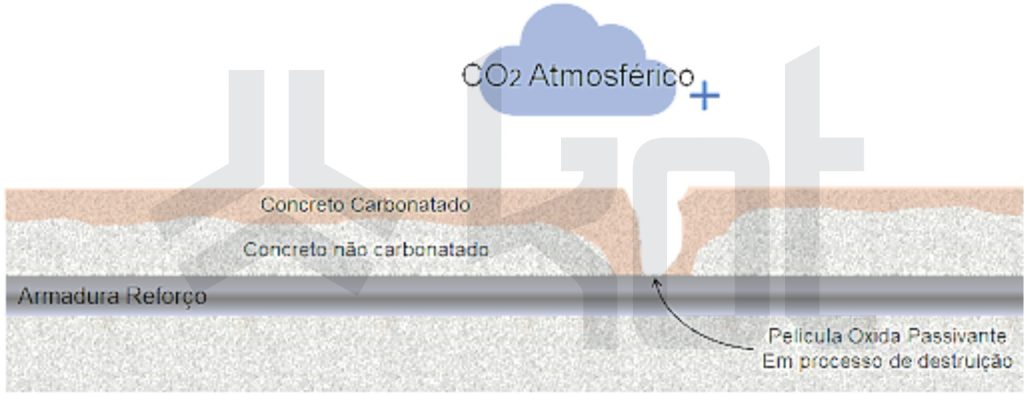
Figure 9: Carbonation in parts with openings. Source: Adapted from Souza (1998).
In view of this discussion, knowledge of the depth of the carbonation front becomes interesting because the applicable set of regulations understands useful life to be the period of time during which the structure maintains certain characteristics and does not require significant interventions.
As one of the main deterioration mechanisms related to reinforcement, depassivation due to carbonation of reinforcement is undesirable and difficult to recover from.
In summary, knowledge of the depth of the carbonation front in the structure is relevant, since the de-passivation of reinforcement due to carbonation indicates one of the references for the service life of the concrete structure. Figure 10 shows the results for this type of assessment.
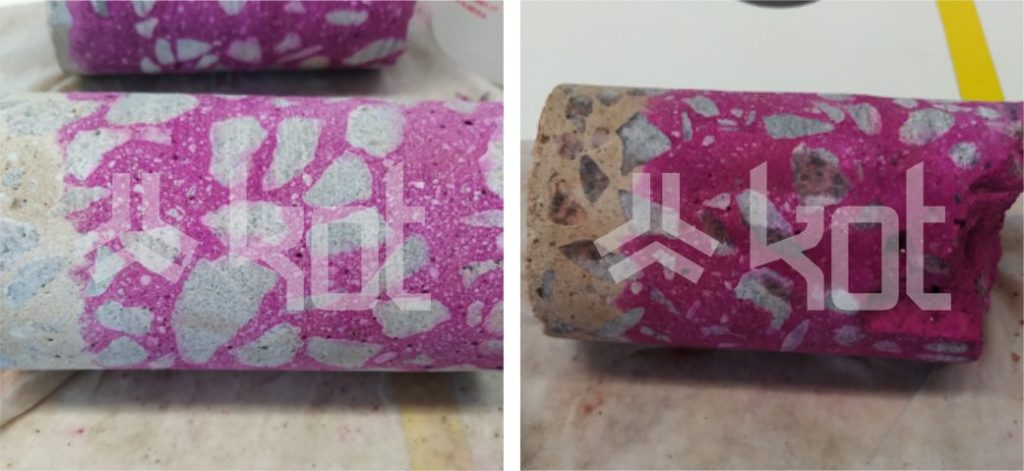
Figure 10: Examples of carbonation front depth testing. Source: Kot Engenharia.
Conclusion
The correct interpretation of the mechanisms of manifestation of anomalies in concrete structures enables the safe operation and maintenance of the asset throughout its life cycle. In this process, concrete tests make it possible to better characterize defects and their mechanisms of manifestation.
For the diagnostic process, it is also important to note the complementary role played by several of these methodologies and the need to understand their limitations and applications when choosing them.
Finally, as mentioned throughout the text, it should be noted that structural analysis and detailed visual inspection are also indispensable tools in this process.
In this regard, Kot Engenharia a team of specialists trained to interpret, implement, and develop appropriate engineering solutions to boost your results. Consult our team for more information!
Follow our pages on LinkedIn, Facebook e Instagram to keep up with our content.
FAQ
1. Como funciona o ensaio de esclerometria e qual é a sua relação com a resistência do concreto?
A esclerometria é um ensaio não destrutivo que mede a dureza superficial do concreto por meio de um esclerômetro de reflexão. O aparelho dispara uma haste com ponta semiesférica contra a superfície da peça e mede a energia conservada elasticamente no impacto (índice esclerométrico). Após tratamento estatístico, esse índice é correlacionado com a resistência característica à compressão do concreto. Pela sua agilidade, é frequentemente utilizado em conjunto com a ultrassonografia para comissionar pontes, viadutos, túneis e bases de equipamentos industriais.
2. Quando é necessária a extração de testemunhos para ensaio de compressão axial?
Embora a resistência possa ser estimada por ensaios não destrutivos, a determinação direta da resistência à compressão real do concreto exige a extração direta de amostras cilíndricas (testemunhos) da própria estrutura para rompimento em prensa. Esse procedimento é indicado para:
-
Aceitação definitiva do lote de concreto em caso de não conformidade nos ensaios de obra;
-
Avaliação da segurança estrutural em obras existentes após acidentes, incêndios ou colapsos parciais;
-
Verificação da capacidade de carga antes de reformas ou mudanças de uso do ativo.
Atenção: Antes de extrair qualquer testemunho, é indispensável realizar o ensaio de pacometria para mapear as armaduras e evitar o seccionamento acidental do aço, o que poderia fragilizar a peça.
3. O que é a carbonatação do concreto e como ela afeta a vida útil das armaduras?
A carbonatação ocorre quando o gás carbônico (CO2) presente na atmosfera reage com os compostos do cimento hidratado. Esse processo reduz o pH do concreto (originalmente alcalino) para valores inferiores a 9. Nessa condição, o aço perde sua camada passivadora de proteção (despassivação) e fica suscetível ao início do processo corrosivo. A medição da profundidade da frente de carbonatação em relação ao cobrimento do aço determina a vida útil residual da estrutura antes que a corrosão se instale.
4. Qual é o papel da extensometria e da acelerometria no monitoramento de estruturas de concreto (SHM)?
Enquanto os ensaios de resistência avaliam o material, a extensometria e a acelerometria avaliam a resposta estrutural real do ativo em serviço:
-
Extensometria: Mede deformações específicas e tensões atuantes sob diferentes combinações de carga.
-
Acelerometria: Mede vibrações, velocidades e acelerações sob ações dinâmicas.
Ambas são aplicadas no Monitoramento da Saúde Estrutural (SHM), permitindo calibrar modelos de Elementos Finitos (MEF), verificar estados limites de serviço e alertar sobre vibrações excessivas em bases de equipamentos vibratórios ou sobre o desconforto de usuários em pontes e passarelas.
5. Por que os ensaios destrutivos e não destrutivos devem ser utilizados de forma complementar?
Nenhum ensaio isolado fornece o diagnóstico completo de uma estrutura complexa. Os ensaios não destrutivos (como esclerometria, ultrassom e pacometria) permitem mapear grandes superfícies com rapidez e sem danificar a peça, identificando regiões críticas. Já os ensaios pontualmente destrutivos (como a extração de testemunhos e testes de carbonatação) fornecem a calibração exata dos dados e material físico para análises laboratoriais. A combinação de ambas as abordagens garante diagnósticos precisos e economicamente viáveis.
References:
[1] SOUZA, RIPPER. Pathology, recovery and reinforcement of concrete structures. São Paulo: Pini, 1998.
[2] BRAZILIAN ASSOCIATION OF TECHNICAL STANDARDS - NBR 6118:
[3] BRAZILIAN ASSOCIATION OF TECHNICAL STANDARDS - NBR 7680: Concrete - Extraction, preparation, testing and analysis of specimens of concrete structures Part 1: Compressive strength - 2015.
[4] IAEA. Guidebook on non-destructive testing of concrete strutures. Vienna: IAEA, 2002.
[5] SAMCO. F08a Guideline for the Assessment of Existing Structures. Berlin: SAMCO, 2006.
ASSOCIAÇÃO BRASILEIRA DE NORMAS TÉCNICAS - NBR 7584: Evaluation of surface hardness by reflection sclerometer - Test method, 2012.