In many situations where assets are used in the field, knowledge of the stresses and strains that are applied to a structure is an important tool for identifying potential problems [1]. In addition, it is essential to prevent high deformations from compromising the purpose for which the structure or equipment was intended. One of these methods is extensometry.
Em princípio, os modelos matemáticos como aqueles elaborados em análises pelo métodos de elementos finitos (FEM) são necessários para prever o comportamento das tensões em uma estrutura. Há algumas situações, porém, em que existe desconhecimento das cargas que estão sendo aplicadas no objeto em análise comprometendo a modelagem, a reprodução da realidade, os resultados e definições das ações requeridas. Nestes casos, para evitar esses equívocos, a experimentação pode ser um caminho interessante a ser seguido.
Além disso, vários métodos podem ser utilizados, como sensor de fibra óptica, piezoelétrico, fotoelásticos e correlação digital de imagem. Nesta primeira parte do artigo, iremos destacar a utilização de extensômetros como forma de experimentação.
What is an extensometer?
Antes de mais nada, vale destacar que o extensômetro (ou strain gauge) foi inventado por duas pessoas diferentes praticamente ao mesmo tempo. O professor Arthur Ruge, do Instituto de Tecnologia de Massachusetts (MIT), foi um desses inventores; o outro foi Edward Simmons. No Instituto de Tecnologia da Califórnia (Caltech), em 1936, Simmons estava investigando o comportamento tensão-deformação de metais sob cargas de choque. Ele era, na época, estudante e trabalhava como assistente de pesquisa no Instituto. A questão interessante é que ambos estavam em locais muito distantes e naquele momento não se conheciam. [3]
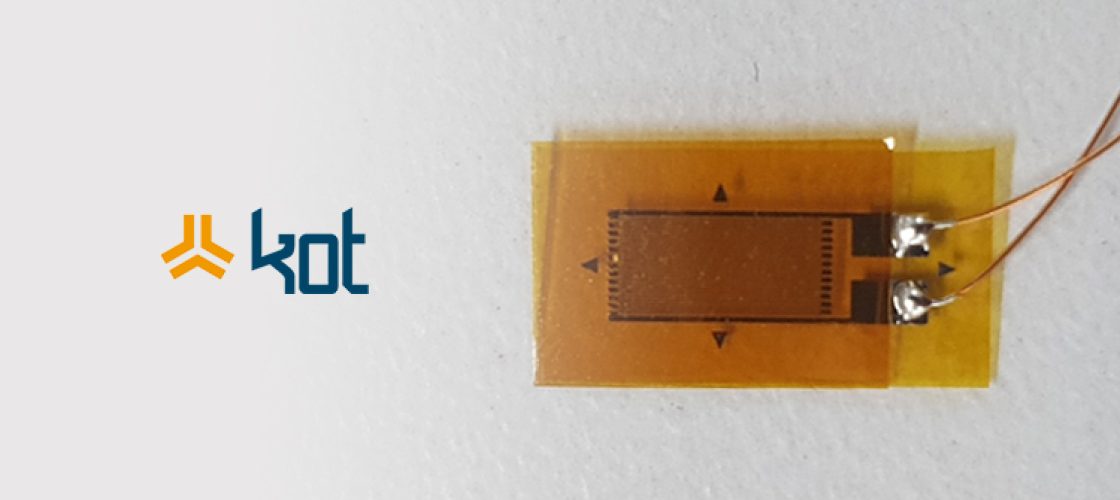
De fato, na prática, o extensômetro é um sensor que pode ser fixado e colado na superfície do objeto estudado, do qual se deseja conhecer as deformações e consequentemente as tensões. Ele pode ser, por exemplo, uniaxial ou triaxial, conforme Figura 1. Tal metodologia é muito importante para a verificação desses parâmetros, principalmente quando o objeto (seja uma estrutura, componente ou equipamento) se encontra em operação.
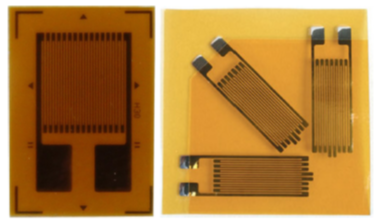
Figure 1: Uniaxial extensometer (left) and triaxial or rosette (right) - SOURCE: SILVA (2019).
Therefore, extensometry refers to the use of this device to measure deformations between two points on solid bodies, which occur when one of them is subjected to a force. This sensor obeys the mechanical deformation of the solid being instrumented as a function of the force/load applied. Basically, these strain gauges experience a change in an electrical parameter, usually resistance, which causes a variation in current. This current variation in the milliamp range is collected and its measured values are interpreted by the data acquisition board and the available computer tool. This interpretation allows the deformation values of the object studied to be known. From there, using Hooke's Law, the deformation values can be transformed into mechanical stress and evaluated in comparison with the structural analysis being carried out. [2]
Hooke's Law
Stress evaluations are based on the work of Robert Hooke ("The power of any springy body is in the same proportion with the extension"), which relates the stresses applied to a given material to the resulting deformation. The law is named after the 17th century British physicist who tried to demonstrate the relationship between the forces applied to a spring and its elasticity.
Estendendo a exploração de molas de Hooke, torna-se aparente que a maioria dos materiais age como molas com força diretamente proporcional ao deslocamento. Porém, em comparação com as molas, outros materiais possuem uma área que deve ser contabilizada.
Por exemplo, um cilindro de aço for puxado, a força aplicada ao objeto é diretamente proporcional à deformação ocasionada na região elástica. Dessa forma, mantém-se uma constante relação entre a deformação e a força aplicada ao objeto. Tal fato denota que a força para neutralizar a força tracionadora é gerada na estrutura interna do material.
Nesse sentido, a definição da magnitude/valor da força aplicada ao objeto por unidade de área é denominada tensão. Basicamente, a tensão pode ser entendida como um vetor, tendo seu valor e sua direção apresentada utilizando MPa (megapascal) ou qualquer outra unidade de valor de força sobre a unidade de área. Em geral, os materiais utilizados comumente na Engenharia têm a propriedade de se esticarem quando são tracionados e de encolher quando são comprimidos.
Por exemplo, a Figura 2 apresenta a relação entre a tensão/deformação em um determinado corpo de prova metálico que está sendo tracionado. Até o ponto σE a tensão é diretamente proporcional à deformação, onde se pode perceber uma inclinação de reta no gráfico praticamente linear. Essa região é conhecida como região elástica, onde a lei de Hooke é aplicável.
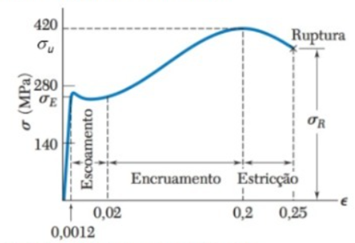
Figure 2: Stress x strain curve - SOURCE: BEER (2011).
A partir disso, ao verificar o princípio de proporcionalidade observado na região elástica no gráfico e considerando que todo o material está tracionado nessa região, obtém-se uma relação entre o comprimento inicial e final, chegando às Equações 1 e 2:
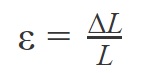
Equation 1: Strain calculation - SOURCE: BEER (2011).
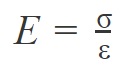
Equation 2: Calculation of the stress and strain ratio - SOURCE: BEER (2011).
Where:
∆L = change in length [m or other unit of length].
L= object length [m or other length unit].
ε = Strain - specific deformation [dimensionless].
σ = Stress - stress value that is measured by the average force per unit area [Mpa or other unit of force over area].
E = longitudinal modulus of elasticity (Young's modulus) [GPa or other unit of force over area], which is a specific proportionality constant for each material.
When and how to use extensometry?
Atualmente, a utilização de extensometria para a solução de não conformidades em ativos estruturais, componentes e equipamentos é importante para a promoção da integridade estrutural. A instalação em uma máquina de pátio pode ser vista na Figura 3. Em suma, várias disciplinas da Engenharia (Aeronáutica, Civil, Mecânica, Geotécnica, entre outras) regularmente usam medidores de deformação para detectar falhas em estruturas e ativos, onde essas não conformidades teriam grande impacto humano e financeiro.
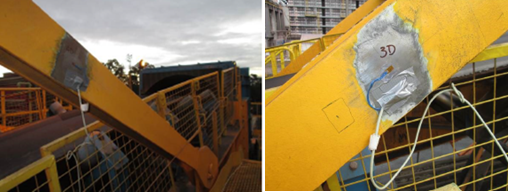
Figure 3: Yard machine instrumentation using extensometer - SOURCE: Kot Collection.
Além disso, existem outras formas de promover a integridade estrutural de ativos, uma delas pode ser visualizada aqui. Nesse sentido, este ensaio não destrutivo também pode ser realizado preliminarmente e em conjunto com a extensometria, por exemplo, para identificação de não conformidades e posterior realização de plano de instrumentação.
Por exemplo, uma aplicação corriqueira é na avaliação estrutural de veículos ferroviários e rodoviários. A instrumentação pode ser realizada em carros, caminhões, reboques, vagões, trilhos, engates ou outras estruturas das quais deseja-se obter as deformações durante a operação do ativo. Inicialmente são determinados os pontos de instalação dos sensores, para posterior execução do plano.
It should be noted that knowledge of all the theory behind extensometry and asset instrumentation methods is crucial for a correct structural assessment. Often, the use of strain gauges is possible, but will not bring the desired results. On other occasions, the use of FEM in conjunction with this method is recommended.
To find out more about the applications and the needs for your company's assets, keep following our blog and consult our team for more information!
Follow our pages on LinkedIn, Facebook e Instagram to keep up with our content.
FAQ
1. O que é a extensometria e qual sua importância na engenharia?
A extensometria é a técnica experimental utilizada para medir a deformação específica que ocorre entre dois pontos de um corpo sólido submetido a cargas externas. Ela é essencial para avaliar a integridade estrutural em campo, pois permite identificar níveis elevados de tensão antes que ocorram falhas catastróficas ou comprometimento funcional do equipamento.
2. Por que a medição experimental com extensômetros é necessária se já existe a Análise por Elementos Finitos (FEM)?
Embora a Análise por Elementos Finitos (FEM) seja uma ferramenta poderosa para prever o comportamento de tensões, ela exige o conhecimento prévio e preciso das forças aplicadas. Em muitos ativos em operação no campo (como máquinas de pátio e veículos ferroviários), o espectro de cargas reais é dinâmico e desconhecido. A extensometria fornece os dados experimentais de campo necessários para validar, calibrar ou substituir premissas de modelos numéricos.
3. Como surgiu o extensômetro elétrico de resistência (strain gauge)?
O strain gauge foi inventado simultaneamente e de forma independente em 1936 por dois pesquisadores nos Estados Unidos:
-
Edward Simmons, no Instituto de Tecnologia da Califórnia (Caltech), enquanto investigava o comportamento de metais sob cargas de choque;
-
Arthur Ruge, professor no Instituto de Tecnologia de Massachusetts (MIT).
Ambos os pesquisadores criaram o dispositivo sem conhecimento prévio do trabalho do outro.
4. Como o extensômetro converte deformação mecânica em dado mensurável?
O extensômetro é colado diretamente na superfície da peça. Conforme a peça sofre deformação mecânica sob ação de uma força, o sensor se deforma na mesma proporção:
-
A deformação altera a geometria da grade condutora do sensor (comprimento e área transversal);
-
Essa alteração geométrica provoca uma variação em sua resistência elétrica;
-
A variação da resistência gera uma alteração de corrente (na casa dos miliamperes), que é capturada por um sistema de aquisição de dados e traduzida digitalmente em deformação.
5. Qual a diferença entre um extensômetro uniaxial e um triaxial (roseta)?
-
Uniaxial: Possui apenas uma grade sensível. É utilizado quando a direção das tensões principais já é previamente conhecida (ex.: tração/compressão pura em uma barra ou viga).
-
Triaxial (Roseta): Combina três grades alinhadas em ângulos conhecidos (geralmente 0° / 45° / 90° ou 0º / 60° / 120°). É indispensável quando o estado de tensão é multiaxial ou a direção das tensões principais é desconhecida.
6. Em quais estruturas industriais a extensometria é comumente aplicada?
A técnica é amplamente empregada na Engenharia Mecânica, Aeronáutica, Civil e Geotécnica. Exemplos comuns incluem:
-
Mineração e Siderurgia: Instrumentação de máquinas de pátio (recuperadoras, empilhadeiras);
-
Setor Ferroviário e Rodoviário: Avaliação estrutural de vagões, caminhões, reboques, engates e trilhos em operação;
-
Estruturas Offshore e Pontes: Monitoramento de fadiga e deformações estruturais críticas.
References:
[1] SILVA, Anderson Langone et al. A study of strain and deformation measurement using the Arduino microcontroller and strain gauges devices. Revista Brasileira de Ensino de Física, v. 41, n. 3, 2019.
[2] ŞTEFĂNESCU, Dan Mihai. Strain gauges and Wheatstone bridges-Basic instrumentation and new applications for electrical measurement of non-electrical quantities. In: Eighth International Multi-Conference on Systems, Signals & Devices. IEEE, 2011. p. 1-5.
[Technology and practical use of strain gages: with particular consideration of stress analysis using strain gages. John Wiley & Sons, 2017.
[4] BEER, Ferdinand P. et al. Mechanics of materials. Amgh, 2011.
[5] BIELEN, Paul; LOSSIE, Mieke; VANDEPITTE, Dirk. A low cost wireless multi-channel measurement system for strain gauges. In: Proceedings of ISMA. 2002. p. 663-670.