
Introduction
Fatigue failure in automotive components is common in the industry and is also present in our daily lives. The automobile is perhaps the machine most widely used by humans today and contains numerous mechanical components—mostly made of metal—that are susceptible to fatigue failure.
In general, fatigue failures are common in mechanical components subjected to cyclic loads, particularly in mechanical elements where stress reversal occurs.
In this context, we will present a failure analysis of the steering terminal of a pickup truck Mitsubishi L200.
The Component
First, a car’s steering system consists of several components and is designed to change the vehicle’s path in response to the driver’s input on the steering wheel. Furthermore, in most vehicles, humans do not have sufficient strength to perform this function, so turning the steering wheel in certain circumstances would be very tiring or would require a large number of turns, which is also uncomfortable. Therefore, steering systems are equipped with power assistance, which can be hydraulic, electric, or a combination of both.
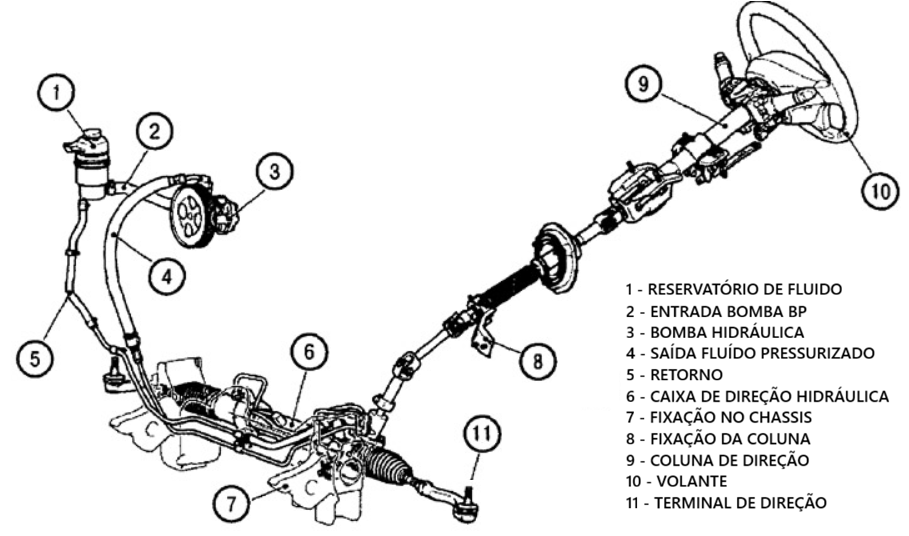
Figure 1 – Components of the steering system, with a focus on the steering terminal.
In this case, the steering system features power steering, which amplifies the force applied to the steering wheel so that the wheels can be steered under normal driving conditions.
In addition, the steering knuckle transmits power from the steering gearbox to the axle shaft; it has a ball joint at one end to allow for power transmission while the suspension operates.
The Flaw
The structural component failed while the vehicle was taking a right-hand turn at a roundabout at low speed, approximately 30 km/h. Thus, the fracture occurred when the component was subjected to a relatively low load compared to the design load limit for which it was engineered. In fact, this condition is characteristic of fatigue failures. As a result, the vehicle’s drivability was completely compromised, and it had to be towed.
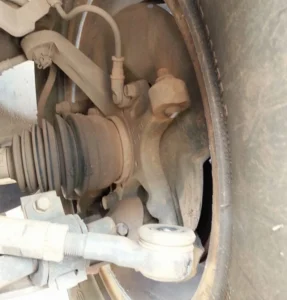
Figure 2 – Steering terminal failure during a low-speed turn.
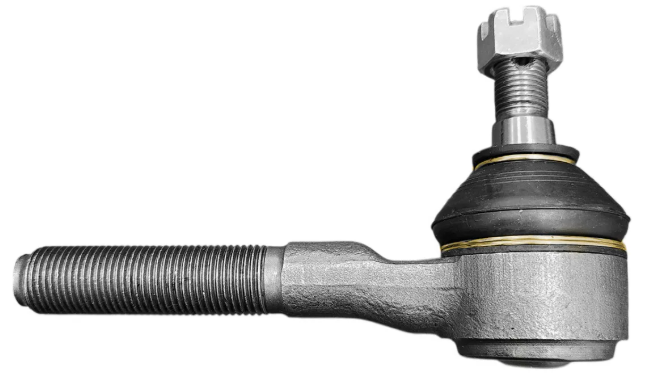
Figure 3 – Steering linkage used in the vehicle – the rubber boot that holds the grease used to lubricate the ball joint played a decisive role in the failure.
Subsequently, upon examination of the component’s fracture surface, two dark, smooth regions are observed, arranged symmetrically, with a porous, white region in the center—typical of a final fracture. The dark region located at the edges corresponds to the section where two fatigue cracks developed, growing symmetrically toward the center of the part.
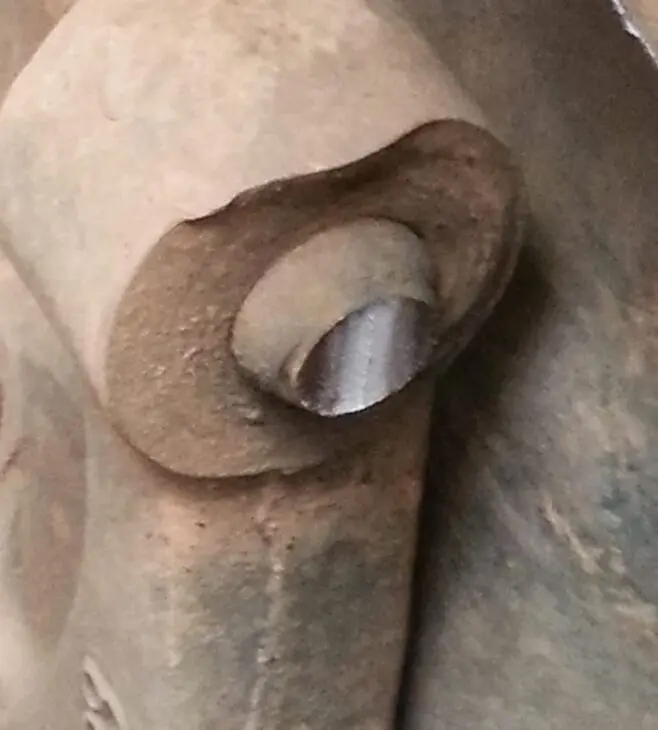
Figure 4 – Fracture surface of the terminal that failed due to fatigue.
By examining the fracture surface, it was possible to estimate that the final failure occurred in an area equivalent to 43% of the cross-sectional area of the component, such that, at the moment of failure, 57% of the area had already been compromised by the two fatigue cracks.
Furthermore, it is worth noting that the two cracks grew symmetrically toward the center of the part, since it is reasonable to assume that a vehicle in urban use—or even on highways—does not make more left or right turns.
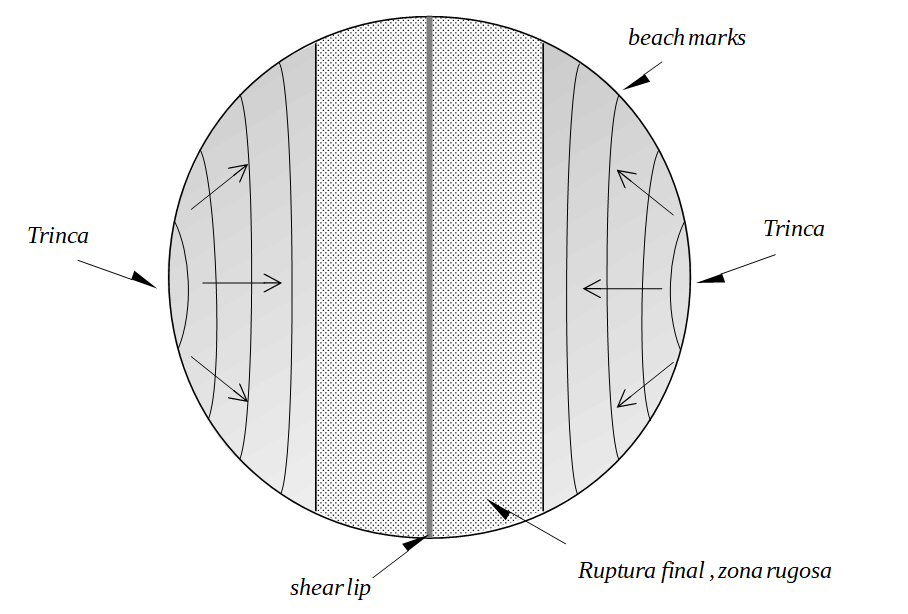
Figure 5 – Patterns identified on the fracture surface of the specimen.
Conclusion
In summary, the component failed due to fatigue caused by the initiation of two cracks that developed during normal use of the vehicle, primarily in urban areas.
In addition, another factor was crucial to the initiation of fatigue cracks in the steering knuckle. After the failure, it was noted that the boot had a tear, which resulted in the expulsion of all the grease surrounding the ball joint. Consequently, the steering knuckle began to operate with increased friction, so that the load required to overcome the friction on the ball increased the stresses acting on the part. Furthermore, the lack of grease allowed direct metal-to-metal contact between the knuckle and its housing, which facilitated crack initiation precisely in this contact area.
Therefore, components and parts are subjected to fatigue testing by manufacturers in their original condition—that is, with grease—so the lack of grease at the terminal was the factor that led to the reduction in the component’s service life.
Contact Kot Engenharia
Are you experiencing problems with premature failures in the mechanical components of your vehicle, fleet, or equipment? For example, issues such as unexpected breakdowns, accelerated wear, or fatigue failures can compromise safety and result in high maintenance costs.
In such cases, a proper technical analysis can identify the root causes of the failure, preventing recurrences and helping to improve the reliability of mechanical systems. Join our more than 150 customers, contact our team and learn about our services.
Since 1993, we have been specialists in developing engineering solutions through inspections, technological tests, and the use of computational methods for complex assessments of concrete and metal structures and industrial equipment.
Be sure to follow our pages on LinkedIn, Facebook and Instagram and keep following our content.
FAQ 1. What characterizes fatigue failure in metals?
Fatigue failure is the progressive, localized failure of a material subjected to fluctuating or repetitive stresses. Unlike failure due to static overload (which visibly deforms the part before it breaks), fatigue occurs without any warning visible to the naked eye in the external macroscopic structure, causing the component to fracture suddenly even under normal operating loads that are considered safe in the design.
2. How can you identify the fatigue zone and the final fracture zone on the surface of a fractured part?
When analyzing the fracture surface (fractography), the fatigue zone generally appears smooth, polished, and darkened, often marked by concentric lines known as“beach marks,” which show the gradual propagation of the crack. In contrast, the final fracture zone has a rough, granular, and shiny (porous) appearance, indicating the moment when the remaining cross-sectional area could no longer withstand the applied load and ruptured instantly due to overload.
3. How did the lack of lubrication (grease) accelerate the failure of the steering terminal?
The grease works by reducing friction in the terminal’s ball joint. With the tear in the protective boot and the loss of lubricant, metal-to-metal friction increased dramatically, requiring much more force from the steering system to rotate the ball. This excess stress was concentrated precisely in the region of the pin neck (seat), acting as the ideal nucleation point for the initiation of microcracks under reverse bending.
4. Why did the fatigue cracks propagate symmetrically in this component?
The symmetry in the crack growth from opposite sides indicates that the component was subjected to a pure and symmetrical reverse bending stress. In the dynamics of an urban or highway vehicle, the lateral forces applied when turning the steering wheel to the left and to the right tend to balance each other out statistically over time, generating identical alternating cycles of tension and compression on both sides of the terminal.
5. How can manufacturers and fleet managers prevent fatigue failures in critical components?
Effective prevention involves three pillars: predictive maintenance focused on seals and lubrication (such as frequent inspection of rubber seals), non-destructive testing (such as magnetic particle or penetrant testing to detect sub-millimeter cracks before they reach a critical size), and, during the design or modification phase of fleets, structural analysis using the Finite Element Method (FEM) to map and eliminate stress concentration points.