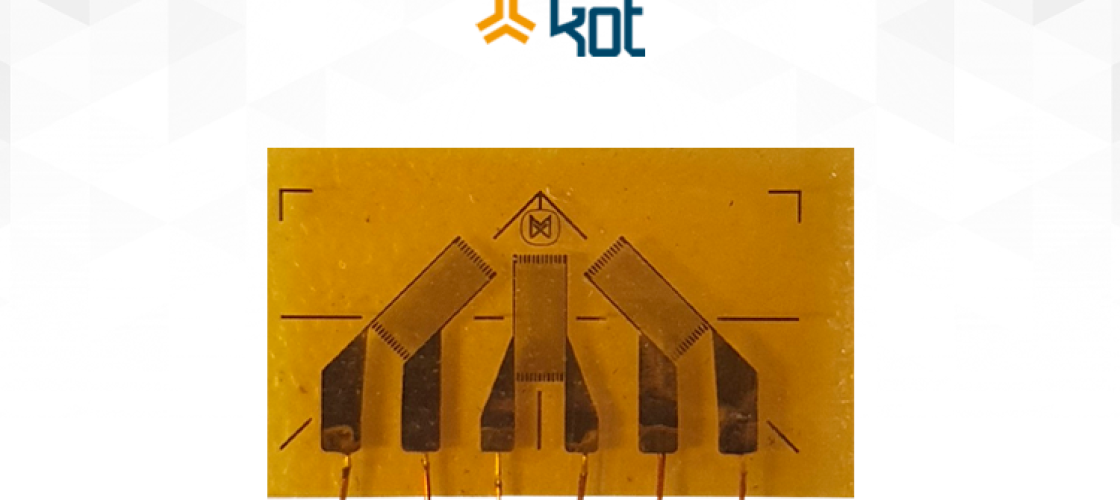
Extensometry is a method of experimentation that aims to measure deformations and, consequently, obtain stresses in components, structures and equipment. This is done by installing sensors that are fixed to the surface of the object under study, called strain gauges.
Para a aplicação dessa metodologia, deve-se conhecer a teoria por trás do seu funcionamento. Anteriormente, no artigo Princípios básicos da extensometria – Parte 1, foi apresentado como a Lei de Hooke relaciona as deformações de um material com as tensões aplicadas nele, que é a base para os estudos utilizando a extensometria. Além disso, nesta segunda parte, conheça mais sobre os extensômetros, os princípios do seu funcionamento e quais são os principais tipos encontrados no mercado.
The strain gauge structure
Strain gauges are sensors based on electrical resistance, behaving like a resistor. It is glued to the component being studied, and when it is subjected to deformation in a certain direction (with one, two or three axes), a potential difference is generated in the sensor.
Basically, the sensors are made up of a grid of conductive material deposited on an insulating adhesive compound. When glued to a body that is being deformed due to the application of a load, the strain gauge undergoes deformation. As a result, the meshes increase in size, generating a variation in the initial resistance of the strain gauge. By applying a constant electrical voltage to the terminals of the strain gauge and varying the resistance with linear deformation, it is possible to obtain the current variation of the closed system. [1]
A grade de metal dos strain gauges é sensível, e a base à qual é conectada adere à peça ou estrutura que se deseja monitorar. Além disso, o fio sensível tem, em grande parte dos extensômetros comerciais, um diâmetro aproximado de 0,1 mm e é fabricado em ligas metálicas especiais. A grade é embutida dentro de um filme plástico fino ou entre 2 (duas) folhas de papel. Exemplos de extensômetros uniaxial e triaxial são apresentados na Figura 1.
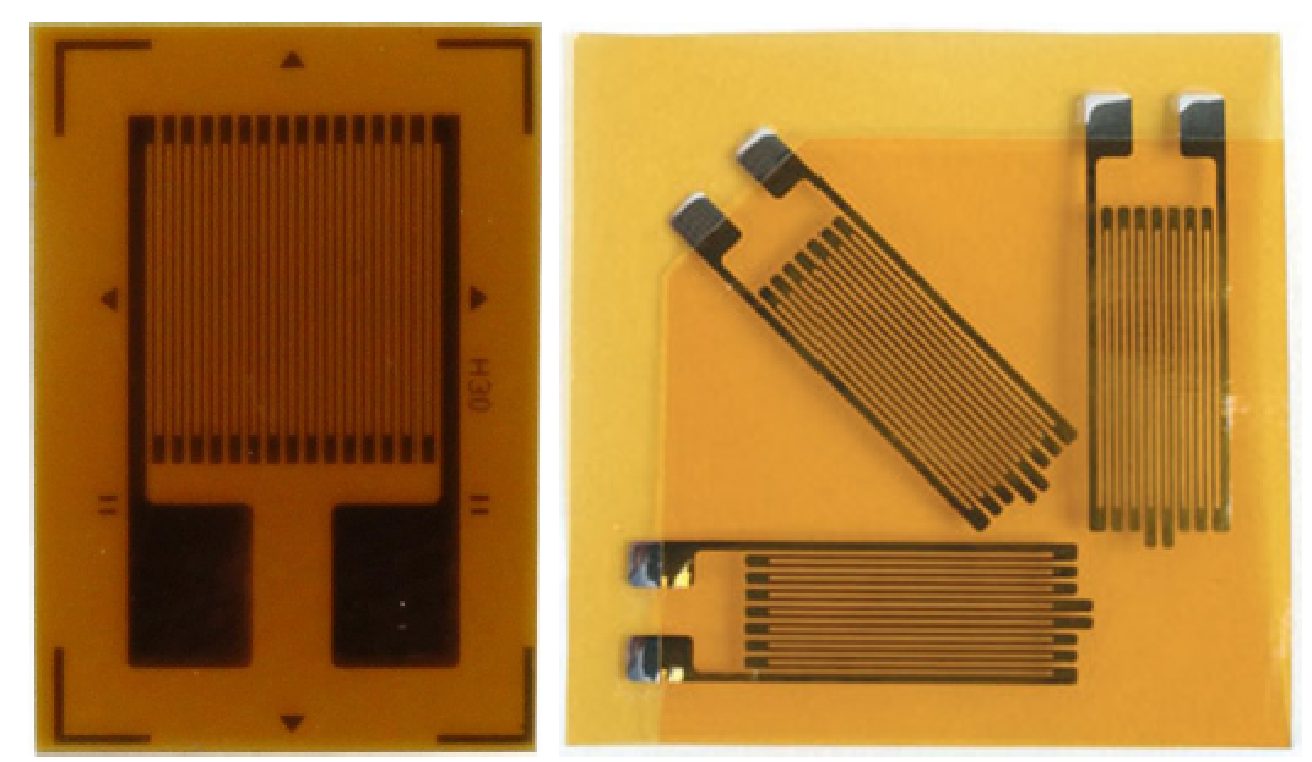
Figure 1: Uniaxial extensometer (left) and triaxial or rosette (right) - SOURCE: SILVA (2019).
The principle of electrical conductance
De modo geral, o funcionamento do extensômetro parte do princípio da condutância elétrica e depende muito da geometria da estrutura analisada. Ele é projetado simplesmente com base no fenômeno de que o comprimento específico de um determinado fio de resistência é diretamente proporcional à resistência do fio, conforme a Equação 1. [3]
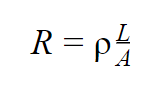
Equation 1: Calculation of electrical resistance - SOURCE: BESTECH (2019).
Where:
R = resistance of the wire;
ρ = resistivity;
A = cross-sectional area of the specific wire.
A partir desse princípio, quando o fio é tracionado a área da sua seção transversal é diminuída, utilizando a Equação 1 obtém-se a Equação 2.
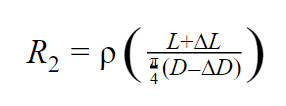
Equation 2: Calculation of the new resistance - SOURCE: BESTECH (2019).
Where:
R2 = is the new resistance generated due to the change in dimensions and is also called the deformed resistance;
D= diameter of the object;
∆D = variation in the diameter of the object.
Dessa forma, a partir da equação da deformação –que pode ser vista aqui– substituindo ∆L pela variação na resistência do extensômetro devido à tensão e L pelo fator de resistência inerente ao extensômetro, tem-se a Equação 3:
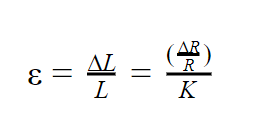
Equation 3: Strain calculation - SOURCE: BESTECH (2019).
Being:
∆R = Variation in strain gauge resistance due to deformation;
R = resistance of the strain gauge;
K = strain gauge measurement factor.
Wheatstone Bridge
In general, it can be seen that a strain gauge works on the basic principle of a simple metal conductor wire that tends to vary in its length, cross-sectional area and resistance due to a given applied voltage.
A partir desse conceito, todas as configurações de extensômetro são baseadas no conceito de uma ponte de Wheatstone, a qual é uma rede de 4 resistências. De forma simplificada, uma ou mais dessas pernas podem ser elementos sensores ativos. Em outras palavras, uma ponte de Wheatstone é um circuito divisor de tensão, como mostrado na Figura 2, que pode detectar pequenas mudanças na resistência.
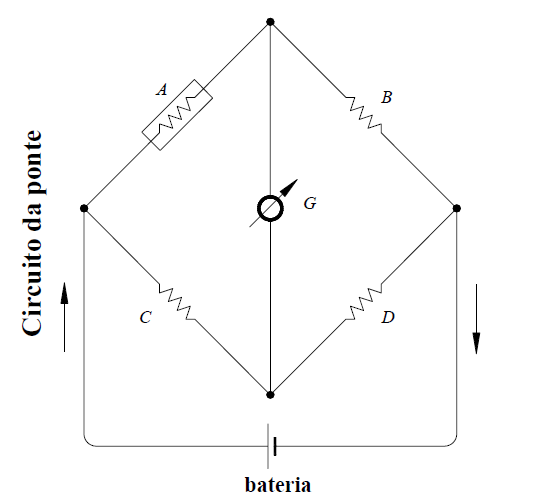
Figure 2: Typical diagram of a Wheatstone bridge - SOURCE: ANDOLFATO, CAMACHO and BRITO (2004).
Essa ponte é também o equivalente elétrico de 2 circuitos paralelos. Neste sentido, RA/RB e RC/RD compõem esses dois circuitos, sendo a tensão medida na saída. A saída de uma ponte de Wheatstone é medida na interface.
Um fenômeno físico, como uma mudança na deformação aplicada a um objeto que está sendo monitorado ou uma mudança de temperatura, altera a resistência dos elementos sensores na ponte de Wheatstone. Assim, a sua configuração é usada para ajudar a medir as pequenas variações na resistência. Consequentemente, esta variação da resistência que os elementos sensores produzem induz uma variação de tensão que, na prática, corresponde a uma mudança física no objeto que está sendo medido/monitorado.
De maneira gereal, existem três tipos de configurações de extensômetro: ¼ de ponte, ½ ponte e ponte completa. Cada uma dessas configurações é subdividida em vários subtipos. Dois exemplos podem ser visualizados na Figura 3 e 4.
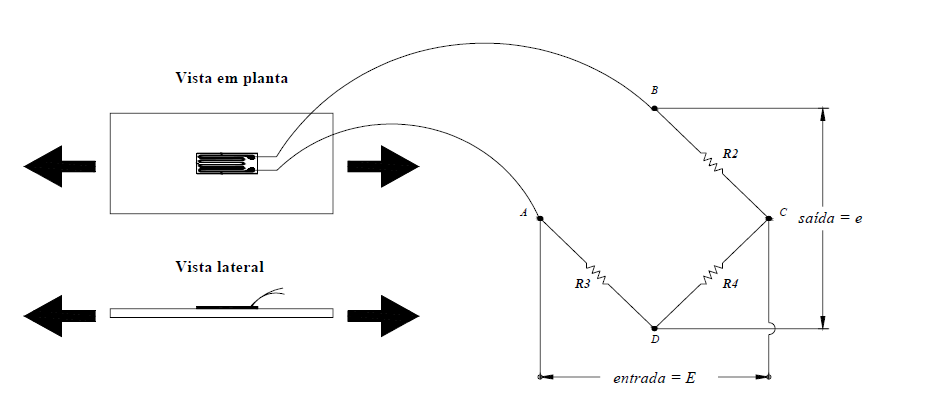
Figure 3: Measurement with traction using ¼ bridge - SOURCE: ANDOLFATO, CAMACHO and BRITO (2004).
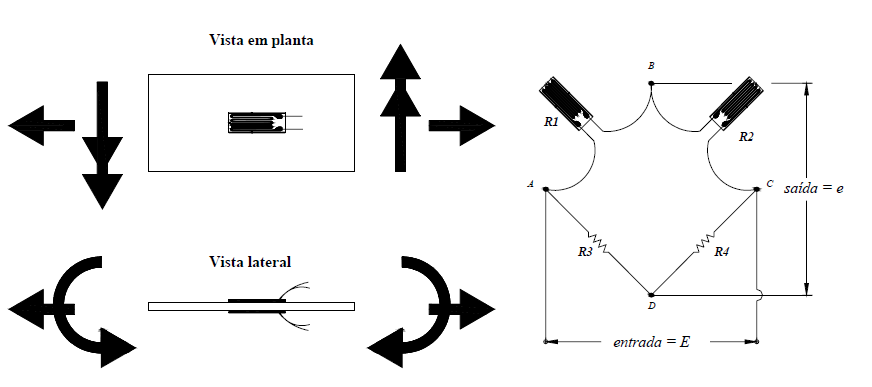
Figure 4: Bending measurement using ½ bridge - SOURCE: ANDOLFATO, CAMACHO and BRITO (2004).
Types of strain gauge
Existem muitos tipos de extensômetros e suas escolhas devem ser feitas de acordo com vários critérios. Entre eles, estão o nível de deformação, a temperatura em que o monitoramento está sendo realizado, o material do objeto, o ambiente, a geometria, o fabricante, a utilização, entre outros fatores. A literatura e os fabricantes fornecem várias classificações e tipos de extensômetro para utilização. De forma simplificada, na Tabela 1, são apresentados alguns tipos de extensômetros mais comuns que podem ser utilizados para extensometria.
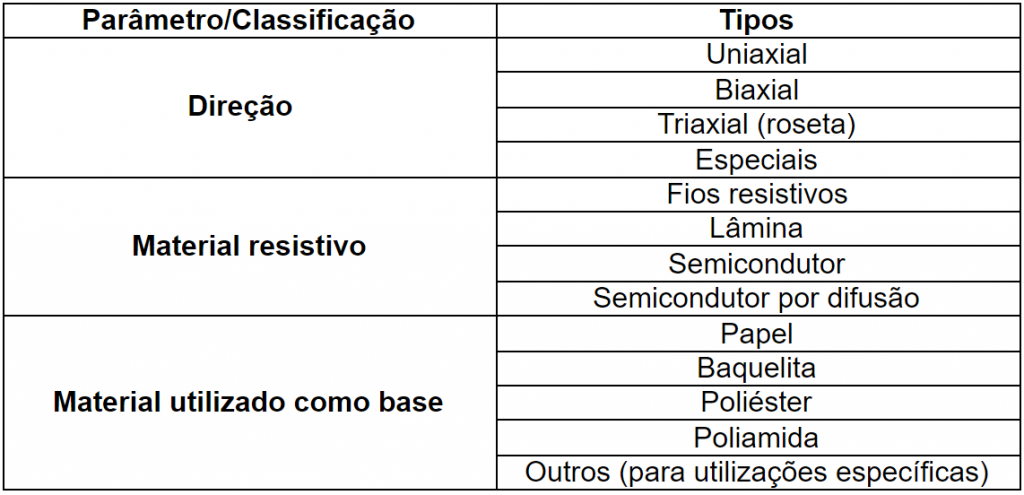
Table 1: Types of extensometer - SOURCE: ANDOLFATO, CAMACHO and BRITO (2004).
As possibilidades de utilização de extensometria para soluções em integridade estrutural são grandes. Entretanto, é importante destacar que também existem limitações para a utilização dessa ferramenta. Por isso, em algumas situações seu uso não é o mais indicado, existindo possibilidades mais adequadas de acordo com a necessidade do estudo. Em determinados casos é recomendável a utilização somente da análise de elementos finitos (FEA). Em outros, a junção de FEM e extensometria.
Kot has extensive experience in this field and can provide its customers with extensometry solutions for testing and monitoring to promote Asset Integrity. Consult our team for more information!
Follow our pages on LinkedIn, Facebook e Instagram to keep up with our content.
FAQ
1. O que é um extensômetro (strain gauge) e como ele é construído?
O extensômetro é um sensor passivo cuja resistência elétrica varia proporcionalmente à deformação mecânica aplicada ao corpo em que está colado. Ele é constituído por uma fina grade de liga metálica especial (com fios de aproximadamente 0,1mm de diâmetro ou folhas corroídas) disposta sobre uma base adesiva isolante de filme plástico ou papel. O sensor é colado diretamente à superfície do componente analisado, acompanhando suas deformações.
2. Qual é a relação física entre a deformação mecânica e a resistência elétrica do sensor?
O funcionamento fundamenta-se na lei da resistência elétrica de um condutor linear:
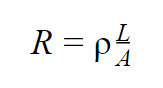
Where:
-
R: resistência elétrica do fio;
-
p: resistividade elétrica do material;
-
L: comprimento do condutor;
-
A: área da seção transversal.
Quando a peça sofre tração, o condutor se estica (aumenta L) e sua área transversal diminui (reduz A), resultando em um aumento da resistência R. A relação entre a variação relativa de resistência e a deformação mecânica é dada pelo fator de sensibilidade do sensor (K ou Gauge Factor).
3. Por que a Ponte de Wheatstone é indispensável na extensometria?
As variações de resistência elétrica produzidas por microdeformações são ordens de grandeza menores do que a resistência nominal do sensor. Medir diretamente essa variação com um multímetro comum é inviável.
A Ponte de Wheatstone é um circuito elétrico composto por quatro resistores organizados em dois ramos paralelos que funciona como um divisor de tensão. Ela transforma variações mínimas de resistência em variações mensuráveis de tensão elétrica, permitindo alta precisão e compensação de efeitos indesejados, como a dilatação térmica.
4. Quais são as principais configurações da Ponte de Wheatstone?
-
¼ de Ponte: Utiliza um extensômetro ativo e três resistores fixos. É a configuração mais simples, indicada para medições diretas de tração ou compressão simples.
-
½ Ponte: Emprega dois extensômetros ativos. Costuma ser aplicada em solicitações de flexão ou quando se deseja cancelar o efeito de cargas axiais e compensar variações de temperatura.
-
Ponte Completa (Full Bridge): Utiliza quatro extensômetros ativos. Oferece a máxima sensibilidade do sinal, excelente imunidade a ruídos e neutralização de efeitos parasitários de temperatura ou torque/flexão combinados.
5. Quais critérios definem a escolha do extensômetro correto para um ensaio?
A seleção do sensor depende de múltiplos fatores operacionais e ambientais:
-
Magnitude de deformação esperada: Define a faixa de medição e sensibilidade necessária;
-
Temperatura de operação: Determina a necessidade de sensores autorcompensados termicamente;
-
Geometria da superfície: Define o tamanho da grade (comprimento da pluma) e se será usado um sensor uniaxial, biaxial ou uma roseta triaxial;
-
Ambiente de aplicação: Influencia a escolha do adesivo e da proteção superficial contra umidade, óleos ou intempéries.
6. Quando utilizar extensometria física versus Análise por Elementos Finitos (FEA/FEM)?
Ambas as técnicas são complementares na engenharia estrutural:
-
Análise por Elementos Finitos (FEA): Ferramenta computacional ideal para as fases de projeto, simulação de múltiplos cenários de carga e identificação global de regiões de concentração de tensão.
-
Extensometria: Ensaio experimental direto no ativo operacional. É indispensável para medir cargas reais de campo, validar modelos numéricos de FEA e monitorar a vida útil à fadiga de componentes críticos.
References:
[1] SILVA, Anderson Langone et al. A study of strain and deformation measurement using the Arduino microcontroller and strain gauges devices. Revista Brasileira de Ensino de Física, v. 41, n. 3, 2019.
[2] BIELEN, Paul; LOSSIE, Mieke; VANDEPITTE, Dirk. A low cost wireless multi-channel measurement system for strain gauges. In: Proceedings of ISMA. 2002. p. 663-670.
[3] BESTECH. UNDERSTANDING THE FUNDAMENTALS OF STRAIN GAUGE. 16-09-2019 Available at: https://www.bestech.com.au/blogs/strain/understanding-fundamentals-strain-gauge/. Accessed on: March 3, 2021
[4] ANDOLFATO, R. P., CAMACHO, J. S., de BRITO, G. A., Basic Extensometry, (NEPAE UNESP, Ilha Solteira, 2004)