This is a subject that can sometimes be controversial, since depending on the source, author and market authority you can find different answers to the question: FEA versus FEM, which is the correct term? Firstly, by understanding the origin of the names:
-FEM is the acronym for Finite Element Method or FEM (MFinite Element Method) in Portuguese.
-FEA stands for Finite Element Analysis or AEF (Finite Finite Element) in Portuguese.
Nesse sentido, de acordo com a Siemens [1], tem-se: “A Análise de Elementos Finitos (FEA) é a modelagem de produtos e sistemas em um ambiente virtual, com o objetivo de localizar e solucionar problemas potenciais (ou existentes) estruturais ou de desempenho.” Já a SIMSCALE [2] considera que: “O Método dos Elementos Finitos (FEM) é uma técnica numérica usada para realizar a Análise dos Elementos Finitos (FEA) de qualquer fenômeno físico”. Outra definição interessante é do IEEE [3] (Institute of Electrical and Electronics Engineers) onde: “FEA é um modelo virtual que auxilia engenheiros a realizar experimentos com um projeto estrutural específico, geralmente utilizando um software como ferramenta. Juntos, FEA e a matemática subjacente do FEM são utilizados para prever o comportamento estrutural e a integridade de um projeto.”
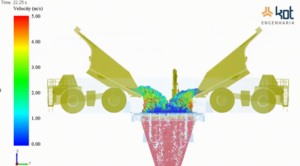
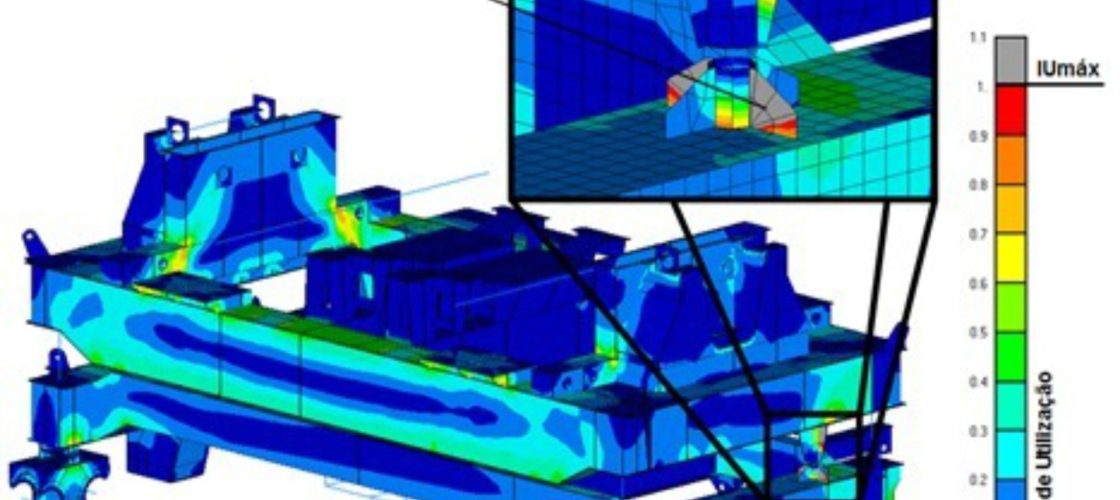
Na prática, FEA é utilizado em casos reais e complexos de engenharia, em que se faz necessário um ambiente virtual e simulado para evitar custos de prototipagem e experimentação. Em algumas situações, essa análise preliminar de um projeto novo pode apresentar pontos de melhoria ou indicar que um determinado projeto pode apresentar falhas que possam exigir intervenções mais severas e de maior custo. De qualquer forma, em comparação com a elaboração do modelo físico, a economia de tempo e recursos é notável.
Além disso, ainda pela Siemens[1]: “A FEA é a aplicação prática do Método de Elementos Finitos (FEM), usado por engenheiros e cientistas para modelar matematicamente e resolver numericamente problemas complexos estruturais, de multifísica e fluidos”. Já no entendimento da Autodesk [4], “FEA é um método computadorizado para a previsão de como um produto reage às condições de contorno (cargas, vibração, calor, fluxo de fluido e outros efeitos físicos). Na prática, a análise de elementos finitos permite investigar se um ativo irá falhar, sofrer desgaste ou cumprir os seus requisitos.”
Dessa forma, a partir das conceituações apresentadas, resumidamente, é possível dizer que FEA pode ser considerada como uma aplicação da teoria, fundação e metodologia desenvolvida por conhecimentos acadêmicos do método, ou seja, FEM (Finite Element Method).
On the other hand, some professionals claim that FEA is simply the more popular term in industry, while FEM is the term preferred by universities. Corroborating this claim, in Altair's Practical Aspects of Finite Element Analysis [5] it is made clear that the two terms refer to the same concept, with FEA being more widely used in industry and FEM in academia.
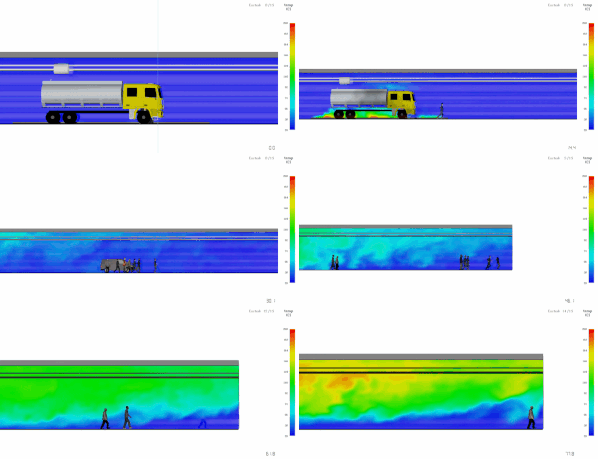
Nesse contexto, FEM é um dos métodos mais utilizados na Kot Engenharia desde a sua fundação há 27 anos. As aplicações, por FEA, podem ser por deformação (lineares, não lineares), por carregamento (estático, dinâmico), por área (estruturas, térmica, fluidos) ou com foco em comportamentos de falha específicos (flambagem, fadiga mecânica etc.)
Além disso, para a utilização da metodologia é fator imprescindível possuir as melhores e mais adequadas ferramentas do mercado, e um corpo técnico capacitado, em que os profissionais tenham conhecimentos sólidos das disciplinas envolvidas na análise e saibam empregar a matemática na solução de problemas de Engenharia. Independente se a procura é por FEM ou FEA, ou se a aplicação final está dentro da engenharia civil ou mecânica, a Kot se destaca no mercado nacional e internacional com oferecimento de serviços em engenharia de alto nível técnico para grandes empresas.
Kot Engenharia has the experience and resources necessary to define the best methodology to help with structural checks for your business. Contact our team for more information!
Follow our pages on LinkedIn, Facebook e Instagram to keep up with our content.
FAQ
1. O que significam as siglas FEM e FEA?
-
FEM (Finite Element Method): No português, MEF (Método dos Elementos Finitos).
-
FEA (Finite Element Analysis): No português, AEF (Análise de Elementos Finitos).
2. Qual é a diferença direta entre FEM e FEA?
O FEM é a fundação teórica, a matemática e o método numérico. A FEA é a aplicação prática dessa teoria em softwares virtuais para resolver problemas de engenharia.
3. Por que FEM domina na academia e FEA na indústria?
A universidade prefere o termo FEM por focar na formulação e no desenvolvimento da técnica matemática. A indústria adota FEA por focar no processo prático de simulação e análise de produtos.
4. Como a FEA reduz custos em um projeto de engenharia?
A simulação por FEA permite testar componentes em ambiente virtual, eliminando os custos de fabricação de protótipos físicos e reduzindo o tempo do ciclo de desenvolvimento.
5. Quais fenômenos e modos de falha podem ser analisados por FEA?
Permite avaliar deformações (lineares e não lineares), carregamentos (estáticos e dinâmicos), comportamentos térmicos e de fluidos, além de falhas específicas como flambagem e fadiga mecânica.
6. O que é necessário para garantir a precisão de um estudo por FEA?
Além de softwares de alto desempenho, exige uma equipe técnica capacitada que compreenda a física envolvida, saiba aplicar a matemática adequada e interprete corretamente os resultados.
References
[1] Siemens. Análises de Elementos Finitos (FEA). Disponível em: <https://www.plm.automation.siemens.com/global/pt/our-story/glossary/finite-element-analysis-fea/13173>. Acesso em: 20 de Outubro de 2020.
[2] Simscale. Finite Element Method – What Is It? FEM and FEA Explained. Disponível em: <https://www.simscale.com/blog/2016/10/what-is-finite-element-method/>. Acesso em: 03 de Dezembro de 2020.
[3] IEEE. Innovation at work. How the Finite Element Method (FEM) and Finite Element Analysis (FEA) Work Together. Disponível em: <https://innovationatwork.ieee.org/how-the-finite-element-method-fem-and-finite-element-analysis-fea-work-together/>. Acesso em: 03 de Dezembro de 2020.
[4] Autodesk. FINITE ELEMENT ANALYSIS SOFTWARE (FEA SOFTWARE). Disponível em: <https://www.autodesk.com/solutions/finite-element-analysis?geoNavigationPreferredSite=US>. Acesso em: 07 de Dezembro de 2020.
[5] Altair University.Practical Aspects of Finite Element Analysis. (2019)