
In industrial safety engineering, the feasibility of an escape route in accident scenarios is determined by the fundamental equation for life safety: ASET > RSET
In this context, ASET (Available Safe Egress Time) is the time available for safe evacuation before the environment becomes untenable, and RSET (Required Safe Egress Time) is the actual time required to evacuate all people. In this practical study, Kot Engenharia how the integration of CFD simulations and evacuation modeling makes it possible to accurately map factors such as visibility, temperature, and escape velocity in tunnels and linear systems to ensure that this safety margin remains positive.
Would you like to see the visual results of these simulations and understand how to mitigate risks in your operation? Keep reading below!
Introduction
As discussed in the first part of this article, Quantitative Risk Analysis (QRA) uses numerical methodologies to assess accident scenarios, thereby enabling an understanding of the potential physical impacts associated with different types of events at industrial facilities and complex infrastructure.
In this context, CFD simulations stand out as highly valuable tools for impact analysis, as they enable a more realistic representation of phenomena related to fluid flow, temperature distribution, gas dispersion, and the interaction of these effects with the geometry of the facilities.
Continuing the discussion, this second part presents practical applications of QRA in industrial systems, with a focus on linear systems, confined spaces, and evacuation simulations. In addition, examples developed by Kot Engenharia will be discussed, highlighting how these analyses contribute to the identification of vulnerabilities, the evaluation of mitigation measures, and support for technical decision-making.
Practical Applications of AQR in Industrial Systems
AQR is applied in a wide variety of systems and operational contexts. In general, in industrial facilities and complex infrastructure, these studies are used to assess, among other things:
- Ventilation and air exchange conditions in confined spaces;
- Thermal exposure of structures, equipment, and electrical systems;
- Accumulation and dispersion of hot gases, smoke, or contaminants;
- Structural Integrity adverse operating conditions;
- Personal safety and the feasibility of escape routes;
- Impacts on business continuity in the event of accidents.
Figure 1 below shows actual photographs of sections of a belt conveyor in operation, which were used as the basis for risk and consequence analysis studies, as well as for modeling the scenario described above. These images provide insight into the physical layout of the facility, including the interaction between equipment, infrastructure, and adjacent areas.
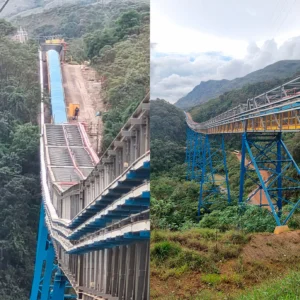
Figure 1 – Sections 6 and 7 of the belt conveyor (photographic record of the installation).
Linear systems: the importance of AQR in large-scale installations
Linear systems, such as belt conveyors, industrial tunnels, and utility tunnels, have characteristics that require special attention in risk assessment studies. Due to their length, physical effects associated with a localized event can propagate over long distances and potentially impact multiple assets and occupied areas.
In certain scenarios, temperature spikes, energy releases, or localized failures can quickly compromise structural and electrical components—and, above all, safety and operational continuity. Figure 1 illustrates a typical scenario in this system without the implementation of automatic mitigation measures.
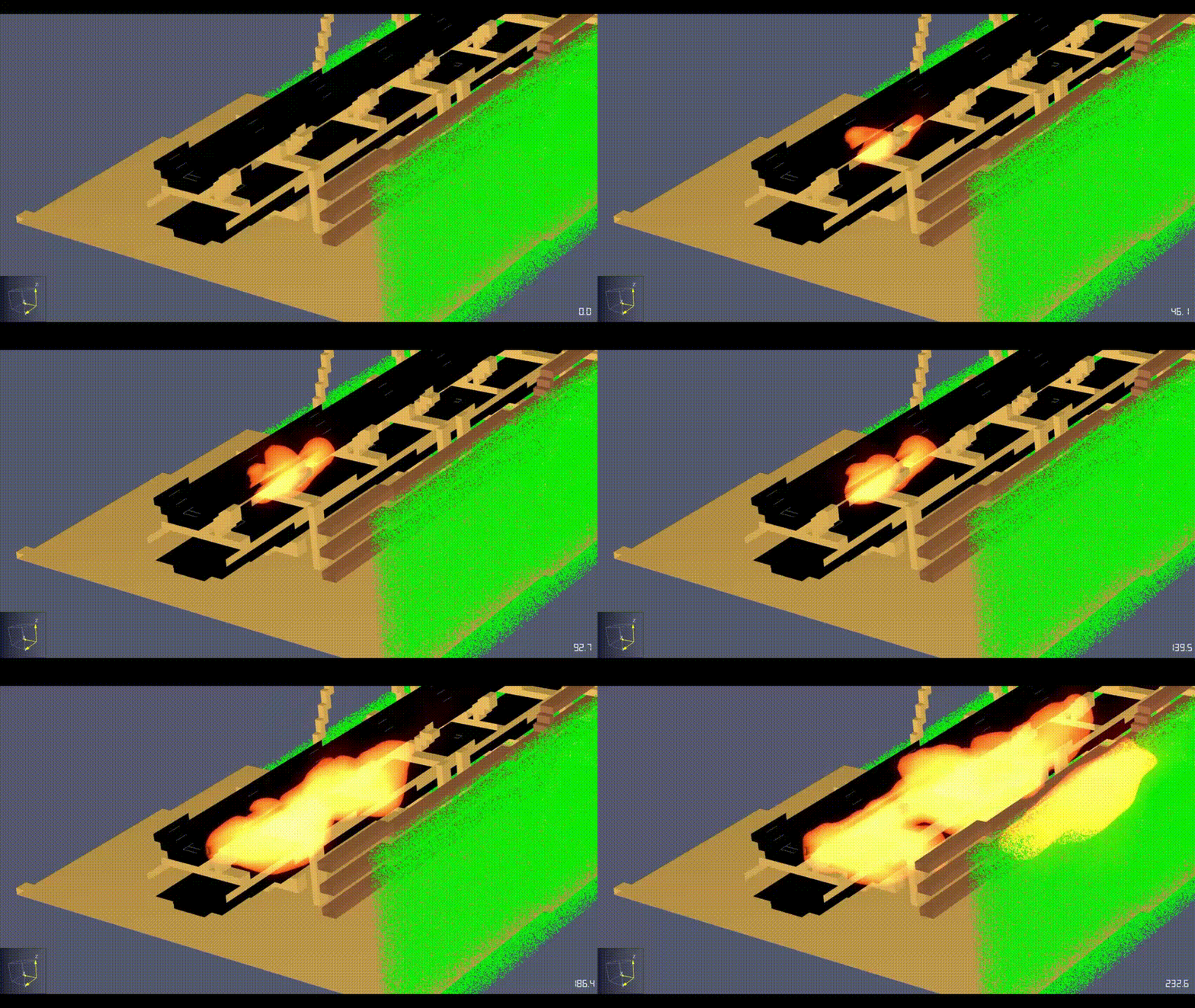
GIF 1 – Evolution of the thermal scenario in a linear system without an automatic mitigation system.
On the other hand, when mitigation measures are included in the scope of the QRA, there is a significant reduction in the severity of the consequences, with a limitation on the spread of effects and greater protection of critical assets, as shown in Figure 2.
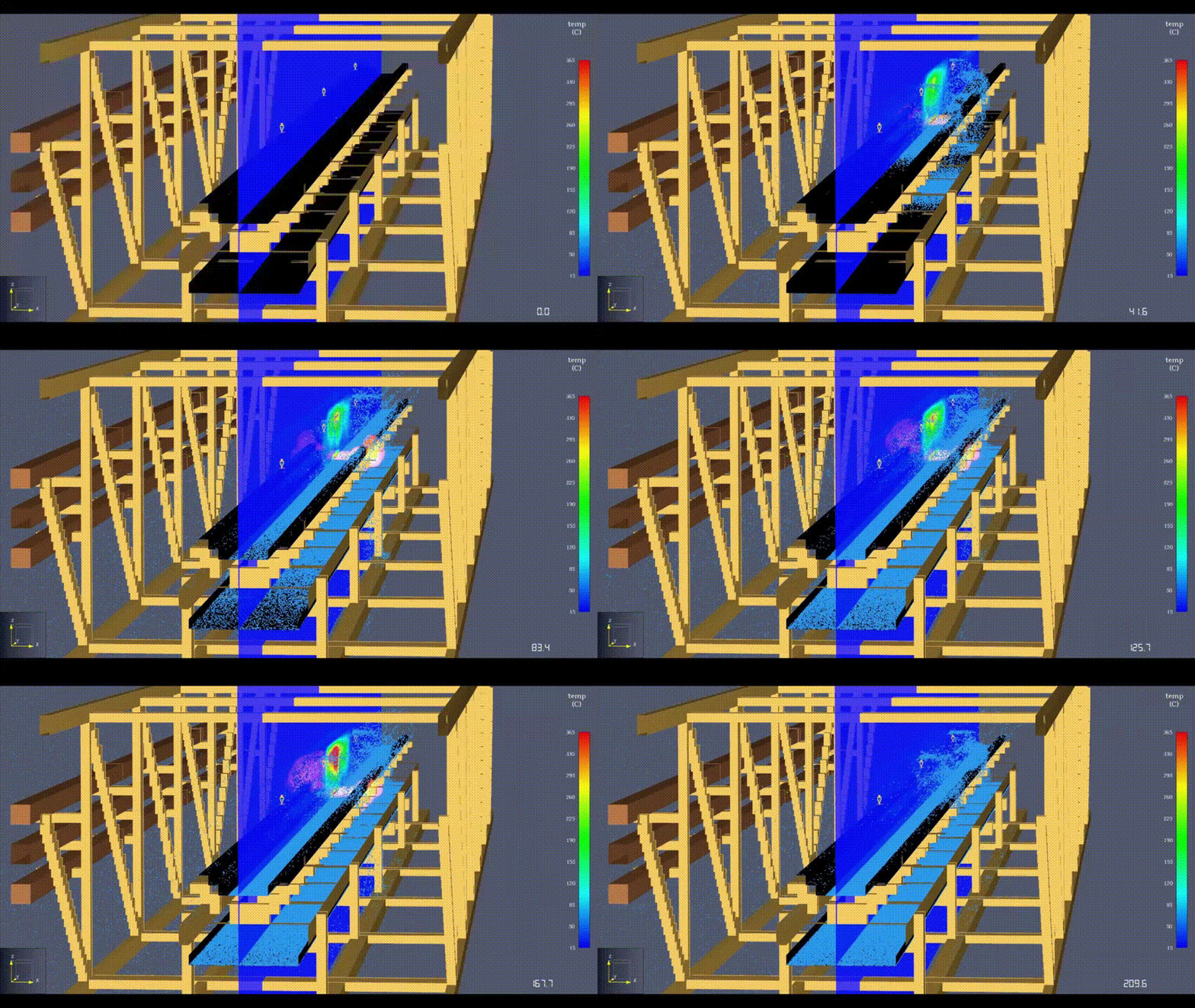
GIF 2 – Scenario evolution with the automatic mitigation system in operation.
Confined spaces and integrated risk assessment
In confined spaces, such as industrial tunnels, consequence analysis plays an even more critical role. This is primarily because the confined geometry and forced ventilation directly influence the distribution of temperatures, gases, and visibility conditions, affecting both the integrity of the systems and the safety of people.
In this context, the analysis of airflow patterns makes it possible to identify areas of recirculation and regions with lower ventilation efficiency, which are considered critical in various scenarios evaluated by AQR. Figure 2 shows an example of an airflow profile associated with a fan installed in an industrial tunnel.

Figure 2: Flow profile of a fan (view centered on the fan).
In situations involving thermal stress—whether due to equipment failures, localized thermal events, or other adverse operating conditions—prolonged exposure of cables, auxiliary systems, and structures can eventually compromise their integrity. Figure 3 illustrates an example of temperature distribution in a section of the tunnel.

Figure 3 – Temperature profile (°C) in the central section of the tunnel at 800 s.
Evacuation drills as a supplement to the AQR
As a natural extension of consequence analysis, evacuation simulations make it possible to assess the interaction between simulated environmental conditions and the movement of people in adverse situations. In this regard, this type of study links the results of CFD simulations to human safety, significantly broadening the scope of risk assessment.
For example, in a study conducted by Kot Engenharia, a tunnel evacuation simulation was performed, taking into account temperature, flow, and visibility fields obtained from CFD analyses, as shown in the following GIFs. This approach makes it possible to evaluate escape times, identify bottlenecks in escape routes, and verify the adequacy of safety conditions along the route.
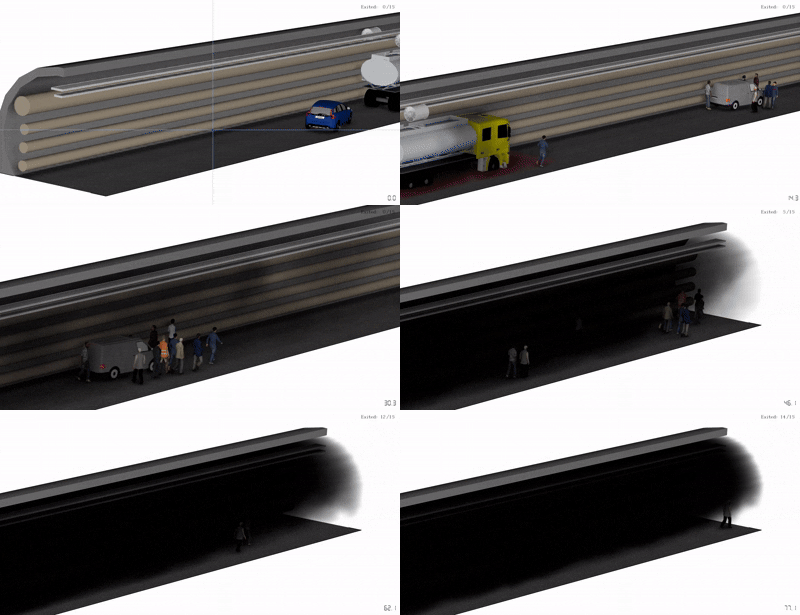
GIF 3 – Evacuation simulation in an industrial tunnel under adverse conditions. Source: Kot Engenharia.
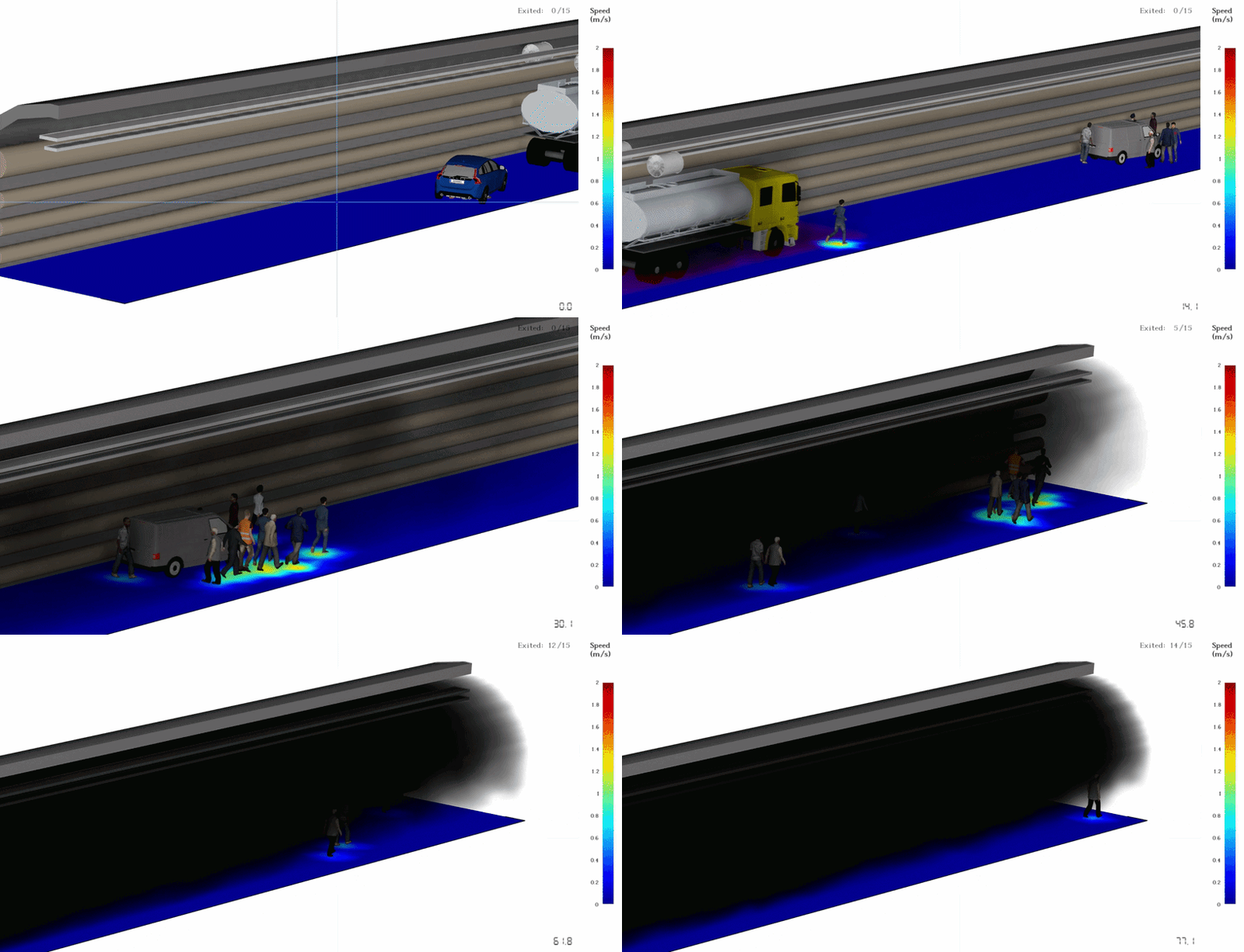
GIF 4 – People’s speed during an evacuation drill in an industrial tunnel. Source: Kot Engenharia.
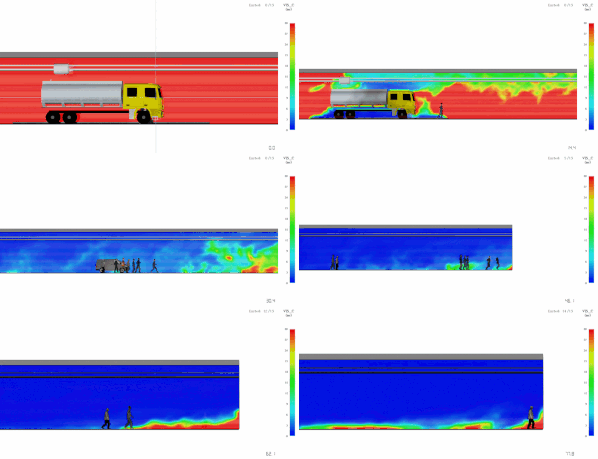
GIF 5 – Visibility calculated in the industrial tunnel evacuation simulation. Source: Kot Engenharia.
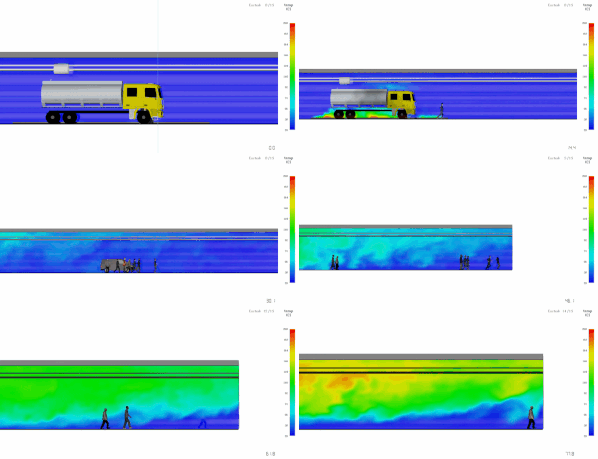
GIF 6 – Temperature profile during an evacuation simulation in an industrial tunnel. Source: Kot Engenharia.
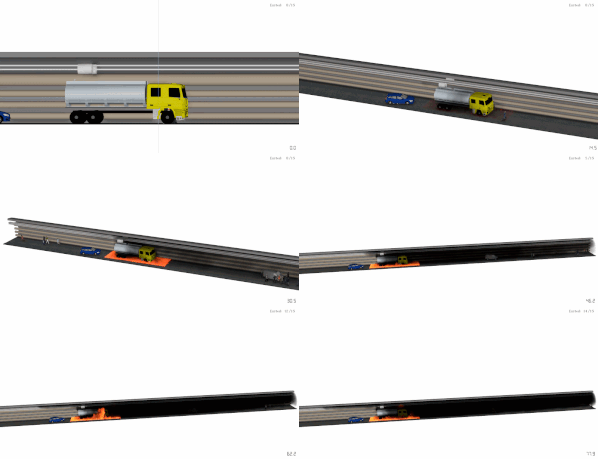
GIF 7 – General smoke conditions during an evacuation simulation in an industrial tunnel. Source: Kot Engenharia.
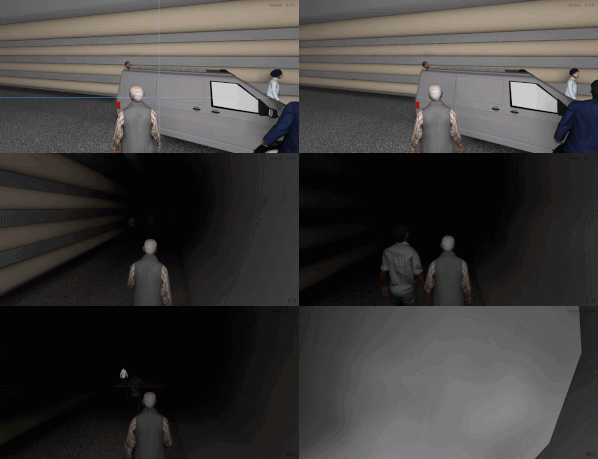
GIF 8 – Visibility and evacuation conditions during a simulation in an industrial tunnel. Source: Kot Engenharia.
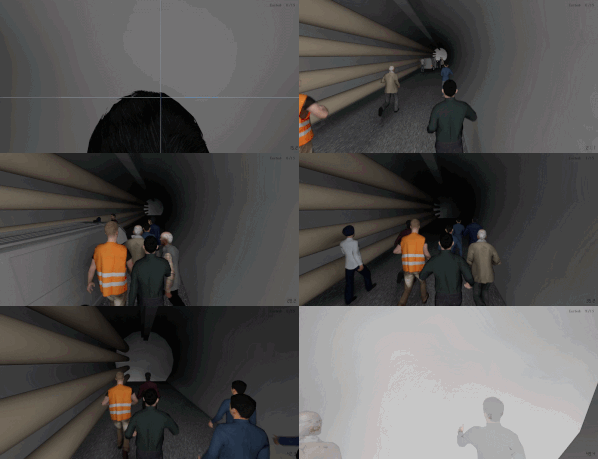
GIF 9 – Visibility and evacuation conditions during a simulation in an industrial tunnel. Source: Kot Engenharia.
Integration of results and support for decision-making
In this regard, the integration of risk analysis and CFD simulations provides a comprehensive view of the risks associated with industrial systems and complex infrastructure. Consequently, these studies make it possible to identify vulnerabilities, compare scenarios, and prioritize mitigation measures in a technical, objective, and evidence-based manner.
Furthermore, rather than simply evaluating a single type of event, AQR contributes to a comprehensive understanding of how facilities behave under adverse conditions, thereby supporting decisions related to design, operation, maintenance, and emergency response.
Conclusion
In short, Quantitative Risk Analysis is an essential tool for risk management across various sectors of the economy. Consequence analysis, as an integral part of these studies, provides an objective understanding of the physical impacts associated with undesirable events, going beyond simplified and purely prescriptive approaches.
In addition, the use of CFD and evacuation simulations significantly enhances the ability to assess these scenarios, particularly in complex facilities and confined spaces.
In this context, Kot Engenharia extensive experience in applying these tools to risk assessment and AQR studies, helping its clients identify vulnerabilities, define mitigation strategies, and make sound technical decisions.
Contact Kot Engenharia
Does your operation involve confined spaces, linear systems, or complex industrial facilities that require risk assessment and consequence analysis?
Situations involving fires, thermal failures, gas leaks, or evacuation difficulties can jeopardize people’s safety, the integrity of assets, and operational continuity.
In this context, Quantitative Risk Analysis (QRA), combined with CFD simulations and evacuation studies, provides a more realistic understanding of accident scenarios, helping to identify vulnerabilities, define mitigation measures, and make safer technical decisions. Join our more than 150 clients, contact our team and learn about our services.
Since 1993, we have been specialists in developing engineering solutions through inspections, technological tests, and the use of computational methods for complex assessments of concrete and metal structures and industrial equipment.
Be sure to follow our pages on LinkedIn, Facebook and Instagram and keep following our content.
FAQ
1. Why do linear systems, such as belt conveyors, require a specific AQR?
Linear systems are characterized by the longitudinal spread of heat and smoke. A fire that starts in one section of a conveyor belt can spread rapidly over hundreds of meters due to the chimney effect or the movement of the flammable material itself. AQR assesses how a failure at a single point can trigger a domino effect that compromises multiple critical assets along the entire length of the system.
2. What is the difference in performance between scenarios with and without automatic mitigation systems?
Without barriers or active automatic suppression systems, thermal energy and toxic gases spread unimpeded, generating extreme temperature spikes within minutes and rendering metal structures and signal cables inoperable. With the implementation of mitigation measures (such as sprinklers or deluge systems), the simulation shows that the high-temperature zone is confined to the immediate vicinity of the initial fire source, preserving the rest of the plant and the escape routes.
3. How do confined spaces and ventilation affect risks in confined environments?
In tunnels and underground galleries, forced ventilation is a two-way process. While it refreshes the air, in the event of a fire, the airflow pushes smoke and superheated gases along the tunnel, creating a toxic plume that reduces visibility to zero and raises the temperature along workers’ escape routes. Mapping these air currents using CFD is crucial for designing realistic emergency plans.
4. What is a CFD-integrated evacuation simulation?
It is a methodology that cross-references dynamic environmental data (generated by CFD, such as CO concentration, temperature, and smoke opacity) with occupant behavior (walking speed, reaction time, and bottlenecks at exits). The evacuation simulation calculates the actual escape time for individuals under the deteriorating conditions caused by the accident, verifying whether the designed escape routes are actually viable.
5. How do smoke and reduced visibility affect the speed of evacuation?
The loss of visibility caused by smoke has an immediate psychological and physical effect: people drastically reduce their walking speed to avoid collisions and falls, which increases the time required for escape ($RSET$). Evacuation simulations use speed-versus-visibility curves to predict these delays with scientific precision in industrial panic scenarios.
6. How do Kot Engenharia ’s simulations Kot Engenharia with investment decisions?
Instead of making multimillion-dollar investments based on assumptions or oversized security systems, Kot’s analyses use performance-based engineering. This means your company can identify exactly where the greatest physical vulnerabilities lie and invest in mitigation measures (such as fans, detectors, and water jets) at the specific locations identified by the three-dimensional risk maps.