Introduction
Instrumentation work on railroads is developed to monitor the physical quantities (accelerations, speeds, temperature, etc.) involved in this complex operating process. The instrumentation techniques used make it possible to understand and evaluate the dynamic effects caused on the trains (wagons and locomotives) and the permanent way. Monitoring this data makes it possible to acquire information for decision-making.
According to the National Association of Railroad Carriers (ANTF), 493.8 million metric tons of payload were transported in 2019, a 95% increase since the start of the concessions in 1997. Today, more than 95% of minerals reach Brazilian ports by rail. In this mode of transport, more than 45% of all cargo consists of agricultural dry bulk for export. [1]
In this regard, the growing, continuous, and significant increase in rail usage can also lead to problems related to infrastructure maintenance and operational safety. One example is fatigue in rails and other train components due to increased axle load, as well as changes in train speed. Another key issue, also related to changes in load and speed, is the risk of train derailments. All of these problems can have a severe impact on operating costs.
Railroad Instrumentation
The purpose of wagon instrumentation is to identify the points and regions of the railroad that cause the most damage to the trains. Knowing these areas makes it possible for management to make timely and assertive interventions to increase the useful life of both the vehicles and the permanent way. In order to collect the quantities involved in the operating process, an on-board instrumentation system is required, which can contain measuring devices such as: accelerometers, strain gauges, pressure sensors, temperature sensors, displacement sensors, GPS equipment, etc. The system is able to collect the output data from the sensors - understanding the dynamics of the wagon; issue alarms and associate them with its global positioning - the latter monitored by GPS (Figure 2).
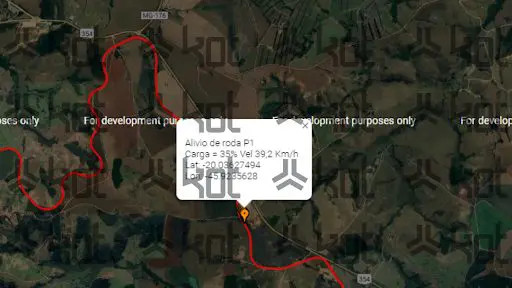
Figure 1: Global alarm identification [2].
Measuring the deformation of wheelsets, using the extensometry technique for example, makes it possible to know indirectly the lateral (L) and vertical (V) loads (Figure 3) to which the train is subjected along the track. By measuring wheel loads, it is possible to accurately quantify peak load events during a journey. These events, which can cause derailments, are usually associated with significant changes in the track path (small radius curves), excessive speed of the wagons, or even sudden braking events (emergency stops) of the trains. Figure 4 shows the derailment mechanism to which the condition defined by Nadal applies.
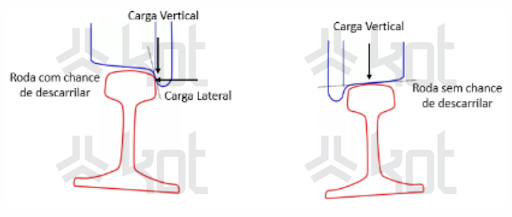
Figure 2: Lateral (L) and vertical (V) loads - [3] Adapted.

Figure 3: Derailment mechanism according to Nadal [3].
Once the L and V loads of an operating route are known, it is possible for engineering to associate premature component wear and reduce the risk of derailment events by determining the L/V coefficient. Figure 5 shows a graph constructed from data measured in the field.
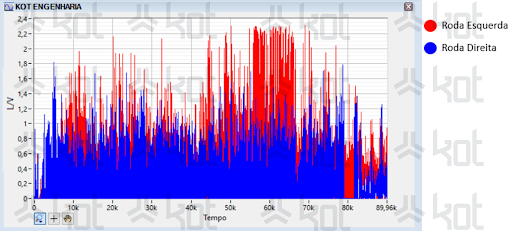
Figure 4: L/V coefficient during a loaded cycle - [2].
The technique of instrumentation on railroads, using sensors to study and understand the quantities, requires the correct specification and use of sensors and data acquisition devices, since the choice is associated with factors such as: what data is expected by the requester, how many journeys will be monitored, what duration and distance will be measured, what will be the format of presentation to the client, among others.
In addition to measuring quantities using sensors and cameras, which can be seen in more detail in the article: Vibration analysis using image processing, and issuing alarms to the requester, it is possible that data such as deformation can be applied to studies using the Finite Element Method (FEM). This study will enable the development of component fatigue analyses (shock and traction devices, tricks and wheels, for example), with the aim of estimating their useful life in cycles for the customer's specific and known operating conditions.
For more information and to understand how Kot can assist with railway solutions, consult our team!
Follow our pages on LinkedIn, Facebook e Instagram to keep up with our content.
FAQ
1. Por que a instrumentação em vagões é indispensável na operação ferroviária?
Ela identifica exatamente quais pontos da via causam mais danos às composições. Integrando sensores (como extensômetros e acelerômetros) com GPS, a gestão consegue fazer manutenções preventivas e pontuais antes que ocorram falhas operacionais graves.
2. O que é o coeficiente L/V e como ele previne descarrilamentos?
O coeficiente L/V mede a proporção entre a carga lateral (L) e a carga vertical (V) aplicadas pelas rodas nos trilhos. Acompanhar essa taxa permite calcular o risco de o rodeiro “escalar” o trilho (mecanismo de descarrilamento de Nadal) em momentos críticos, como curvas acentuadas ou frenagens de emergência.
3. Como os dados de campo ajudam a prever a vida útil das peças?
Os dados reais de deformação e esforço coletados pelos sensores são usados em simulações do Método dos Elementos Finitos (MEF). Isso permite estimar quantos ciclos de trabalho componentes como truques e sistemas de choque/tração ainda suportam antes de apresentarem fadiga.
References:
[1] Associação Nacional dos Transportadores Ferroviários – ANTF. Disponível em: <https://www.antf.org.br/informacoes-gerais/>
[2] Kot Engenharia Collection.
[3] DALLY J. W., Experimental stress analysis, McGRAW-HILL, 3rd ed., 1991.
[4] AAR, Manual of standards and recommended practices. Design, fabrication and construction of freight cars, section C part II, 2011.