Risk-Based Inspection (RBI) is a strategic methodology that replaces rigid, time-based maintenance schedules with a dynamic plan focused on the actual criticality of assets. Governed by international guidelines such as API RP 580 and API RP 581, this approach combines Probability of Failure (PoF) with Consequence of Failure (CoF) to identify vulnerable points in industrial plants. By combining targeted inspections, non-destructive testing (NDT), and advanced computational simulations using the Finite Element Method (FEM), the methodology allows engineering resources to be concentrated precisely where the risk of structural failure or operational shutdown is imminent. The continuous application of this technical ecosystem, which is fully integrated into Kot Engenharia asset governance framework, reduces emergency costs and enhances long-term operational reliability and safety.
Want to learn how to turn inspection data into a smart strategy for preventing failures? Keep reading!
1. What is Risk-Based Inspection (RBI)?
The purpose of this article is to present, in an objective manner, the methodology of Risk-Based Inspection (RBI), also found in other literature as Risk-Based Inspection (RBI).
First, for a clear understanding of the topic, we will address the basic definitions for risk classification and assessment, the development of a risk matrix, and the information needed to maximize the application and success of the RBI methodology in industrial asset management.
In addition, RBI is part of a structural journey that Kot Engenharia already uses in its studies and promotes together with its clients. Therefore, if you would like to learn more about these proposed journeys, you can also read our article on the CARE methodology – Asset Control for Structural Revitalization.
2. Origin and fundamentals of the RBI methodology
The Risk-Based Inspection methodology was developed by the American Petroleum Institute (API) with the aim of planning and executing inspections by prioritizing activities and optimizing available resources.
In this regard, the main standards currently used for the implementation and execution of RBI are API RP 580, API RP 581, ASME PCC-3, and BS EN 16991.
Therefore, to understand how the RBI methodology guides decision-making, it is essential to understand the concepts of risk and risk matrix.
Firstly, risk is the probability of a potentially undesirable event causing some damage or loss – note that when defining risk, two variables must be analyzed: the probability of occurrence and the severity of the damage or loss. This type of analysis is routinely used in everyday decision-making, even if unconsciously. As an example, we can cite the choice to purchase a product of a certain brand or an investment decision. All these decisions are evaluated in terms of benefits and drawbacks, which in practice is a matrix of choices. Thus, note that these decisions become more assertive according to the information available and the degree of experience of those involved.
3. How to apply the RBI methodology in Structural Integrity
In the industrial sector, RBI defines these two main elements of risk assessment as Probability of Failure (PoF) and Consequence of Failure (CoF). According to API, we have:
- Probability of Failure (PoF): The chance that the asset will fail, based on its failure history, operating conditions, age, wear and tear, among other factors;
- Consequence of Failure (CoF): The impact of asset failure, which may include damage to safety (such as accidents or injuries), the environment (such as spills or contamination), financial losses, damage to the company's reputation, and production disruption.
Thus, based on these two elements, a risk matrix is developed, which classifies risks as low, medium, high, and very high. An example of a matrix can be seen in Figure 1.
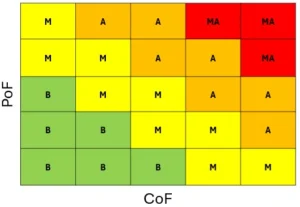
Figure 1 – Probability x Consequence risk matrix.
This matrix, focused on maintenance management and Structural Integrity, can be used to classify types of structural damage, the degree of degradation of these pathologies, and the structural function of the elements, thereby defining the risk of structural collapse or severe operational downtime.
However, although the focus of this article is the application of RBI to Structural Integrity, the methodology can be applied in other areas such as financial, environmental, and reputational risk assessment.
Thus, returning to the focus on Structural Integrity, the first step (or the first layer of assessment) is to conduct sensitive inspections of the asset, mapping the pathologies and their severity.
Next, after identifying pathologies and non-conformities, the degrees of severity found are classified using a risk matrix. With the available data, the most critical scenarios are prioritized. With this hierarchy defined, corrective or preventive actions are developed to mitigate or eliminate existing risks.
4. Essential techniques and information for risk assessment
First, the initial sensory inspection provides a basic level of information to begin the analysis. However, additional information may be necessary for risk assessment. This information can be obtained through other techniques, such as:
- Non-destructive testing (NDT): thickness measurement, penetrant testing, magnetic particles, eddy current, pacometry, ultrasound, among others;
- Structural analyses and calculations: Finite element modeling (FEM), Fitness-for-Service (FFS) analyses governed by API 579;
- Provisional or continuous monitoring: extensometry, vibration analysis, temperature monitoring, periodic inspections, among other techniques.
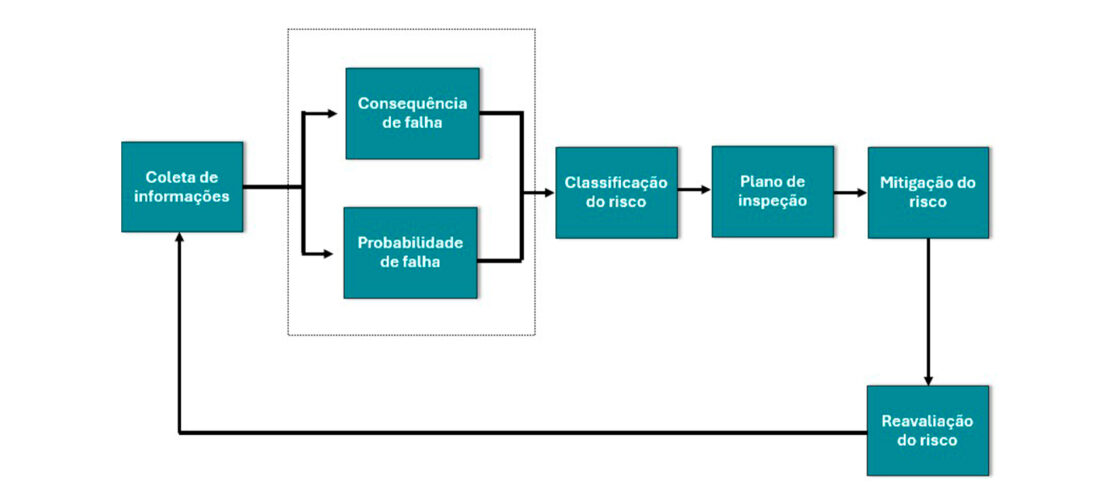
The planning flowchart suggested by API RP 580 can be seen in Figure 2.
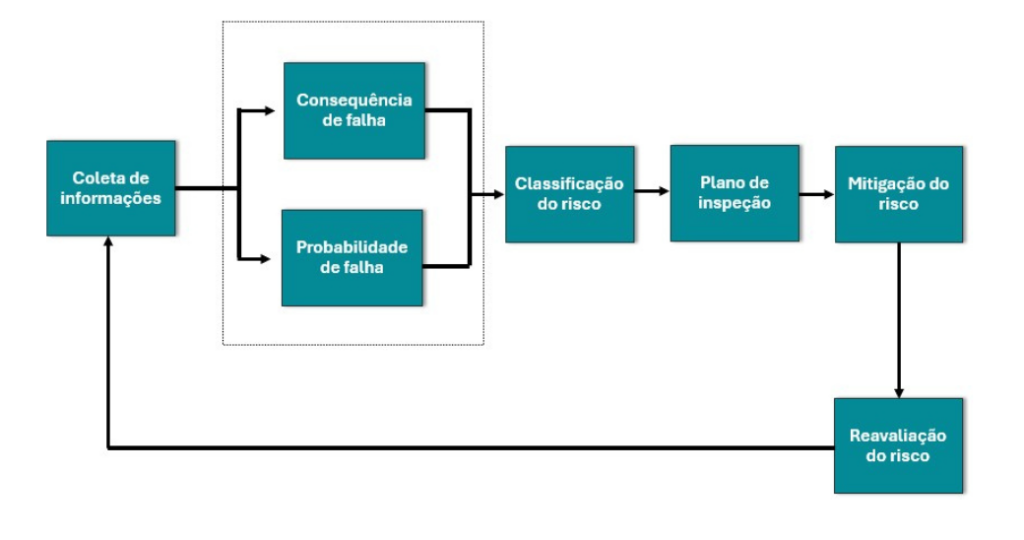
Figure 2 – RBI planning flowchart – Source: Adapted from API RP 580
Furthermore, for RBI to be effective in both execution and implementation, it is essential to use an experienced multidisciplinary team and the various techniques available on the market for monitoring and quantifying parameters. In addition, the availability of historical information on the asset is indispensable, including:
- Active projects, manuals, and technical specifications;
- Maintenance records;
- Records of adjustments and modifications;
- Database of automation instruments (vibration, deformation, temperature monitoring, etc.).
5. Benefits of RBI in industrial asset management
As a result, the continuous application of RBI creates a virtuous cycle of continuous improvement: the more data, the more accurate the analysis and, consequently, the better the maintenance and asset management decisions.
RBI is more than a methodology. It is an intelligent asset management strategy. But at the end of the day, Kot's experience in using this practice shows the following benefits for the organization and people involved with the assets:
5.1. Ensuring the safety of people and the environment:
RBI considers not only the financial impacts of a failure, but also the impacts on safety and the environment. The methodology helps prevent accidents, material leaks, and environmental damage, protecting workers and the institution involved.
5.2. Prioritize resources where the risk is most severe
Focus efforts (time, staff, budget) on the most critical structures and equipment, optimizing resources and increasing the effectiveness of maintenance actions;
5.3. Reduction in operating and maintenance costs:
Time-based inspection with fixed deadlines can lead to unnecessary inspections of low-risk assets and neglect of critical assets. RBI eliminates this waste and in many cases allows inspection intervals to be safely increased, reducing downtime and emergency maintenance.
5.4. Increase operational reliability:
By monitoring and acting on the most sensitive points in the production process, unexpected failures are avoided and asset availability is increased, resulting in higher operational efficiency, production stability to meet targets, and lower risk of incidents.
5.5. Servicing insurance companies, regulatory requirements, audits, and public agencies:
Companies are increasingly required to implement structured risk prevention programs. The use of RBI facilitates compliance with these requirements, strengthening the company's technical governance;
5.6. Make more informed decisions for asset maintenance:
Maintenance and inspection decisions are now based on actual data rather than estimates, enabling more proactive asset management, greater predictability, and better long-term planning.
5.7. Creating a fertile technical environment for a cycle of continuous improvement:
The more information collected about assets, the more accurate and detailed risk models become, resulting in a virtuous cycle of improvement. In this sense, each inspection cycle provides information that makes the next one even richer and more efficient.
Contact Kot Engenharia
If you, like our more than 150 clients, are looking for specialized solutions in structural analysis or failure prevention such as deformation, vibration, and corrosion, consult our team and count on Kot Engenharia.
Since 1993, we have been offering engineering consultancy services through technical studies using non-destructive testing, field instrumentation and computer simulations (FEM, DEM and CFD) for highly complex diagnoses of concrete and metal structures and industrial equipment.
Follow our pages on LinkedIn, Facebook and Instagram and keep following our content.
FAQ
1. What is the core concept of Risk-Based Inspection (RBI), and what regulations govern its implementation?
The RBI (or IBR—Risk-Based Inspection) methodology was originally developed by the American Petroleum Institute (API) to optimize inspection plans and resource allocation at highly complex industrial plants. The process involves analyzing the risk variables of each asset to determine the most appropriate inspection schedules, methods, and scopes. Its technical foundations are governed by global reference standards, such as API RP 580 and API RP 581, as well as ASME PCC-3 and the European standard BS EN 16991.
2. How are the Probability of Failure (PoF) and the Consequence of Failure (CoF) calculated and correlated?
Reliability engineering uses two main variables to plot assets on a risk matrix (which ranges from low to very high):
Probability of Failure (PoF): Measures the likelihood that equipment will fail based on its operational history, age, corrosion rates, wear and tear, and the severity of the operating environment.
Consequence of Failure (CoF): Assesses the actual impact should a failure occur, including risks to worker safety, environmental contamination, financial losses due to production downtime, and damage to the organization’s reputation.
3. What is the main advantage of switching from time-based maintenance to the RBI methodology?
Traditional maintenance schedules with fixed deadlines tend to cause two major problems: a waste of financial resources on unnecessary inspections of low-risk assets and, worse still, the unintentional neglect of critical points. By adopting RBI, asset management becomes predictive and precise. This makes it possible, with complete technical confidence, to extend inspection intervals for secondary equipment and focus efforts and funding where the risk of a catastrophic failure is real.
4. What tests and technical analyses are used to inform a structured RBI plan?
The risk model requires accurate field data to function. An initial visual inspection maps surface defects, but refining the model requires Non-Destructive Testing (NDT), such as ultrasonic testing, plate thickness measurement, magnetic particle testing, and pacometry, combined with monitoring of variables (vibration, strain gauges, and temperature). For highly critical assets, specialized engineering consulting firms, such as Kot, complement RBI with Fitness-for-Service (FFS – API 579) analyses and Finite Element Method (FEM) mathematical models to quantify exact structural wear.
5. How does the implementation of RBI help ensure compliance with insurance company requirements and audits?
High-risk insurers, investment funds, and public regulatory agencies require structured programs for loss mitigation and technical governance. Presenting an RBI plan demonstrates that the company has traceable control over the integrity of its structural and mechanical assets. Since decisions regarding intervention and repairs are now supported by quantitative data and robust engineering reports, the audit process becomes more transparent, reducing the risk of penalties and facilitating the negotiation of industrial insurance policies.