
Human vision allows us to interpret countless aspects of the world. These perceptions are diverse; for example, when observing a tree on the street, it is possible to notice different aspects of the plant, such as colors, textures, and shapes. In addition, one can recognize characteristics in images, such as emotions on the faces of people in a photograph.
In this context, computer vision is one of the branches of artificial intelligence that studies the processing of real-world images by a computer. In other words, this field investigates ways to give machines the ability to visually interpret information—that is, to see. In this article, developed by the Kot Engenharia team, learn about the fundamentals of how this technology works and how your company can get involved in this field.
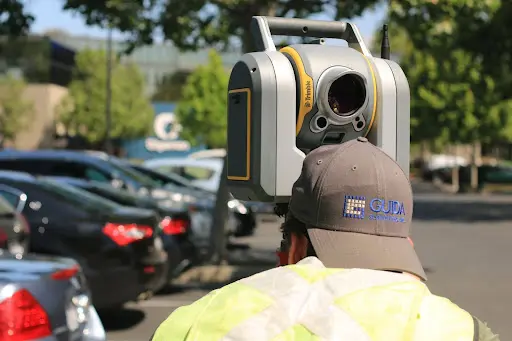
Figure 1: Human and computer vision. [1]
Basic concepts
Firstly, for a better understanding of computer vision, it is necessary to define the concepts of Image and Image Processing.
Thus, the concept of an image can be somewhat abstract. From a computational standpoint, it can be viewed as a data set. This information is related through a scalar function of two variables [2].
For this reason, such data typically contain a great deal of noise resulting from factors such as the location where the image was captured, the equipment used, the objects in focus, and others [3]. Thus, image processing aims to make the necessary adjustments to mitigate these variations. To this end, since the computer views the image as a function, there are numerous mathematical techniques for modeling the data as needed.
Deepening understanding
Based on these concepts, computer vision is responsible for developing a complete automated system that captures images, processes them, analyzes the visual information, and triggers a command to initiate the appropriate subsequent process.
Stages for the realization of Computer Vision [4]
Initially, it is necessary to establish that there is no single system for applying computer vision. The most common steps for implementing this technology are listed below:
-
- Acquisition: the stage aimed at capturing images;
-
- Image processing: the aim of this stage is to adapt and optimize the visual data acquired. To do this, techniques such as removing noise, rotating the image, applying filters, etc. can be applied;
-
- Image analysis: this is when the images are made unique from the computer's point of view. Each image is assigned a unique function of two independent unknowns, which can be viewed more objectively by the machines;
-
- Pattern recognition: at this point the images are classified according to their similar characteristics.
Consequently, based on pattern recognition, the system can automatically initiate actions, setting the necessary sequence for the process.
Advantages and Limitations of Computer Vision
In general, among its benefits, one advantage of computer vision is the ability to implement a system that reduces the company's costs. In addition, it is possible to improve the quality of the products the company manufactures.
On the other hand, because it is a system tailored to each specific application, each case must be analyzed, planned, and implemented individually. This fact results in a high investment required for development, which is the main limitation of computer vision.
Industry applications
Computer vision has a number of applications in industrial automation:
-
- Non-invasive check
In this case, for example, it is possible to verify whether the contents of the packages are complete, eliminating the need to open the product packaging. Figure 2 shows the diagram used for this application.
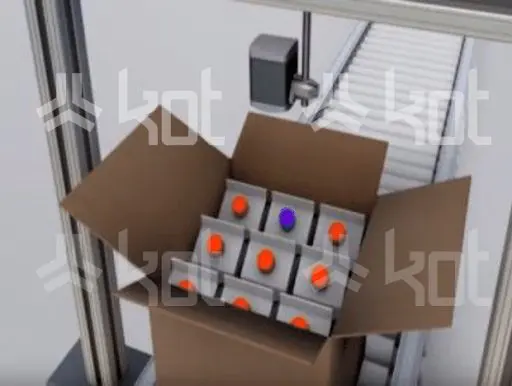
Figure 2: Schematic of the application of non-invasive verification of package integrity. [5]
-
- Inspection of machinery and structures
In addition, computer vision can be used to perform inspections and analyses on machines and structures [6]. In fact, check out this article a methodology applied by Kot.
-
- Accident prevention
Another plausible application for computer vision is in the prevention of machine collisions. To illustrate this, Figure 3 shows the situation.
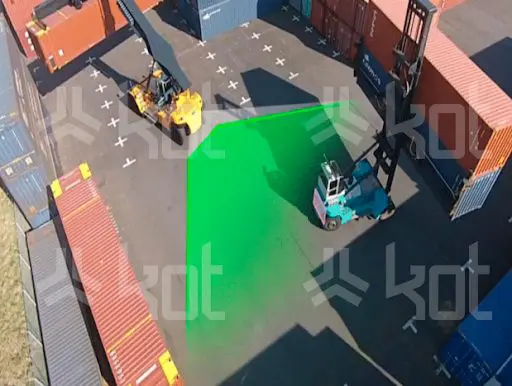
Figure 3: Distance monitoring and collision avoidance scheme. [6]
-
- Pattern recognition
Finally, computer vision can also be used for pattern recognition that triggers automated processes, such as the identification of labels, codes, letters, and printed numbers. For example, Figure 4 illustrates the use of computer vision for inventory management.
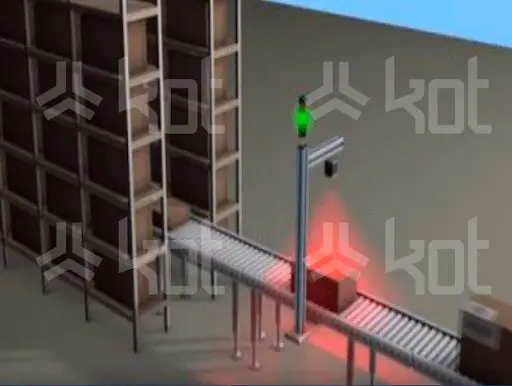
Figure 4: Computer vision box stock management scheme. [6]
Conclusion
In summary, based on the article, it can be concluded that computer vision offers a wide range of potential applications for problem-solving and process optimization. Kot Engenharia the necessary expertise to implement it, enabling the company to assess different operational contexts and contribute to the results. Contact our team for more information!
Follow our pages on LinkedIn, Facebook e Instagram to keep up with our content.
FAQ
1. O que é Visão Computacional e qual seu objetivo na Inteligência Artificial?
A Visão Computacional é a subárea da Inteligência Artificial voltada para o processamento e interpretação de dados visuais do mundo real por meio de computadores. Seu objetivo principal é replicar a capacidade da visão humana nas máquinas, permitindo que elas identifiquem formas, cores, texturas, objetos e padrões para tomarem decisões de forma autônoma.
2. Como uma imagem é interpretada matematicamente por um computador?
Do ponto de vista computacional, uma imagem não é uma figura abstrata, mas sim um conjunto estruturado de dados numéricos (pixels). Ela é representada como uma função escalar de duas variáveis independentes, $f(x, y)$, onde cada coordenada $(x, y)$ corresponde à posição espacial do pixel e o valor da função indica a sua intensidade de cor ou brilho.
3. Por que o processamento de imagens é uma etapa indispensável?
Imagens capturadas no mundo real frequentemente carregam “ruídos” — variações indesejadas provocadas por iluminação inadequada, vibrações de câmera, sujeira, reflexos ou foco incorreto. O processamento de imagens aplica filtros e transformações matemáticas para suavizar esses ruídos, ajustar contraste e destacar contornos, preparando a imagem para a etapa de análise.
4. Quais são as etapas do fluxo de trabalho (pipeline) da Visão Computacional?
O processo é composto por quatro etapas sequenciais:
-
Aquisição: Captação das imagens por meio de câmeras ou sensores visuais;
-
Processamento de Imagens: Filtragem, rotação e remoção de ruídos para otimização dos dados;
-
Análise de Imagens: Isolamento e extração matemática de características únicas da figura;
-
Reconhecimento de Padrões: Classificação das informações extraídas por similaridade e disparo automático das ações do sistema.
5. Quais são as principais vantagens e limitações dessa tecnologia?
-
Vantagens: Redução sustentada de custos operacionais, aumento da velocidade de inspeção, eliminação do erro humano por fadiga e elevação do padrão de qualidade dos produtos.
-
Limitações: Alta especificidade do sistema. Como cada aplicação industrial exige algoritmos, câmeras e iluminações customizadas para seu cenário específico, o investimento inicial de desenvolvimento pode ser elevado.
6. De que formas a Visão Computacional é utilizada na indústria?
Entre as aplicações mais consolidadas destacam-se:
-
Inspeção não invasiva: Verificação do preenchimento de embalagens sem violar o produto;
-
Inspeção de máquinas e estruturas: Mapeamento visual automatizado de trincas, desgastes e desalinhamentos em ativos;
-
Prevenção de colisões: Monitoramento contínuo de distância entre máquinas móveis e obstáculos no ambiente fabril;
-
Gerenciamento de estoque: Leitura automatizada de etiquetas, códigos de barras e contagem rápida de volumes.
References:
[1] Blake, Scott (2018). Disponível em: <https://unsplash.com/photos/K6JzHiV4aq8>.
[2] G. Kovasznay, L., & Joseph, H. (1955). Image Processing. Proceedings of the IRE, 43(5), 560-570. doi:10.1109/jrproc.1955.278100.
[3] Santiago, Gaubert (s.d). Method Based on Computer Vision for Digit Recognition Aimed at Reading Consumption in Hydrometers with Analog and Digital Indication.
[4] Backes, A and Sá Júnior, J (2019). Introduction to Computer Vision Using MATLAB.
[5] Szeliski, Richard (2010).Computer Vision: Algorithms and Applications .
[6] IFM Collection.