"I need to start a Structural Integrity journey Structural Integrity my organization,due to the current state of my assets. But where should I start?"
This question often arises in our daily lives, usually coming from technicians, engineers, managers, directors, and other professionals whose mission is to maintain the Structural Integrity assets while meeting their production targets. These assets are often complex and carry a high level of responsibility, so they need to operate safely and meet the required production targets simultaneously.
If you work in sectors such as energy, agriculture, oil and gas, mining, steel, logistics (rail, road, and port), infrastructure, or any other industrial environment, you have most likely encountered some unpleasant structural scenarios, whether in our country, abroad, in literature, in the news, or in your professional experience.
In these contexts, uncomfortable situations were likely to be perceived, such as unexpected failures, costly maintenance, unplanned downtime, and operational risks that affect performance and production. In addition, such events can often affect the peace of mind, morale, and safety of the team, generating unwanted intangible effects. Consequently, the impact can go far beyond tangible and measurable losses, as a structural failure can generate a negative bias to the company's institutional image.
In industrial environments, the structure is much more than meets the eye. After all, behind every metal or concrete structure, equipment, and other assets, there is a silent mechanism that supports the entire operation of the organization. However, few people realize this mechanism, called Structural Integrity undesirable events with major repercussions occur.
In this article, readers will learn, in a simple and straightforward way, how and why Structural Integrity transform the reality of their specific asset or plant, based on an understanding of four basic points:
- What is Structural Integrity in practice and in everyday life?
- What are the most common pain points that lead people to implement Structural Integrity their assets?
- What are the expected gains that my organization can achieve by implementing the program?
- What are the initial steps in implementing a Structural Integrity program Structural Integrity I can apply to my assets?
1. What is Structural Integrity in practice and in everyday life?
Essentially, Structural Integrity the ability of metal, mixed, and concrete structures, or equipment, to operate safely and perform as specified in the design throughout their projected service life. In other words, this means that the asset must function in accordance with the technical purchase specifications, its operating parameters, and the respective national and international technical standards.
In addition to preventing collapses or avoiding obvious damage, Structural Integrity ensure the durability of assets in a cost-effective manner, as well as operational availability and reliability. As a result, this day-to-day care results in much safer environments, more stable operations, and more efficient and sustainable industrial plants from both a technical and economic standpoint.
The journey of Structural Integrity with the awareness that it is necessary to better understand your assets. In this sense, it is essential that the organization as a whole adopt a more proactive, preventive, and technical approach to maintenance. Instead of reacting to failures in a corrective manner, it is possible to preventively and proactively anticipate them with reliable and widely used methodologies, avoiding unforeseen losses and risks. This develops a keener insight, especially from an occupational safety perspective. Therefore, Asset Integrity participants Asset Integrity keep in mind that failure is likely to occur if we take no action on the object. So, what are we going to do through our assessment to prevent this failure from happening?
To assess integrity, it is important to consider factors such as: the load supported by the structures/equipment, the possible existence of damage, the maintenance history, and the actual conditions of use.
In summary, the goal of implementing best practices in any serious Structural Integrity study Structural Integrity to prevent critical failures, increase the service life and reliability of structures, and achieve all of this at the lowest possible cost.
As an example of a very common failure, Figure 1 shows severe corrosion found on a metal profile, mapped by Kot's inspection team during a service performed for a specific customer.

Figure 1: Severe corrosion on metal profile. Source: Kot Collection.
2. What are the most common pain points that lead people to implement Structural Integrity their assets?
The reasons that may lead a given organization to want to implement a Structural Integrity program Structural Integrity be varied and completely different. In order to facilitate understanding of these reasons, a compilation of some of these pain points and situations is presented in Table 1.
Table 1: Most common pain points that lead people to implement Structural Integrity their assets.
3. What are the expected gains that my organization can achieve by implementing the program?
The benefits can be technical, financial, and/or operational. Furthermore, throughout Kot Engenharia decades of experience Kot Engenharia providing this type of solution, it has been noticed that the impact goes far beyond cold, tangible numbers. In other words, intangible benefits such as more confident teams, a better organizational climate, more organized processes, and data-driven decisions are hallmarks of industrial plants that invest in Structural Integrity.
In fact, industries operate with risk and profit margins that do not allow for improvisation. Equipment that has been designed with a significant calculation error, built or assembled without following good engineering practices, an undetected crack, or ignored corrosion can represent not only financial losses, but also risks to people's safety and the environment.
Therefore, in practice, companies that invest in Structural Integrity management Structural Integrity clear gains such as:
- Reduction in incidents that could cause impacts in the personal, environmental, financial, and/or institutional spheres;
- Increased asset availability through reduced failures and fewer emergency shutdowns, resulting in higher productivity/production;
- Compliance with technical standards and audits, facilitating compliance with any legal requirements and technical certifications that may be necessary;
- Greater control and predictability of maintenance costs, as well as reduced corrective maintenance costs.
4. What are the initial steps in Structural Integrity management?
Initially, the process of implementing integrity is neither unique nor standardized. As such, there are many paths that lead to Rome, and there is no single path to follow. Therefore, it must be adapted to the reality of each plant, culture, corporate procedures (among other reasons) and is often written by "many hands" to better serve the end customer. However, there is a recommended technical flow that has proven to be effective, which is presented in the following sub-items.
4.1 Registration and prioritization of assets
Therefore, the first step in the Structural Integrity journey Structural Integrity be to thoroughly understand the assets under study. After all, what is the size, quantity, and diversity of the assets under my responsibility? To do this, it is important to map their location, identify materials, construction methods, and important characteristics, as well as understand the function and importance of each structure within the production process under study. It is to assess how the components of the system under analysis are composed and important within that microcosm.
In addition, for modeling the Structural Integrity program, asset prioritization is essential. In fact, it is known that not all assets have the same level of criticality within a process. For example, a conveyor belt that is part of the only flow path (single line) of ore to the ship loader will always take priority over a given asset that has several redundancies in the event of a possible failure. Another example is a single railroad bridge, which can represent a bottleneck in its operation, making it a highly critical structure.
4.2 Initial Sensory Inspection
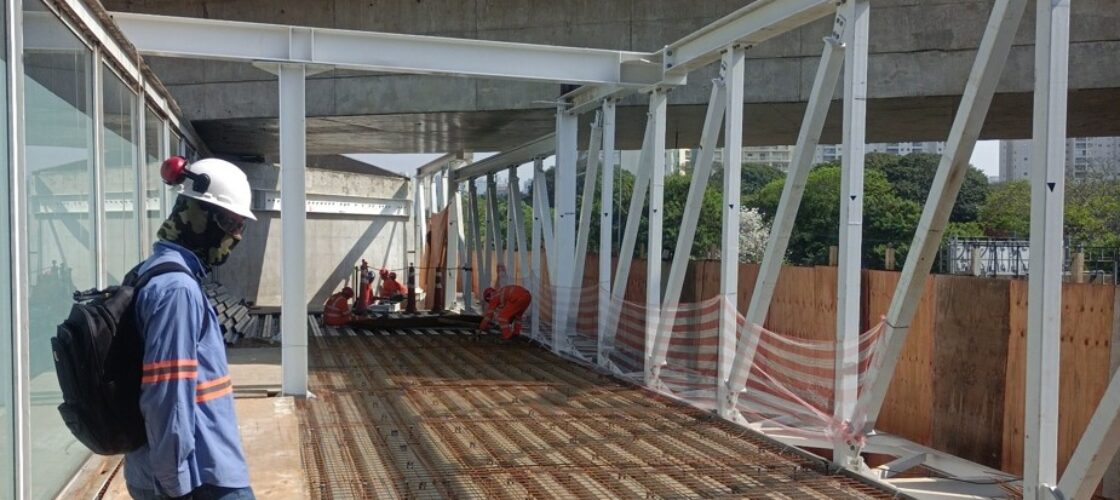
From this stage onwards, based on the mapping carried out, a sensitive technical inspection begins. This technique involves visually and tactilely observing deformations, bends, buckling, discontinuities, cracks, corrosion, missing fasteners, misalignments, vibrations, and other signs of failure. Figure 3 shows an inspection carried out by the Kot team on a walkway.
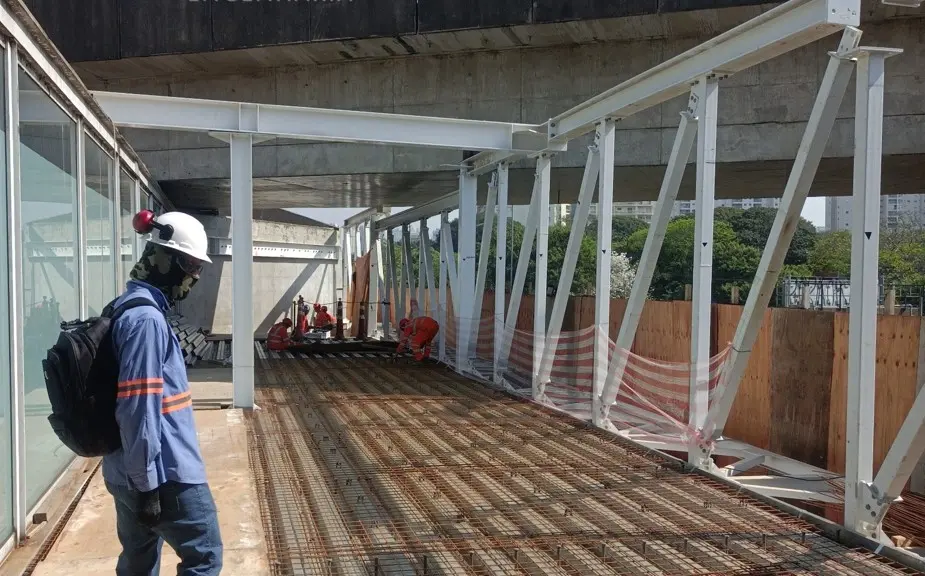
Figure 3: Visual inspection on a walkway. Source: Kot Collection.
In this sense, it is important to raise an issue that science is aware of and that highlights the importance of having a company like Kot to carry out the necessary inspections. However, in practice, professionals who are overly familiar with their work environment tend to lose sight of non-conformities, which can compromise the effectiveness of inspections. This natural distraction can be caused by several factors, such as the following behaviors:
- Blindness through familiarity (Familiarity Blindness or Inattentional Blindness):
- The human mind often fails to notice anomalies in familiar environments because of its cognitive and/or visual accommodation;
- Normalization bias (Normalization of Deviance):
- Structural deviations begin to be accepted as "normal" during everyday life because they do not cause immediate catastrophic failures, leveraging risk tolerance among employees directly involved.
In addition, another point to be considered by the client when choosing Kot is its expertise in various industries and multidisciplinary technical staff in the areas of mechanical, civil, electrical, electronic, and materials engineering, who work together with qualified inspectors to execute and prepare technical opinions and reports. In addition to all the historical data and know-how in structural calculations, monitoring, inspections, and accident investigation built up over the last few decades.
4.3 Issuance of technical notes and monitoring of actions
From there, the identified faults generate technical recommendations that must be carried out by the maintenance team. For this reason, at this point, the involvement and monitoring of specialized engineering is essential. It is the best decision to ensure that repairs comply with the customer's internal procedures, standards, and applicable regulations.
In addition, independent technical monitoring during services can prevent common errors, such as poorly executed welding that can cause new cracks or accelerate corrosion processes, assembly mistakes, failure to follow procedures, improper tightening of bolted joints, among other compliance deviations. Therefore, it is always essential to ensure that the required actions are aligned with good engineering practices and standards.
Unfortunately, poorly designed corrective actions can have a detrimental effect and shorten the asset's useful life. In this sense, poorly structured Structural Integrity programs Structural Integrity fail to provide technical support during the implementation of the required actions.
4.4 Routine inspections and continuous reassessment
Finally, Structural Integrity management Structural Integrity a continuous process of collecting data and information for important decision-making by the organization. By analogy, in our personal lives, it is common to have medical check-ups at regular intervals. As in medicine, periodic and routine Structural Integrity are necessary in Structural Integrity to ensure that assets maintain their ability to operate safely over time.
However, unfortunately, if routine inspections and ongoing integrity assessments are not carried out, all the excellent work that has been competently performed in the previous stages may be lost. In addition, corrosion due to weathering, for example, often requires this established routine.
5. Methods beyond sensitivity analysis
In these situations, if the sensory inspection detects pathologies that require a more detailed understanding, more advanced techniques can be used to assess integrity. Naturally, it is logical that the selection and application of the best technique will depend on the type of structure or equipment, the materials involved, the environmental conditions, and the severity of the problems identified. In this scenario, Kot Engenharia several techniques, including:
5.1 Vibration analysis
Vibration analysis is essential for identifying imbalances in components such as drums, pulleys, bearings, and shafts, as well as checking machine balance, excessive vibrations, human comfort issues, resonances, and other issues. For this test, special sensors or cameras can be used to detect vibration levels above the tolerable range, which may indicate possible failures. Figure 4 shows data collection conducted by Kot, using vibration analysis through images.
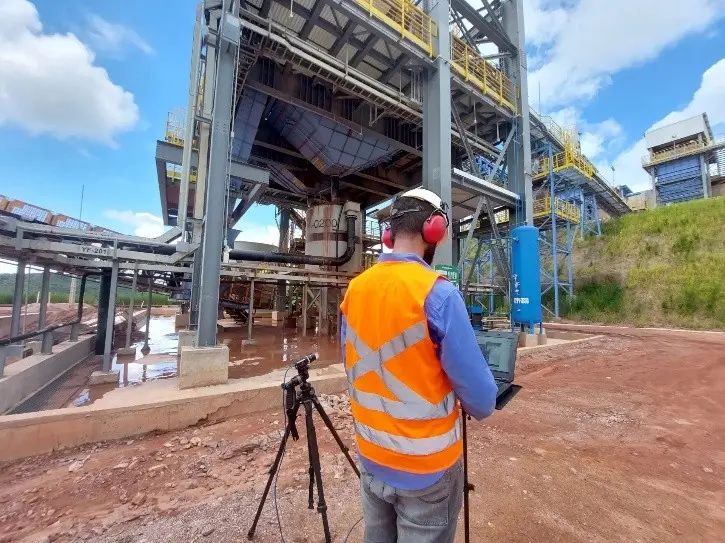
Figure 4: Vibration data collection by image. Source: Kot Collection.
5.2 Non-destructive testing (NDT) for metals and concrete
The tools that can be used for metal structures include methods such as ultrasound, penetrating liquid, magnetic particles, and drones. They are essential for inspecting welds, metal sheets, and structural components.
For concrete, tests such as pacometry, ultrasound, tomography, and GPR (Ground Penetrating Radar) allow for the detection of reinforcement, voids, cracks, and other non-conformities in civil structures. For the inspection of piers and bridges over rivers, for example, Kot uses a remotely operated underwater vehicle ( ROV). Figure 5 shows a non-destructive test on concrete performed by the Kot Engenharia team. Figure 6 shows some of the ROVs used by Kot to serve its customers.
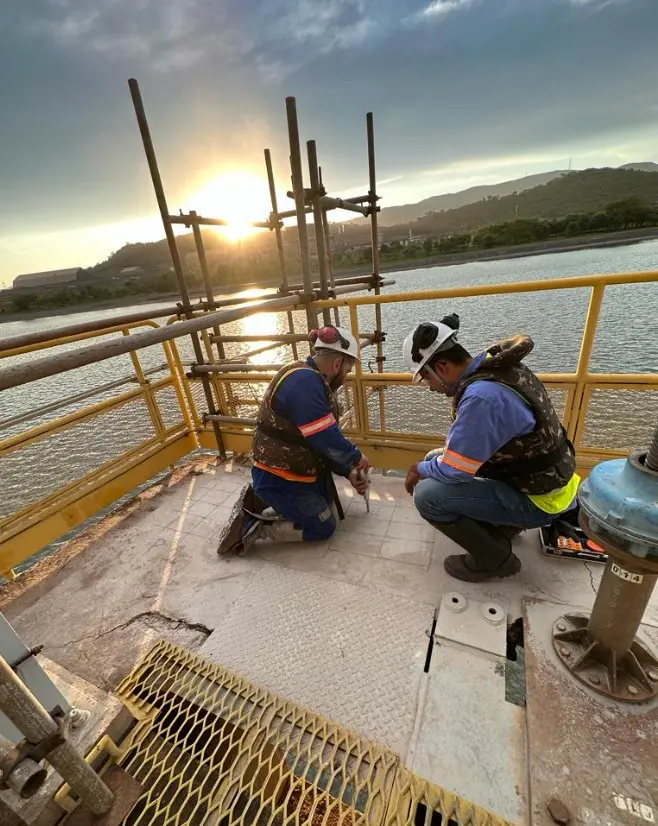
Figure 5: Non-destructive testing on concrete. Source: Kot Collection.
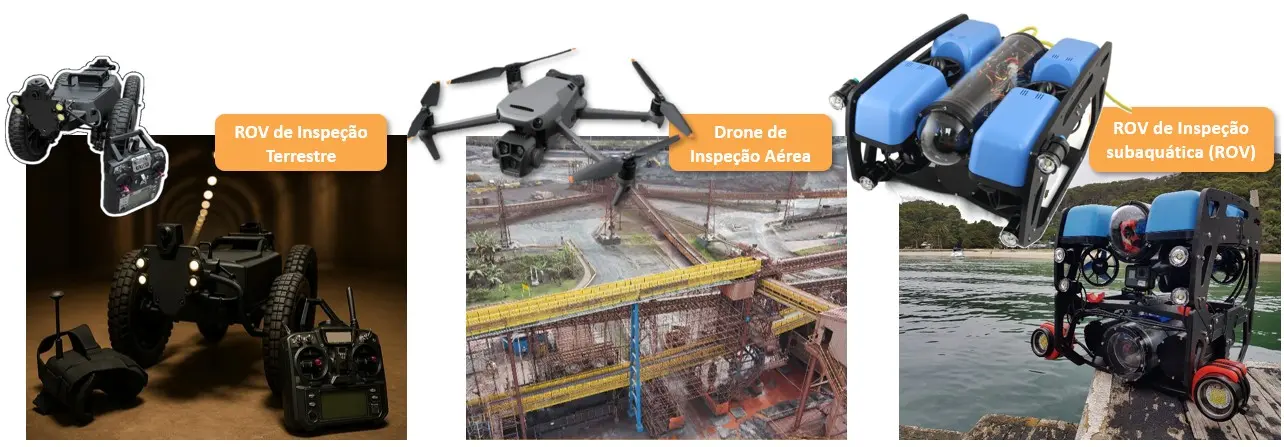
Figure 6: Remotely operated vehicles. Source: Kot Collection.
5.3 Risk-Based Inspection (RBI)
This methodology uses a cause x probability matrix as an example to ensure the Structural Integrity asset, categorizing regions with a higher probability of failure and greater severity (operational, economic, human, and environmental impact). In this way, those involved in the study can prioritize the actions required to resolve structural non-conformities according to their severity.
At the end of the day, urgent actions on critical assets will be directed for immediate treatment, and less urgent actions on less critical assets can be scheduled for the best time.
6. How Kot Engenharia help?
With an international presence in more than 15 countries and over 30 years of experience in the Structural Integrity solutions market, Kot Engenharia technical expertise with tools such as: finite element analysis (FEA), field inspections, instrumented asset monitoring, and assembly supervision. It is the marriage of theory and practice. It is the combination of the office and the field.
Are you interested in implementing a sustainable integrity program in your company? Contact our team through our communication channels.
Our employees are at your disposal to turn your challenges into solutions and boost your results, as we have been doing since 1993. It will be our pleasure to serve you!
Follow our pages on LinkedIn, Facebook and Instagram and continue to follow our content.
FAQ
1. What are the most common operational issues that require a Structural Integrity program?
Organizations typically turn to the program when they face recurring cracks, severe corrosion, excessive vibrations, and frequent corrective shutdowns that result in production losses and maintenance budget overruns. It is also common for organizations to need to extend the service life of older assets to avoid large CAPEX investments (total replacement) or to avoid fines and non-compliance issues during government audits and inspections.
2. What are “blindness due to familiarity” and “normalization bias” in maintenance?
These are cognitive phenomena that occur among professionals who are overly accustomed to their work environment:
-
Blindness due to familiarity: The human mind fails to notice visual anomalies in familiar places due to visual accommodation.
-
Normalization bias: Serious structural defects (such as small cracks or corrosion) come to be accepted as “normal” in day-to-day operations because they did not cause an immediate collapse, thereby dangerously raising risk tolerance. For this reason, relying on an independent technical inspection is vital.
3. How does the process of registering assets and assigning them a criticality level work?
This is the first step in the program, in which the location, materials, and construction methods of all structures on the plant site are mapped. The prioritization process determines which assets are prioritized based on the impact that a potential failure would have on the production process. For example, a single-line conveyor belt that feeds the main outflow at a port will be given the highest priority over structures that have operational redundancies.
4. Why is independent technical oversight of repairs crucial to the program’s workflow?
Simply identifying the fault is not enough; the recommendations set forth in the technical notes must be implemented in accordance with strict engineering standards. Independent technical oversight prevents serious errors in field maintenance, such as poorly executed welds (which cause new cracks or accelerate corrosion), improper bolt tightening, and the use of incorrect materials, thereby preventing improvised corrective actions from further reducing the asset’s service life.
5. What advanced non-destructive testing (NDT) methods can complement sensitive inspection?
When visual inspection detects complex defects, advanced technologies are used. For metal structures, ultrasonic testing, magnetic particle testing, penetrant testing, and drone inspections are employed. For concrete structures, pacometry, tomography, and GPR (Ground Penetrating Radar) are used. In addition, remotely operated vehicles (ROVs) are used for underwater inspections of bridges and port piers.
6. What is the Risk-Based Inspection (RBI) methodology?
Risk-Based Inspection (RBI) is a methodology that cross-references an asset’s probability of failure with the severity of its impact (whether operational, economic, human, or environmental) using a technical matrix. With this mapping, managers can plan interventions intelligently: urgent actions on critical assets are addressed immediately, while minor deviations in secondary assets are scheduled for when the plant’s financial situation is most favorable.