A análise dinâmica não linear é uma metodologia avançada de simulação computacional indispensável para avaliar estruturas e equipamentos submetidos a condições extremas, como impactos rápidos, grandes deformações e plastificação dos materiais. Enquanto a análise estática linear considera apenas deformações elásticas e cargas graduais, a simulação não linear contabiliza acelerações, respostas dinâmicas e a capacidade de absorção de energia no regime plástico. Essa abordagem é crucial para o dimensionamento de grelhas de britagem, estruturas de proteção contra acidentes e para a reconstituição de falhas estruturais.
Introduction
Currently, most structures and equipment in the basic industry are designed to operate throughout their service life within the limits of small elastic deformations. In this sense, deformed structures return to their original state once the load is removed. This type of deformation occurs in most buildings, tanks, transmission towers, bridges, conveyor belts, silos, and other types of machinery and equipment. For this reason, most numerical simulations performed for the design or analysis of these structures, is a so-called linear simulation.
Furthermore, in most of these structures, loads are assumed to be applied gradually and remain constant throughout the analysis period. Given these considerations, the analysis does not account for dynamic effects, such as structural accelerations or load impulses. Although small dynamic effects are present in the actual loads acting on the structure, these are typically represented by equivalent static loads.
Therefore, the most common type of structural analysis performed is static analysis. In other words, mathematically speaking, this means that only the stiffness matrix is solved in the system; that is, every force generates only deformation, not acceleration of the structure. This type of analysis is so common that some authors even refer to structural analysis simply as static analysis.
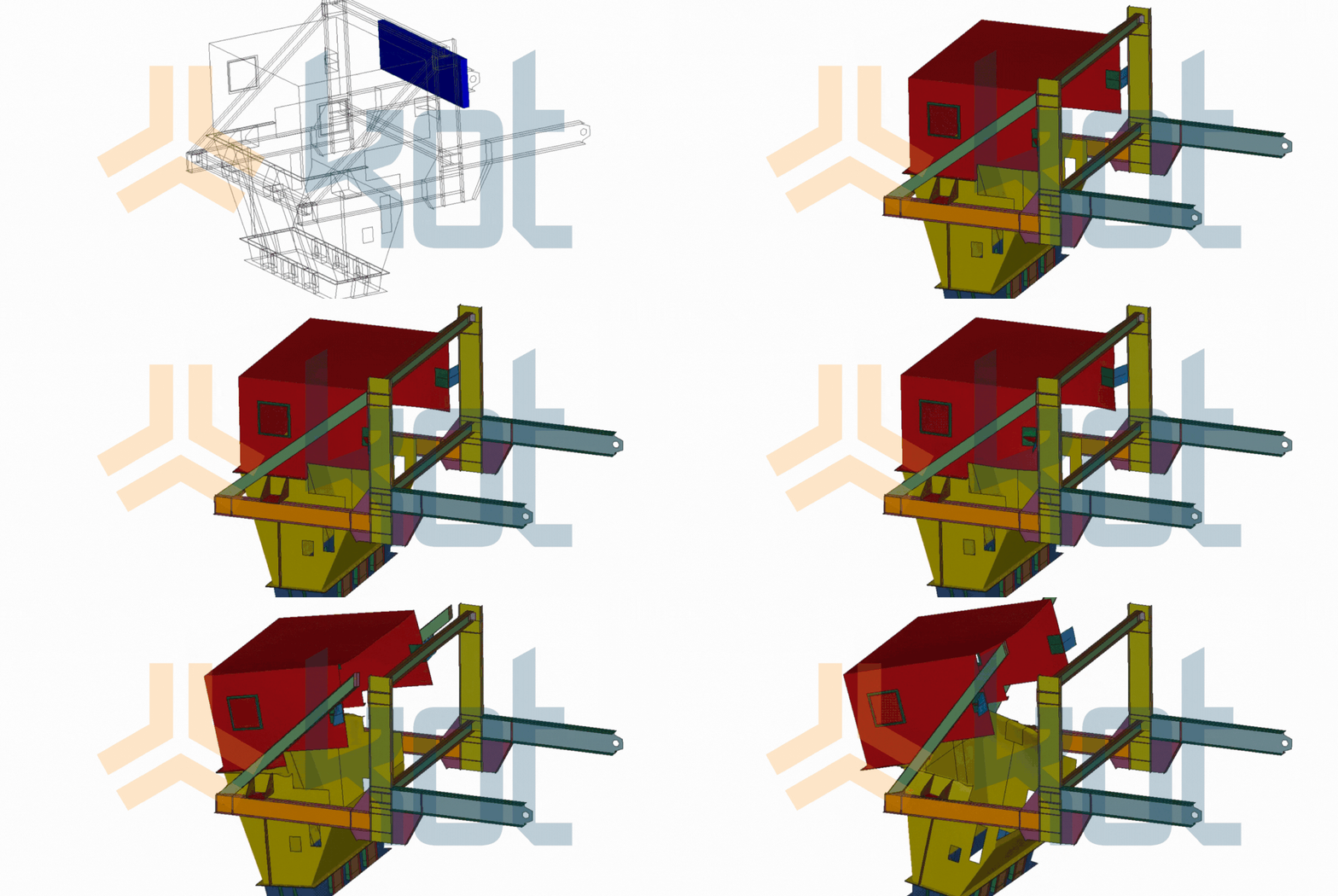
There are, however, many applications in which the assumptions of static and/or linear analysis do not apply. In this regard, assessments involving impacts, for example—whether operational or accidental—deviate significantly from these principles. These studies involve loads that vary rapidly (usually in fractions of a second), generating significant accelerations in the structure (Figure 1). These accelerations generally cause permanent deformations, which no longer correspond to the elastic regime.
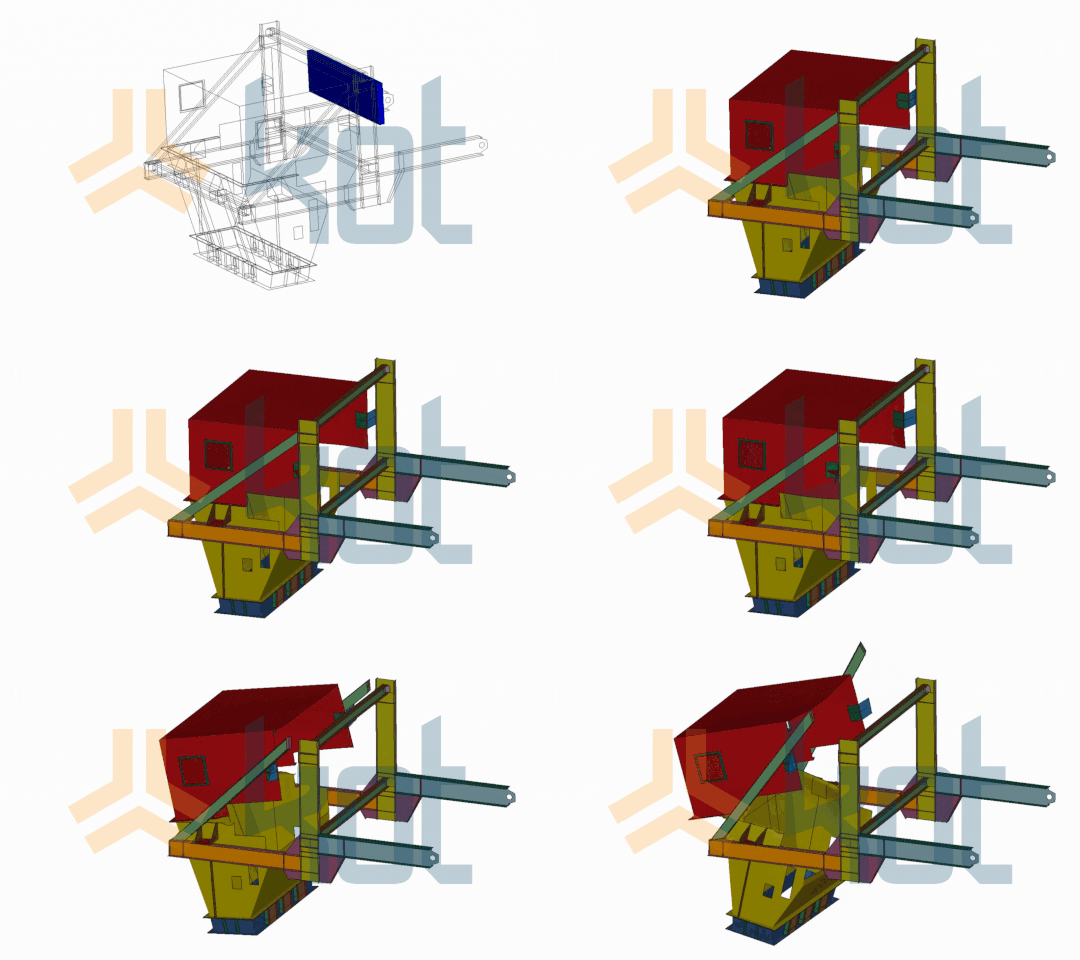
Figure 1: Non-linear analysis of kick structural failure. SOURCE: Kot Collection.
Therefore, to evaluate this type of situation, a more complex and computationally intensive type of analysis is required: nonlinear dynamic analysis. This type of analysis generally involves an explicit numerical integration in which, at every instant in time, the applied forces and their effects on the structure’s deformation, velocity, and acceleration are calculated.
In addition, Kot has a team specializing in nonlinear dynamic analysis that has been helping its clients for over a decade to obtain reliable solutions for cases involving non-standard structures and loads, where nonlinear dynamics is the most appropriate—or even the only—method for proper structural evaluation. Below are some examples of applications of nonlinear dynamic analysis.
Operational impacts
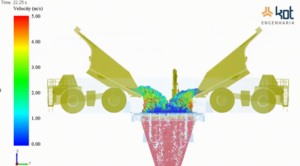
In ore crushing operations, for example, grates are subjected to the discharge of granular material (Figure 2). In this case, moreover, the grate structure must withstand not only the flow of fine material but also impacts from larger particles, often weighing tons. Thus, when discharged, this material can reach speeds of up to 40 km/h just before colliding with the structure.
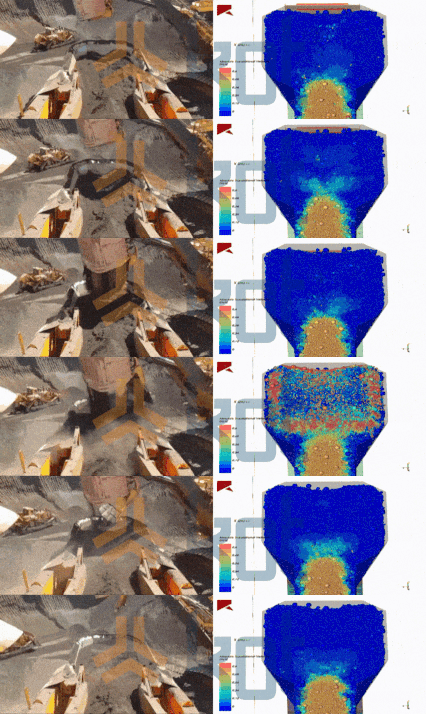
Figure 2: Unloading material into a feeder. SOURCE: Kot collection.
In this regard, the magnitude of the force acting on the structure during such impacts depends on variables such as the impact location and the size of the affected area, the duration of the impact, the acceleration, and the level of permanent deformation of the structure. Defining these variables analytically, or through linear static analyses, can in many cases lead to the structure being undersized. As a result, unexpected deformations, cracks, and fractures may occur throughout the component’s service life, or operational limitations may be necessary to adapt operations to the existing structural capacity.
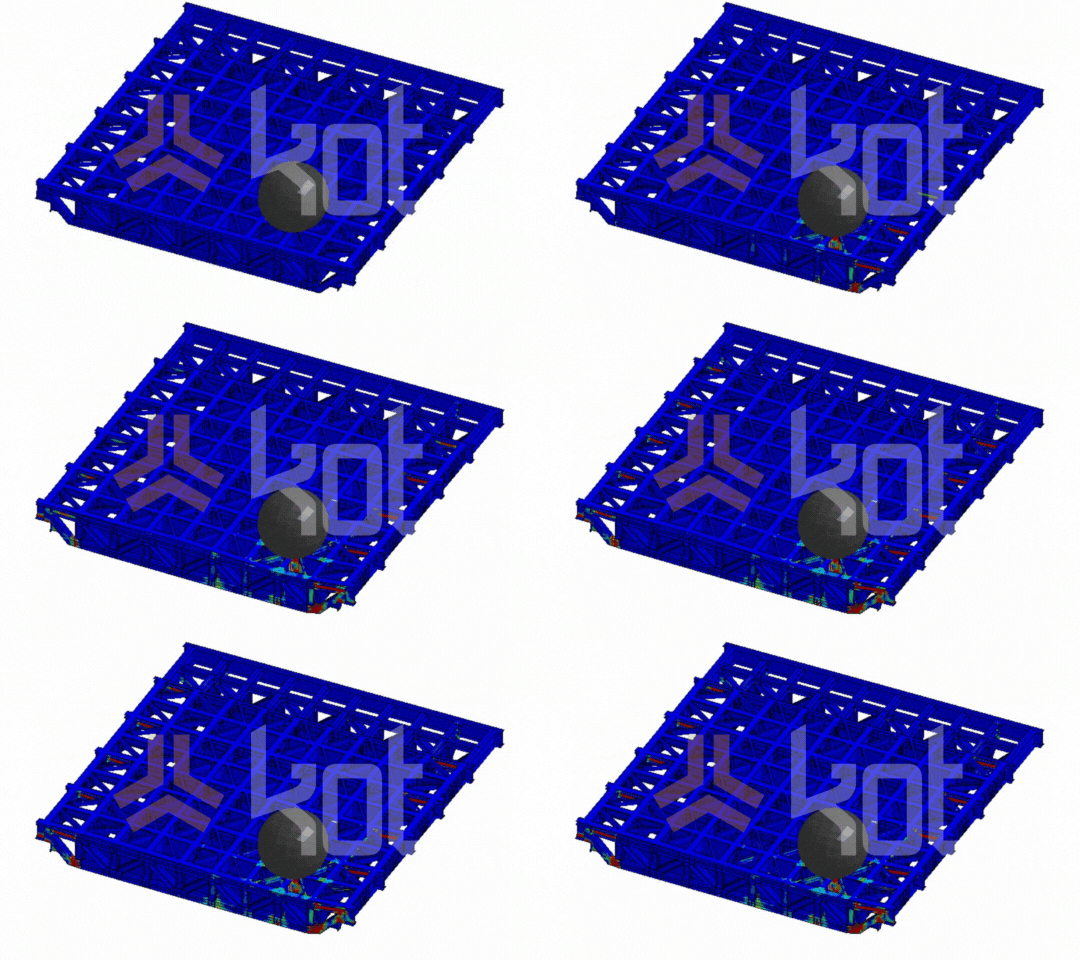
Figure 3: Non-linear analysis of an ore crushing grid. SOURCE: Kot Collection.
Kot has already conducted analyses of various structures of this type, in which nonlinear dynamic simulation was used to accurately determine the forces acting on each component of the grid for each operational requirement. Thus, this type of simulation allows for the specific design of the grid for each application, rather than relying on a standard—and often inadequate—design.-successful approach of reusing projects that have already been applied in other scenarios.
In some cases, in addition to structural precautions regarding impact, there is also concern about the movement of the structure. For example, one such case involved the nonlinear analysis of the movable cover structure of a foundry ladle (Figure 4). In this situation, there was a possibility of impacts that could not only damage the equipment but also cause movement that would dislodge the cover from its support on the ladle, making it unstable and potentially causing it to tip over during operation or hoisting.
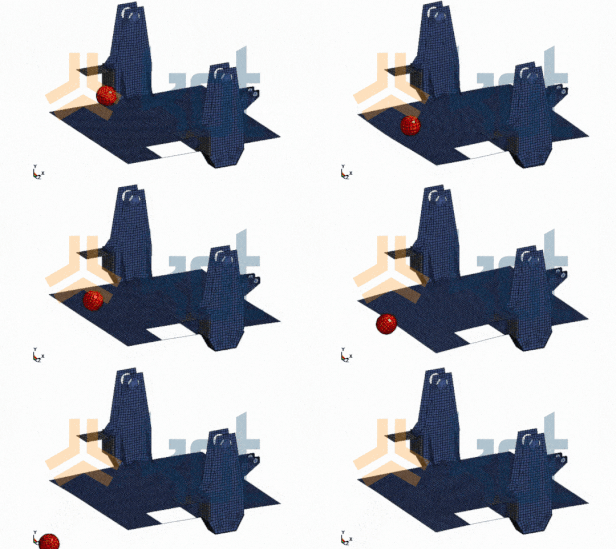
Figure 4: Non-linear impact analysis on a mobile casting pan cover. SOURCE: Kot Collection.
Protective structures
In general, there are structures where a potential impact is not part of the equipment’s normal operating procedure, but rather occurs as a result of structural failures or accidents. In such cases, therefore, it is necessary to ensure that the impacted structures are capable of withstanding the forces involved and containing any fragments. This prevents projected fragments from striking other components or even people. In these situations, the forces involved are generally quite significant, and the protective structures do not need to withstand multiple impacts, being replaced after each one.
In this way, sizing by linear analysis is either unfeasible or excessively conservative, since it does not take into account the portion of energy absorbed in the plastic regime. On the other hand, with non-linear dynamic analysis, the forces involved and the structural response of the protection can be determined precisely, allowing safe and specific sizing for each situation. Kot has experience in developing protections to contain mechanical component failures. Some of the work carried out by the company consists of protections for hydrodynamic coupling explosions, pulley ruptures and protection of vehicle occupants, such as checking the resistance of windows and windshields to impacts.
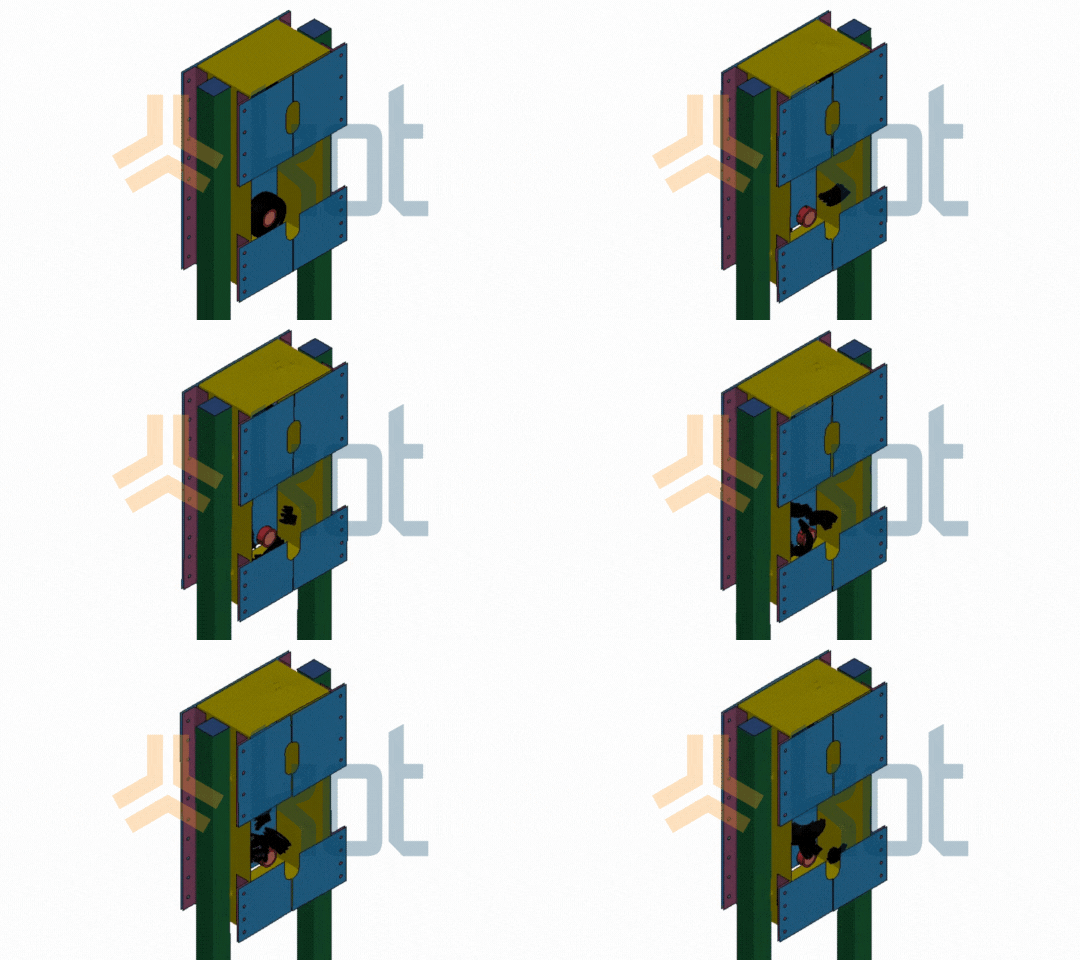
Figure 5: Non-linear analysis of pulley protection. SOURCE: Kot Collection.
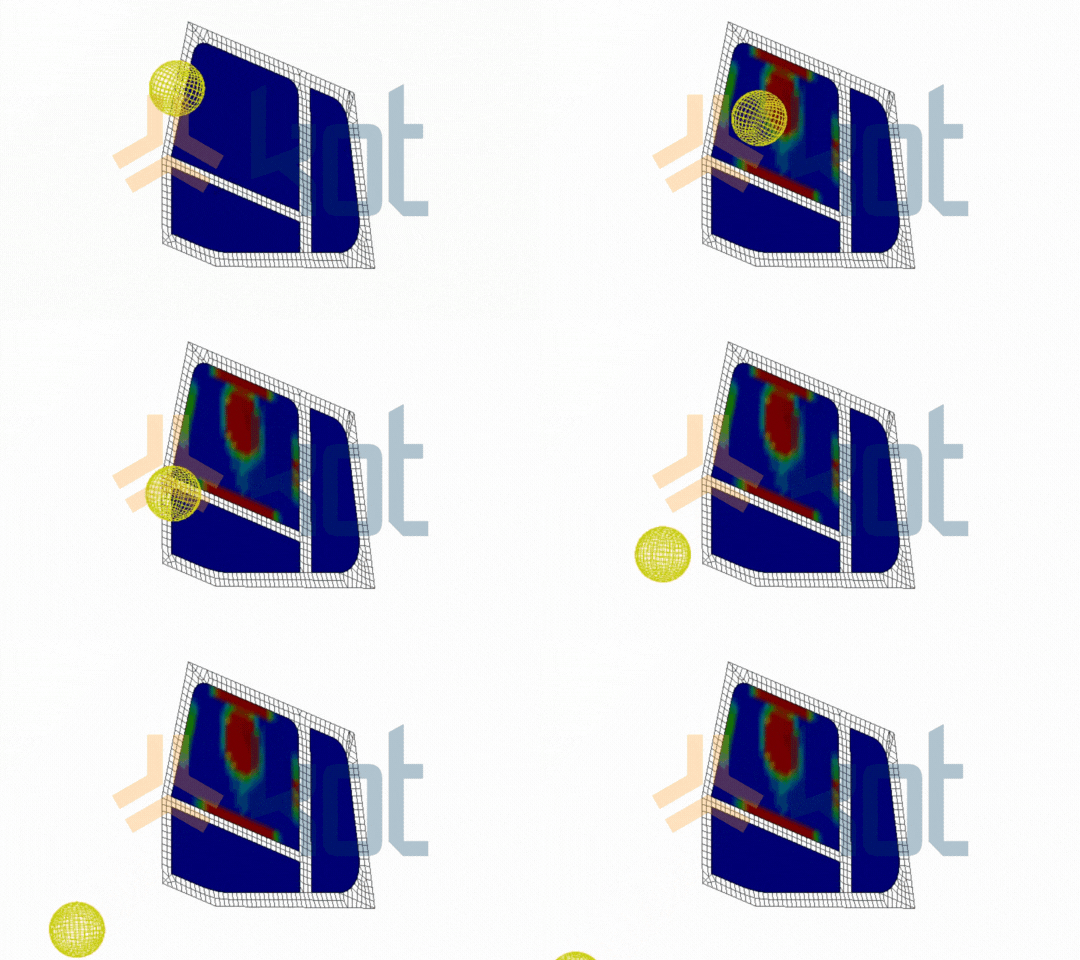
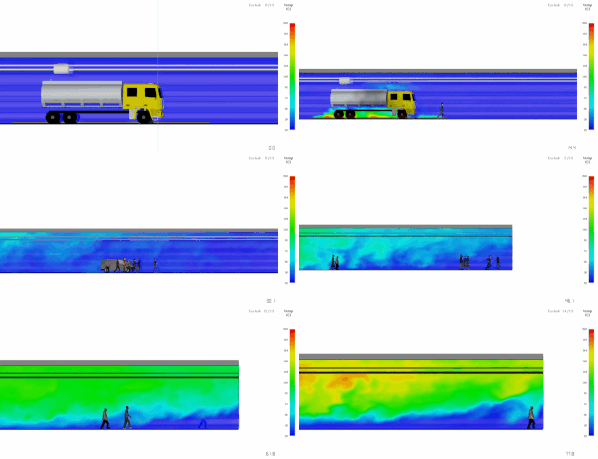
Figure 6: Non-linear analysis of window impact resistance. SOURCE: Kot Collection.
In addition, because explicit simulations allow for multiphysical analysis, the impact of fluids on structures can also be simulated. For example, in recent projects, it was necessary to develop reinforcements for a receiving chute of an ore feeder. This study was conducted to prevent collapse or excessive leakage in the event of internal avalanches in the silo during the feeding process, in which a large mass of material descends uncontrollably, posing serious risks to operations in the event of accidents.
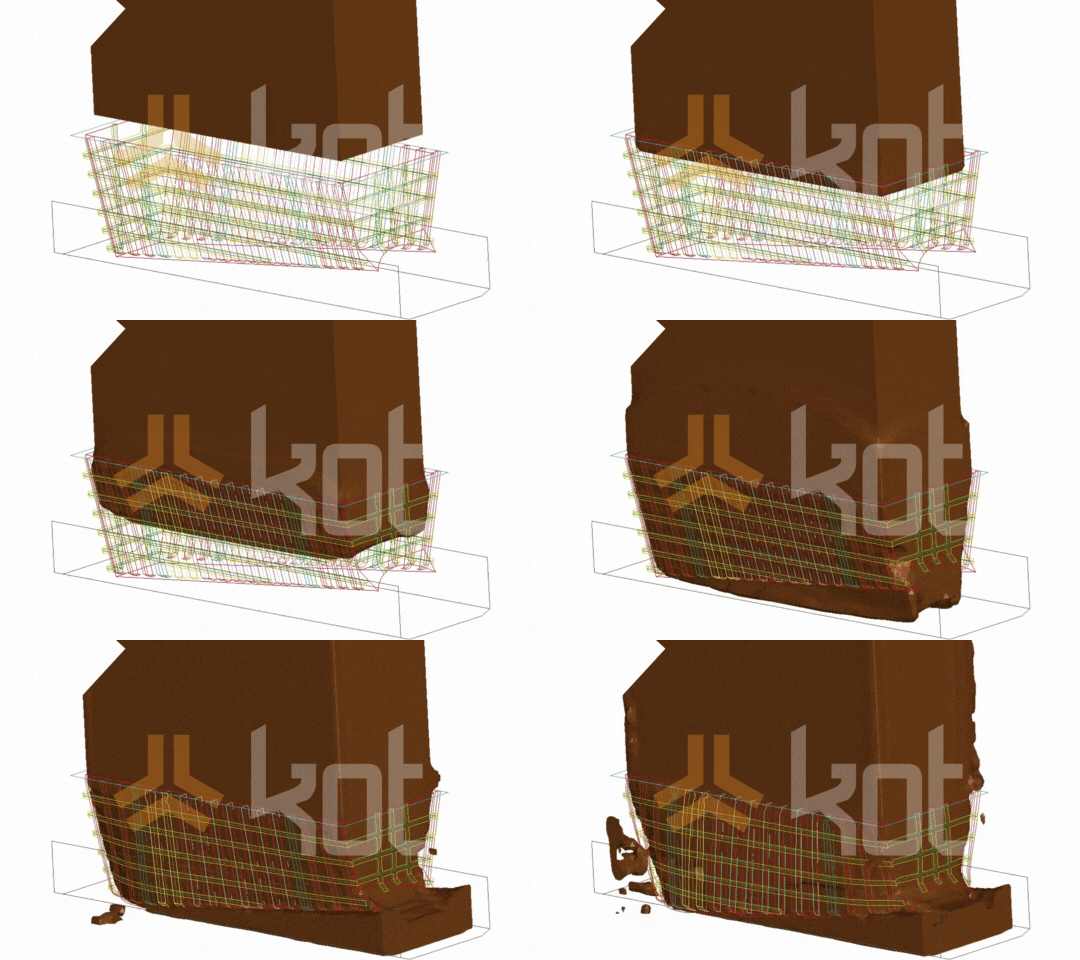
Figure 7: Non-linear analysis of silo unloading. SOURCE: Kot Collection.
Failure analysis and accident reconstruction
In cases of accidents or structural failures, one of the primary requirements is to gain a thorough understanding of the causes and failure mechanisms involved, in order to prevent similar situations from occurring in the future. To this end, it is often necessary to reconstruct the failure modes that occurred, both to understand the sequence of events and to validate failure hypotheses and determine the loads involved for the design of solutions. In such cases, nonlinearity is a fundamental part of the analysis, since in many instances, structures—especially steel structures—exhibit significant nonlinear behavior immediately prior to failure.
Kot has already been involved in several failure analyses and accident investigations in which linear dynamic simulation has been fundamental for reconstructing what happened, validating hypotheses and defining preventive actions to prevent further occurrences. Even for assessing the severity of possible damage to humans, non-linear dynamic analysis plays a fundamental role in determining the speeds, accelerations and forces involved, which, when associated with biomechanical analysis, allow for a classification of the severity of the impact and its possible consequences.
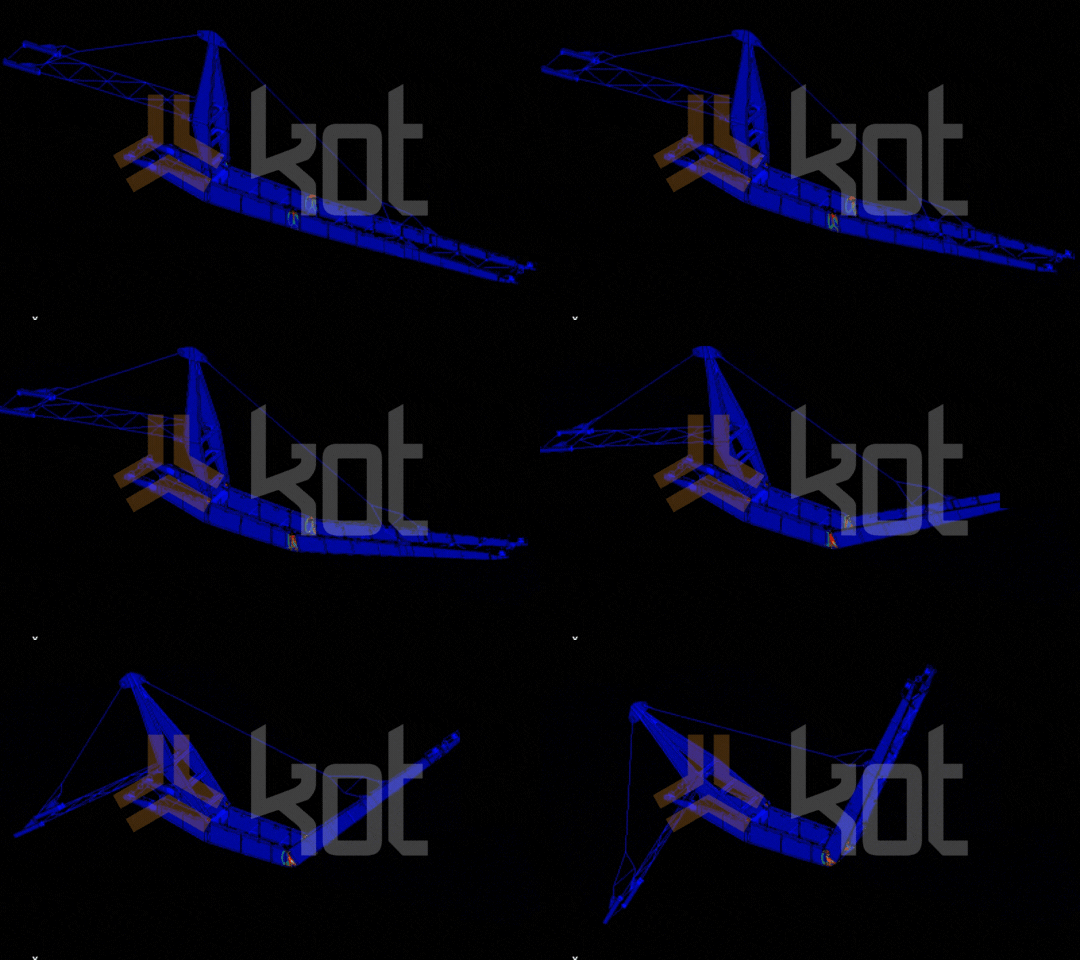
Figure 8: Non-linear failure analysis of a reclaimer: SOURCE: Kot Collection.
Conclusion
In short, it can be said that non-linear dynamic analysis is an advanced computer simulation approach used in engineering to study the behavior of complex systems under the influence of forces and loads that vary over time. In this type of analysis, large deformations, plasticity effects and other non-linear behaviors of structures are taken into account in order to obtain accurate results in situations that static and linear analyses are unable to adequately solve. Non-linear dynamic analysis is particularly useful when dealing with impact/collision problems, structural failures and accidents, fluid-structure interactions, structural checks of mechanical components and any other physical systems in which the responses cannot be adequately represented by linear relationships.
Kot specializes in non-linear dynamic analysis and can help you with reliable, customized solutions, promoting the safety and performance of equipment and structures. Do you need to carry out non-linear analysis on your company's assets? Contact our experts for more information!
Follow our pages on LinkedIn, Facebook e Instagram to keep up with our content.
FAQ
1. Qual é a diferença fundamental entre a análise estática linear e a análise dinâmica não linear?
| Características | Análise Estática Linear | Análise Dinâmica Não Linear |
| Comportamento do Material | Regime elástico (a estrutura retorna ao formato original após a remoção da carga). | Regime plástico e grandes deformações (ocorre deformação permanente ou plastificação). |
| Aplicação da Carga | Gradual e constante ao longo do tempo. | Variável e rápida (frações de segundo, como choques e explosões). |
| Efeitos Dinâmicos | Desprezíveis (considera apenas a matriz de rigidez do sistema). | Cruciais (computa forças, acelerações, velocidades e inércias instantâneas via integração explícita). |
| Aplicação Típica | Prédios, pontes, tanques e silos sob operação normal. | Impactos de grandes blocos, colisões, explosões e análise de colapsos. |
2. Por que a análise linear falha ao dimensionar estruturas sujeitas a impactos operacionais (como grelhas de britagem)?
Em instalações de britagem, grelhas recebem blocos de minério de várias toneladas caindo a velocidades de até 40 km/h. Tentar simplificar esse impacto por meio de uma carga estática equivalente na análise linear traz sérios riscos:
-
Subdimensionamento: Ignorar a velocidade, o tempo de contato e a resposta dinâmica do material pode resultar em trincas, fraturas e deformações imprevistas no componente durante a operação;
-
Superdimensionamento ineficiente: Projetar a estrutura para suportar a energia de impacto inteiramente dentro do regime elástico gera componentes excessivamente pesados, caros e inviáveis do ponto de vista operacional.
3. Como a análise não linear viabiliza o projeto de estruturas de proteção e contenção de acidentes?
Estruturas de proteção — como blindagens contra a explosão de acoplamentos hidrodinâmicos, ruptura de polias ou calhas sujeitas a “avalanches” em silos — têm como objetivo conter fragmentos e proteger operadores em eventos acidentais.
Essas proteções não precisam permanecer intactas sem deformação; elas são projetadas para absorver a energia cinética do impacto por meio da deformação plástica (deformação permanente do aço). A simulação dinâmica não linear calcula com exatidão a quantidade de energia absorvida e o limite de ruptura do material, permitindo projetar proteções leves, viáveis financeiramente e altamente eficientes.
4. De que maneira a simulação dinâmica não linear auxilia na reconstituição de acidentes e análises de falha?
Quando ocorre a falha catastrófica ou o colapso de um equipamento industrial (como o tombamento de uma recuperadora ou a queda de uma ponte rolante), a estrutura metálica passa por um extenso comportamento não linear antes da ruptura. A simulação não linear permite:
-
Reconstituir a sequência exata dos eventos mecânicos que levaram à falha;
-
Validar ou descartar hipóteses sobre causas de sobrecarga e defeitos do material;
-
Estimar, via análises biomecânicas associadas, a severidade de desacelerações e forças transmitidas a operadores, auxiliando no desenvolvimento de medidas preventivas para evitar novas ocorrências.