
The durability, safety, and performance of concrete structures depend directly on knowledge about the behavior of the material throughout its service life. In this context, concrete testing plays a fundamental role in assessing quality, identifying anomalies, and supporting technical decision-making, both during the construction phase and during the operation of structures. Throughout this article, we present the main testing methodologies applicable to concrete, their operating principles, and their practical applications in engineering. Continue reading to learn more about this topic.
INTRODUCTION
Firstly, concrete is the name given to the material resulting from the appropriate mixture, known as a mix, of cement, water, coarse aggregate (gravel), and fine aggregate (sand). The composition of this material with steel bars produces reinforced concrete.
When in its plastic or fresh state, concrete can be molded into the desired shapes and sizes. On the other hand, when hardened at the end of the cementitious material's hydration process, usually called curing, it has a high compressive strength of between 20 MPa and 90 MPa.
For this reason, reinforced concrete is currently the most widely used structural material around the world.
PATHOLOGIES IN BUILDINGS
In general, throughout the useful life of a building, deviations in design, construction, use, and maintenance, in addition to the natural aging process of the material, result in deterioration and the consequent manifestation of defects, such as:
-
- Cracks;
-
- Reinforcement corrosion;
-
- Loss of performance, i.e. the loss of characteristics and functionalities expected of the structure or material during its useful life.
Therefore, understanding the mechanisms of manifestation and causes of anomalies is essential for the maintenance and safe operation of any structure.
In this sense, the holistic approach of understanding the material, the design, the construction, the use and the necessary maintenance and recovery processes of structures is commonly referred to as "Building Pathology".
TESTS ON CONCRETE STRUCTURES
Also during the construction of concrete structures, quality control tests are carried out on the material, such as theSlump Test and the breaking test on specimens sampled from the batches of concrete used.
These tests are used to assess the conformity of concrete in relation to design and construction parameters.
Although useful, these tests are representative of a limited period in the useful life of the concrete structure and have some obstacles such as:
-
- Project documentation unavailable for evaluation;
-
- Manifestation of structural anomalies after a long period in service;
-
- When there are doubts about the quality of the concrete or the geometry of specific parts (e.g. beams, columns, slabs, etc.), and/or their reinforcement;
-
- When it is necessary to obtain details of possible anomalies presented during the operation of the asset.
Therefore, inspection, structural analysis, and testing (destructive or non-destructive) are of great importance in order to obtain an adequate assessment of the existing problem. It should be noted that only with this diagnosis is it possible to define the need for and method of appropriate correction.
In conclusion, diagnostics optimize asset life, increase reliability levels, reduce the need for excessive corrective maintenance processes, among other advantages. In addition to visual inspectionand auditing of , Kot also performs tests on metal and concrete structures. The purpose of this text is to address some of the methodologies used by the company on concrete structures.
CONCRETE ULTRASOUND
The working principle of ultrasound testing in concrete, better known as ultrasound for concrete, is to measure the propagation time of an ultrasonic wave along a piece of concrete.
The propagation time is dependent on the density and modulus of elasticity of the concrete, and changes as a function of:
-
- Densification conditions during construction;
-
- Concrete mix, curing conditions;
-
- Anomalies along the concrete piece.
In order to measure the speed of propagation, you need equipment made up of electroacoustic transducers (transmitter and receiver) and a computer to acquire, process and interpret the signals captured.
In addition, it is necessary to know the precise propagation distance in order to calculate the propagation speed. Figure 1 illustrates this process.
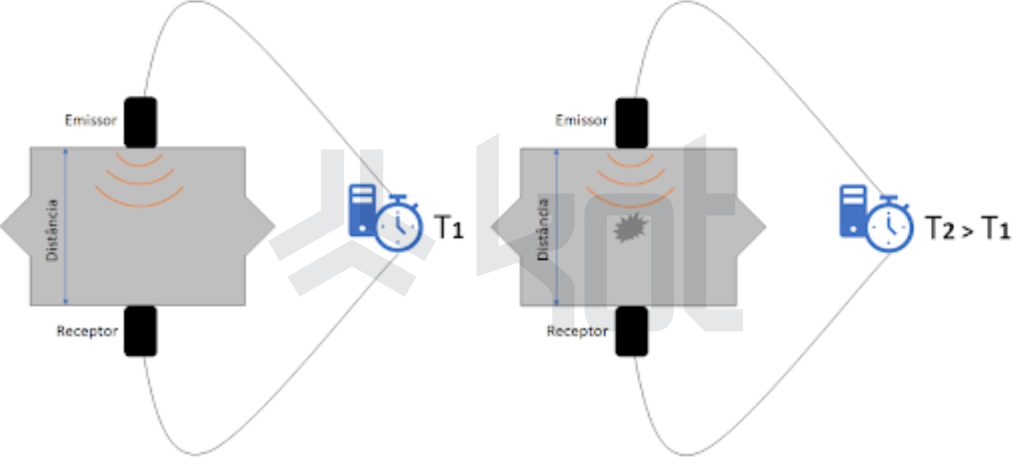
Figure 1: Illustration of the ultrasound process. Source: Modified from ACI 228.2R-13.
Therefore, with this in mind, concrete ultrasound can be applied to:
-
- Determining the homogeneity of concrete in structures;
-
- Define areas where more detailed research is recommended;
-
- Monitor the evolution of concrete properties over the structure's service life;
-
- Determine the modulus of elasticity of concrete in service.
Figure 2 shows an example of an ultrasound result on concrete.
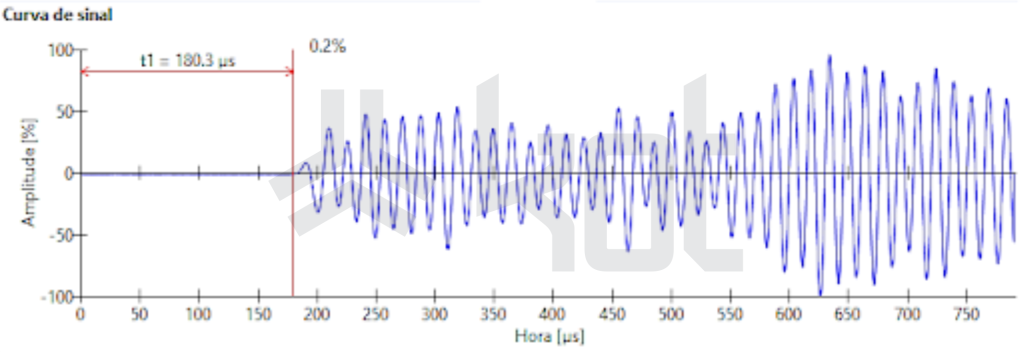
Figure 2: Example of ultrasound results on concrete. Source: Kot Engenharia.
In the event of discontinuity in the part, ultrasound can be useful for defining the occurrence and investigating the depth of propagation of cracks or voids. This process is illustrated in Figure 3.
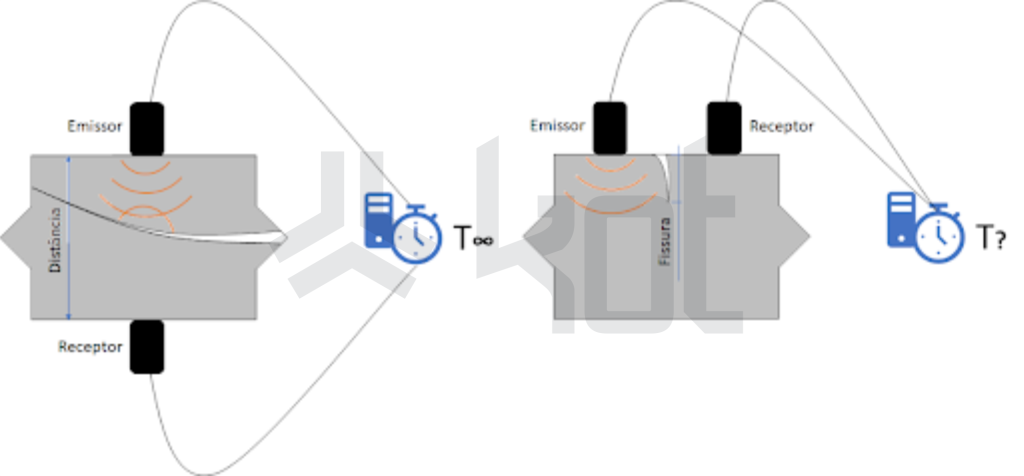
Figure 3: Illustration of ultrasound investigation of discontinuities in concrete. Source: Modified from ACI 228.2R-13.
Another very useful application is the use of ultrasound to estimate the compressive strength of concrete, a procedure that can be complemented by sclerometry tests and the extraction of cores.
This approach is particularly interesting for the commissioning and investigation of large and/or highly responsible structures, such as:
-
- Bridges, viaducts and other Special Works of Art such as:
-
- Tunnels, railroads and highways;
-
- Buildings to support equipment (crushers, silos, mills, etc.) and other processes.
-
- Bridges, viaducts and other Special Works of Art such as:
This test is standardized by Brazilian and international standards. Even so, it is essential to understand the structural behavior and interpretation of the data obtained.
ULTRASONIC TOMOGRAPHY OF CONCRETE
Over the last 30 years, ultrasonic tomography of concrete, or concrete tomography, has become widespread as a tool for non-destructive investigation of concrete structural parts.
According to White, the technology has historically been used to define the thickness of concrete pieces, modulus of elasticity, executive compliance and anomaly detection.
In general, the method is based on the emission and reception of ultrasonic waves through a transducer array. Along the propagation path in a non-homogeneous medium (such as concrete), refractions and reflections are obtained that can be triangulated and also evaluated in terms of their level of "resistance" to wave propagation.
With this data, software is used to build two-dimensional images of the tested section. Figure 4 shows an example of this process.
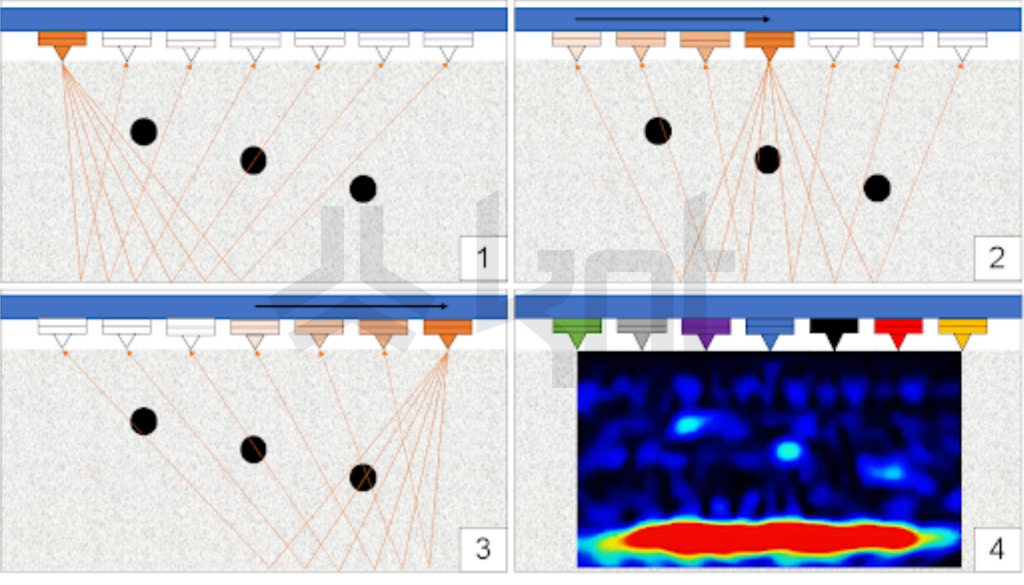
Figure 4: Illustration of the tomographic construction process. Source: Adapted from Proceq.
In this configuration, images closer to reddish tones indicate regions of greater heterogeneity, such as
-
- Detachments;
-
- Emptiness;
-
- Reinforcement bars.
In contrast, bluer tones indicate areas of low reflection, i.e., with greater homogeneity. Figure 5 illustrates a test result.
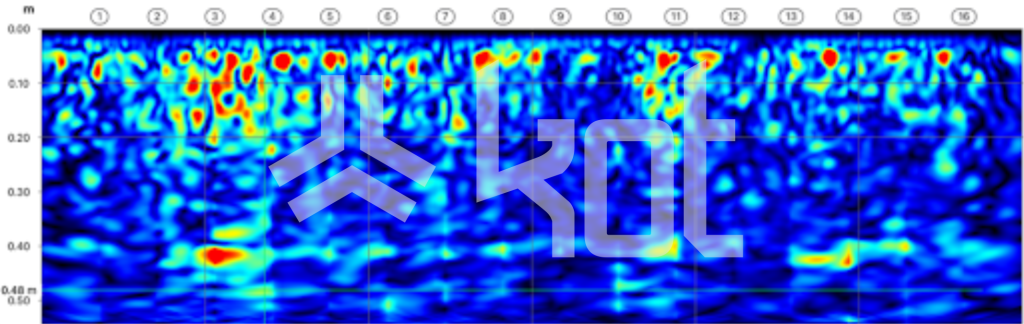
Figure 5: Example of tomography on a reinforced concrete wall. Source: Kot Engenharia.
The most modern devices have ceramic transducers that don't require a coupler and have a wide range of frequencies available, meaning they can be used to investigate different geometries and types of concrete.
Another great advantage of this test is the possibility of investigating structures with only one accessible face, for example:
-
- Investigations on concrete structural tunnel walls;
-
- Conference on the grouting of sheaths for active reinforcement in prestressed bridges;
-
- Investigation of defects and discontinuities in concrete parts in general, such as beams, columns and slabs;
-
- Measuring the thickness of concrete pieces where only one side is accessible.
PACOMETRY
In addition, pacometry is a test that uses electromagnetic induction to assess the presence, coverage, and, in some cases, the diameter of reinforcing bars (reinforcement) in reinforced concrete parts.
Commercial pacemeters can be divided into two classes:
-
- Based on the principle of magnetic reluctance;
-
- Based on the measurement of eddy currents.
Measurements based on eddy currents are possible due to the fact that when a magnetic field is brought close to a conductive material, (eddy) electric currents are aroused in this conductive material.
In turn, eddy currents alter the configuration of the original magnetic field. In practical terms, this change is then interpreted to indicate the presence of a steel bar, as shown in Figure 6 and Figure 7.
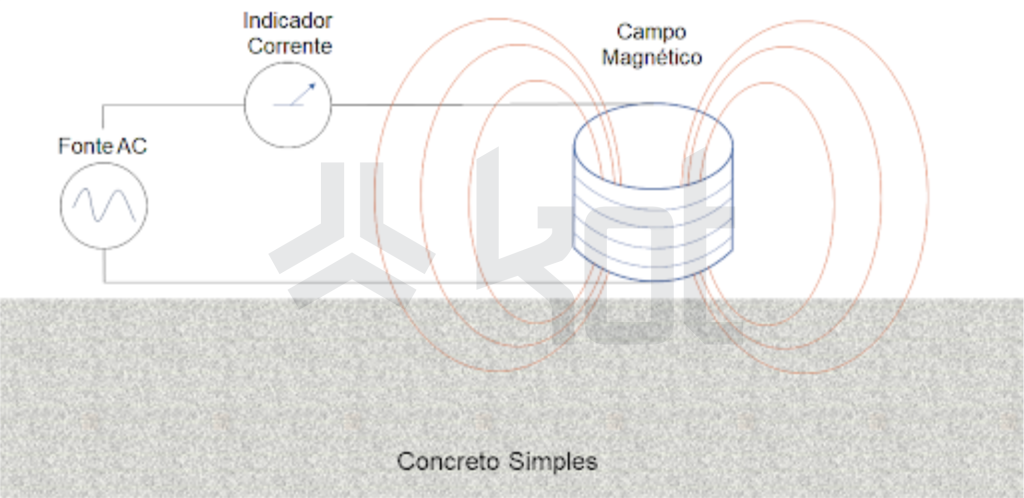
Figure 6: Illustration of the parasite induction process. Source: Modified from ACI 228.2R-13.
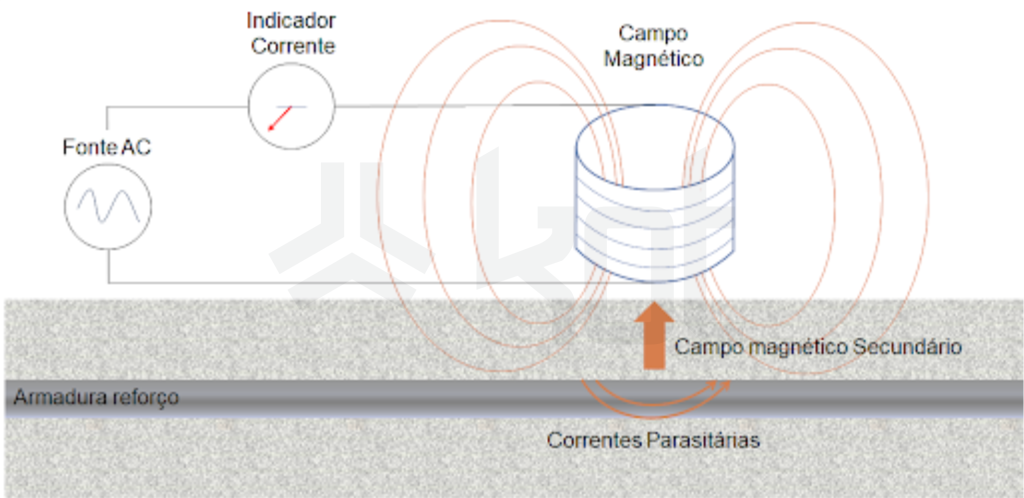
Figure 7: Illustration of the parasite induction process. Source: Modified from ACI 228.2R-13.
Kot Engenharia has equipment with adequate productivity to carry out tests on parts with a large area, such as slabs, but it is more usual for this procedure to be carried out on smaller areas:
-
- Assisting with ultrasound or pacometry tests;
-
- Quality control in relation to the positioning and covering of reinforcement bars after concreting parts;
-
- Investigate structures where design documentation is not available;
-
- Removing testimonies from structures in service (to be discussed in a future post);
-
- Locate ferromagnetic materials embedded in concrete (pipes, inserts, etc.).
The limitations of this method arise in some situations, such as:
-
- In the investigation of areas with a high density of bars or with the presence of secondary electromagnetic fields;
-
- Reading the diameter of the bars, when possible, can be difficult;
-
- The investigation of the second layer of bars for reinforcement is almost always unfeasible.
It can therefore be said that carrying out this test requires knowledge of the method and its application.
Reading the text, it is possible to conclude that it is not enough to have modern, technological equipment to carry out a correct structural assessment. In addition to the tools, it is necessary to master the concepts, from the fundamentals to those that involve reading and interpreting the acquired data.
Kot Engenharia can help with this, having the right equipment and specialized labor to carry out the services. Get in touch with our team.
Follow the Kot Blog to see the next article, in which we will present more about concrete, its tests and how Kot can be useful, containing other test methodologies for concrete bodies and/or structures. See also our team for more information!
Follow our pages on LinkedIn, Facebook e Instagram to keep up with our content.
References:
[1] SILVA, Ney. Reinforced concrete. Class notes - Federal University of Minas Gerais. Belo Horizonte, 2021.
[2] PFEIL, Walter. Reinforced concrete Vol. 1. Rio de Janeiro: LTC, 1985.
[3] IAEA. Guidebook on non-destructive testing of concrete strutures. Vienna: IAEA, 2002.
[4] SOUZA, RIPPER. Pathology, recovery and reinforcement of concrete structures. São Paulo: Pini, 1998.
[5] MACDONALD, Susan. Concrete: Building Pathology. Oxford: Blackwell Science, 2009.
[6] ASSOCIAÇÃO BRASILEIRA DE NORMAS TÉCNICAS - NBR 8802: Hardened concrete - Determination of ultrasonic wave propagation velocity - Test method, 2019.
[7] AMERICAN CONCRETE INSTITUTE - ACI 228.2R:2013: Report on Nondestructive Test Methods for Evaluation of Concrete in Structures.
[8] WHITE, Joshua Benjamin. Ultrasonic tomography for detecting and locating defects in concrete structures. 2012. Theses - Master of Science, Texas A&M University, 2012.
FAQ
1. Qual é a diferença entre a ultrassonografia convencional e a tomografia ultrassônica em concreto?
-
Ultrassonografia Convencional: Utiliza um par de transdutores (emissor e receptor) para medir o tempo e a velocidade de propagação de ondas ultrassônicas ao longo da peça. Serve principalmente para avaliar a homogeneidade do concreto, estimar o módulo de elasticidade e determinar a profundidade pontual de trincas.
-
Tomografia Ultrassônica: Emprega uma matriz com múltiplos transdutores que emitem e captam reflexões e refrações da onda. Um software processa esses sinais e constrói imagens bidimensionais (fatias da seção transversal), permitindo visualizar a localização exata de vazios, descontinuidades e armaduras no interior do elemento.
2. Em quais situações a tomografia ultrassônica é o ensaio mais indicado?
A tomografia ultrassônica é especialmente vantajosa em estruturas em que apenas uma das faces da peça está acessível. Ela é a solução ideal para:
-
Inspecionar o interior de paredes de túneis e galerias;
-
Verificar a qualidade do grauteamento em bainhas de cabos de protensão em pontes;
-
Medir a espessura de lajes ou paredes cegas de grande porte;
-
Mapear falhas de adensamento (ninhos de concretagem) e delaminações profundas em vigas e pilares.
3. Como funciona a pacometria e quais são suas principais aplicações em campo?
A pacometria baseia-se no princípio da indução eletromagnética (medição de correntes parasitárias ou relutância magnética). Quando o equipamento é aproximado da superfície do concreto, o campo magnético interage com o aço das armaduras, revelando sua presença. O ensaio é aplicado para:
-
Mapear o posicionamento, o alinhamento e a profundidade de cobrimento das barras de aço;
-
Evitar a seccionamento acidental de armaduras durante a extração de testemunhos ou perfurações;
-
Investigar estruturas antigas que não possuem projetos ou memoriais descritivos (as-built);
-
Localizar insertos metálicos e tubulações embutidas na estrutura.
4. Quais são as limitações técnicas do ensaio de pacometria?
Embora muito prático, o ensaio de pacometria possui algumas restrições operacionais:
-
Densidade de armaduras: Em regiões com alta concentração de barras, os campos magnéticos podem se sobrepor, dificultando a distinção individual de cada elemento;
-
Camadas profundas: A identificação de uma segunda camada de armaduras é difícil ou inviável, pois ela fica mascarada pela primeira camada mais próxima da superfície;
-
Interferências externas: A presença de campos eletromagnéticos secundários no ambiente de medição pode distorcer os dados de cobrimento ou do diâmetro estimado das barras.
5. Por que os ensaios de controle tecnológico da obra (como o Slump Test) não substituem os ensaios na estrutura em serviço?
Ensaios como o Slump Test e a ruptura de corpos de prova de concreto medem apenas a trabalhabilidade do concreto fresco e a resistência do lote no momento da concretagem. Com o passar dos anos, fatores como erros de adensamento, cura inadequada, ataques de agentes agressivos (cloretos e CO2), variações de temperatura e sobrecargas operacionais geram patologias na estrutura que não existiam na fase de obra. Os ensaios não destrutivos avaliam o comportamento e a degradação real do ativo no seu ambiente de operação, fornecendo dados fundamentais para intervenções preditivas.