Operar, ampliar ou reformar uma planta industrial sem a documentação As Built ou As Is atualizada coloca a segurança estrutural em risco. O levantamento estrutural da Kot Engenharia combina Ensaios Não Destrutivos (END) e destrutivos pontuais para mapear a estrutura interna do concreto e obter geometrias complexas em 3D sem interromper sua operação. Veja como recuperar o controle técnico e a real capacidade de carga dos seus ativos.
1. Structural survey of buildings: what to do when no plans are available?
Building designs play a vital role in all phases of an asset's life, from conception to decommissioning. In this sense, structural surveys, i.e., consulting structural information, may be necessary during all phases of an asset for a variety of reasons.
Keeping the collection of projects and technical documents organized and in high-resolution digital format, with backups and strict control of issues and revisions, is crucial. This is because this action provides structural security, agility in decision-making, reduction of hours spent on inspection services or expansion projects, increased added value of the asset, among other benefits.

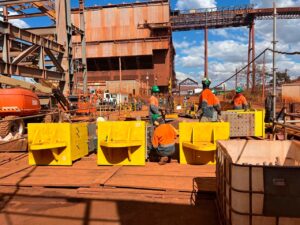
Process building at a mining site.
When structural designs are not available, have not been verified (‘As built’) or have not been updated after modifications (‘As is’), it is necessary to collect information in the field. In addition, information can be obtained in the field for all types of structures and materials, such as reinforced concrete, prestressed concrete, metal, wood, masonry, fiber-reinforced polymers, and earth structures.
When it comes to reinforced concrete structures, prestressed concrete, and composite structures, the information gathering process will employ some of the destructive or non-destructive techniques presented below:
2. Structural survey by thickness determination using ultrasonic tomography
Ultrasonic tomography, also known as phased array, uses ultrasonic waves to map the thickness of structural elements, identifying internal voids and different layers. As such, it is effective in performing structural surveys on elements up to 180 cm thick.
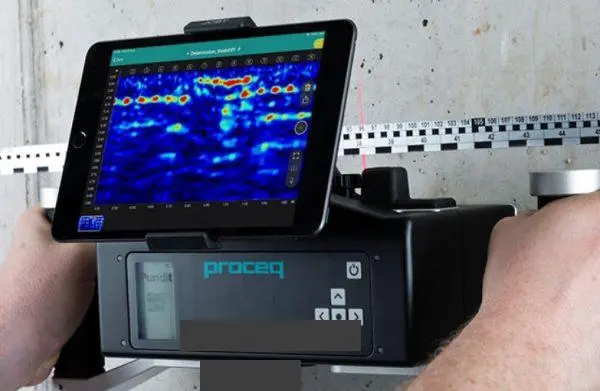
Ultrasonic tomography testing of concrete.
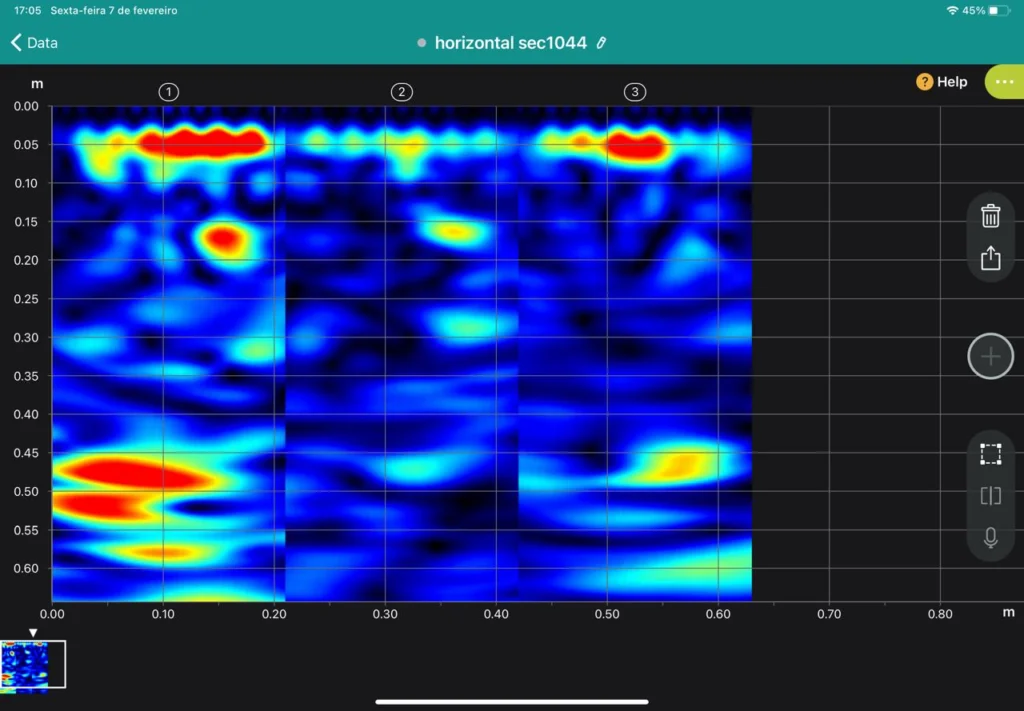
Presentation of the results obtained in the CT scanner's HMI.
3. Determination of length/depth by PIT
Ideal for foundations and vertical elements, PIT measures the transit time of ultrasonic pulses to determine length or depth. Similarly, it also detects geometric variations and setting changes. Thus, accuracy may require verification by complementary methods to produce an efficient structural survey.
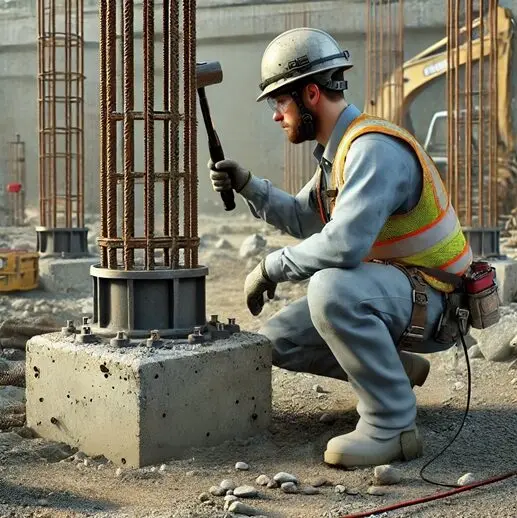
Example of a PIT test.
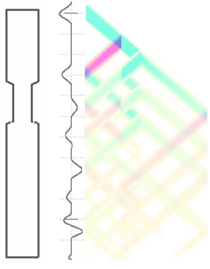
Schematic diagram showing how to obtain the length of the lead weight.
4. Structural survey by surveying reinforcement, anchor bolts, and other materials using ground-penetrating radar
The electromagnetic waves emitted by the equipment allow the location of reinforcement bars, anchors, voids, and changes in concrete or soil. Thus, the choice of frequency affects the resolution and depth of penetration.
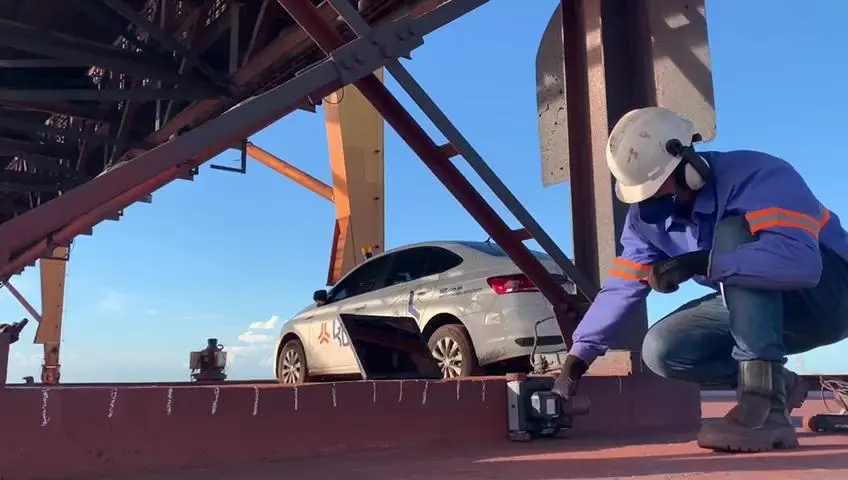
GPR testing of concrete.
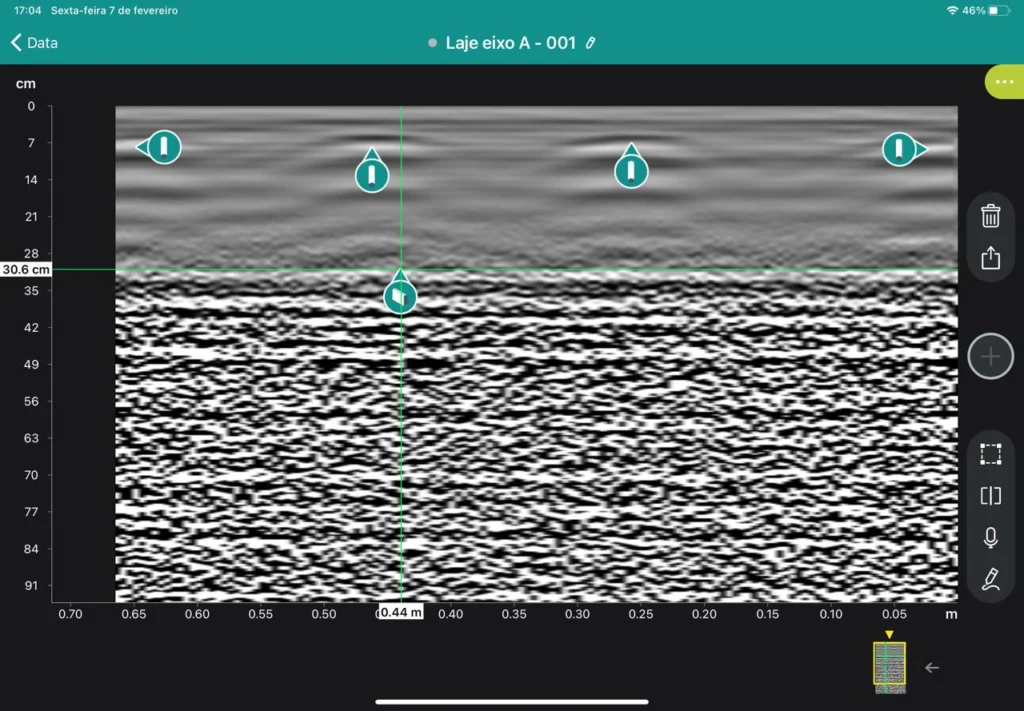
GPR equipment HMI.

Ground-penetrating radar.
5. Survey and frame diameter by magnetic detection
Magnetic detectors use the eddy current principle to identify and estimate the diameter of steel bars. Therefore, when limited to depths of up to 20 cm, the recommendation is for semi-destructive sampling using Pacometry testing.
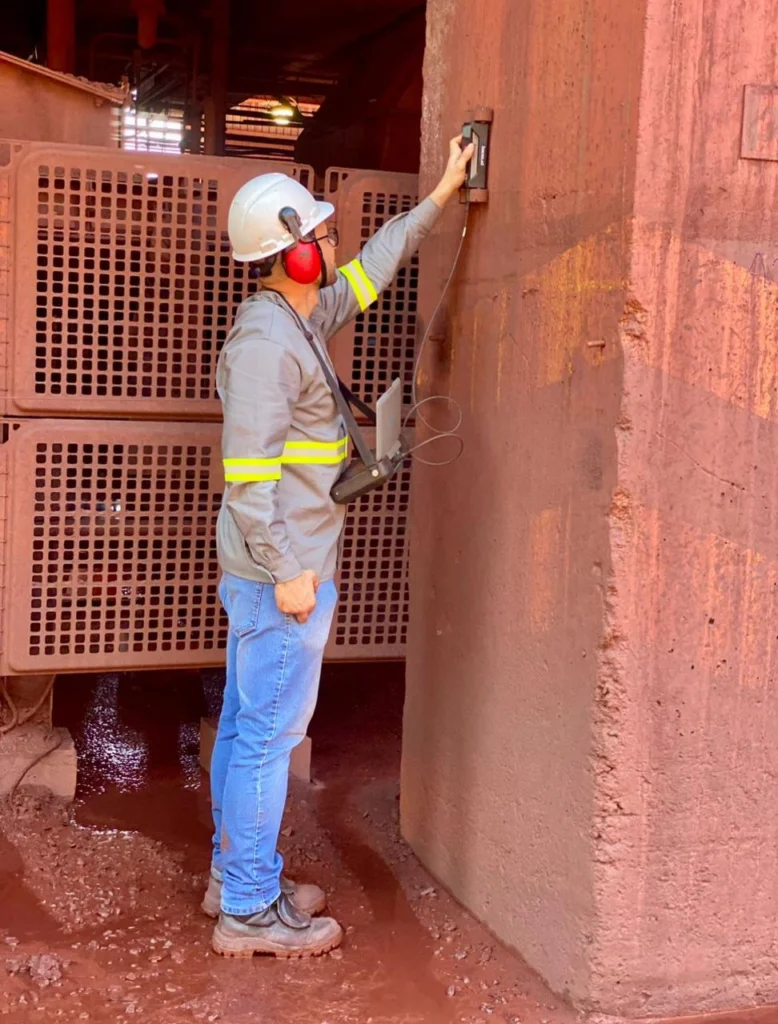
Example of pacometry test.
6. Structural survey by determining compressive strength and modulus of elasticity
Ultrasound testing, sclerometry, and core sampling allow for accurate estimation of concrete compressive strength and elastic modulus. In this way, complementary non-destructive testing validates homogeneity and reduces the need for samples. Consequently, this reduces field work time, risk exposure, and operational downtime.
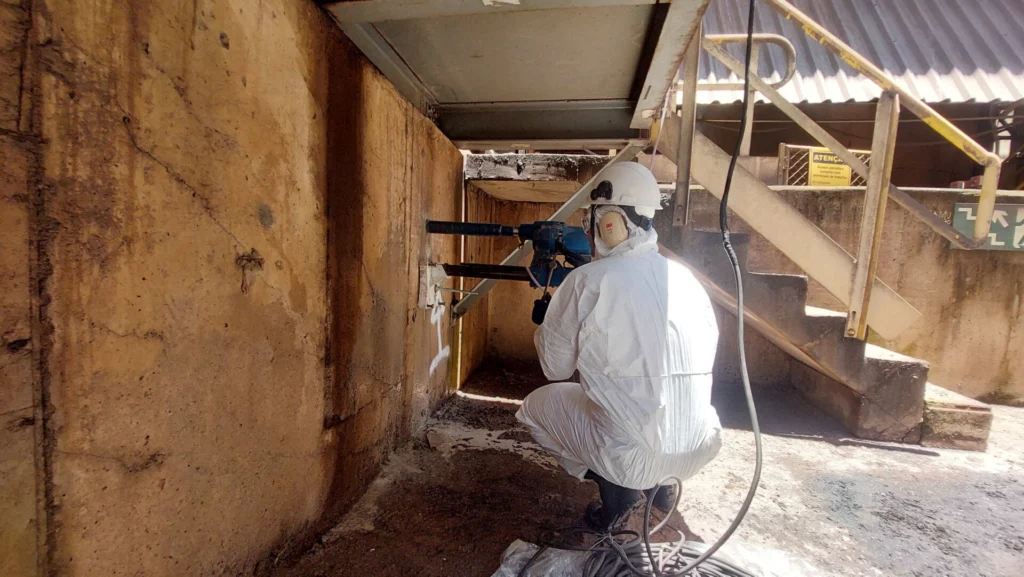
Extraction of testimony.
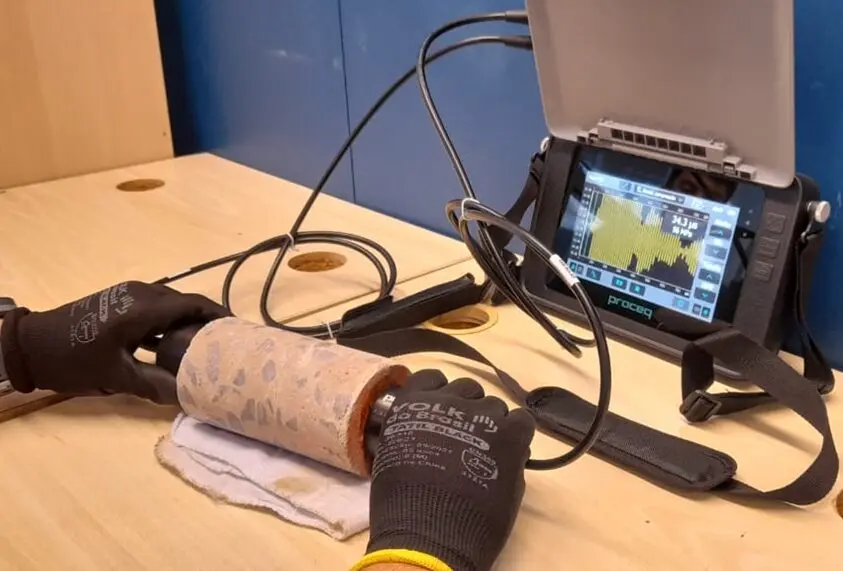
Ultrasound test.
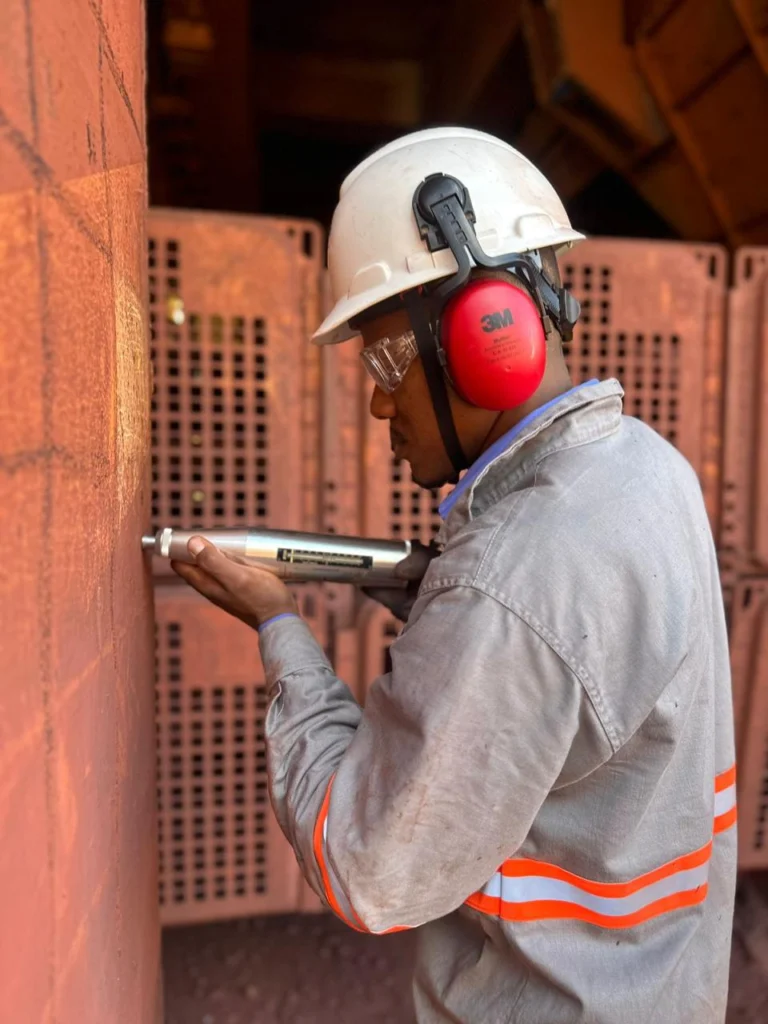
Sclerometry test.
7. Geometric survey by laser scanning or photogrammetry
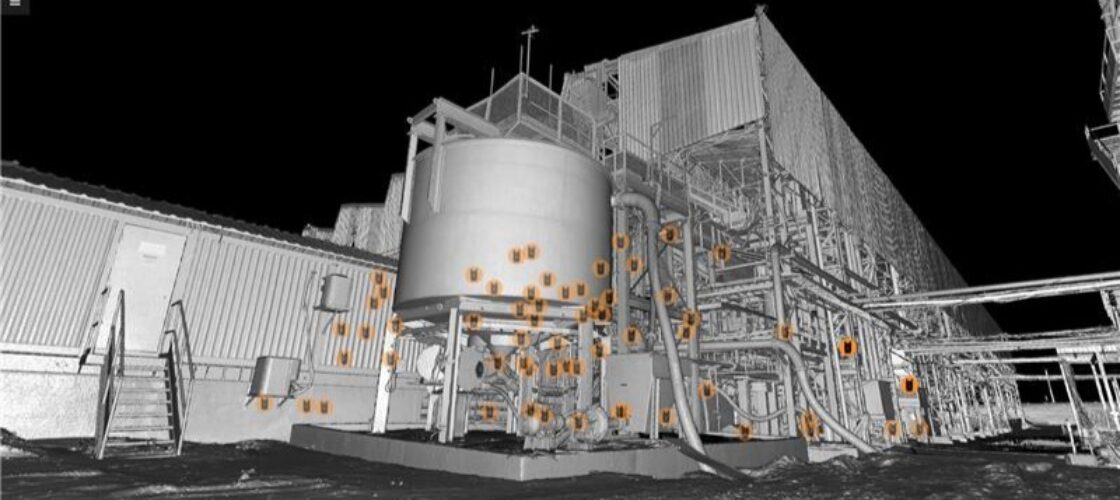
In complex or large structures with structural design deficiencies or gaps, it is essential to perform laser scanning to obtain high-precision point clouds and virtual models. This allows for detailed acquisition of the geometry and dimensions of structural elements and equipment. In addition, point clouds can be used to track movements or modifications in the structure.
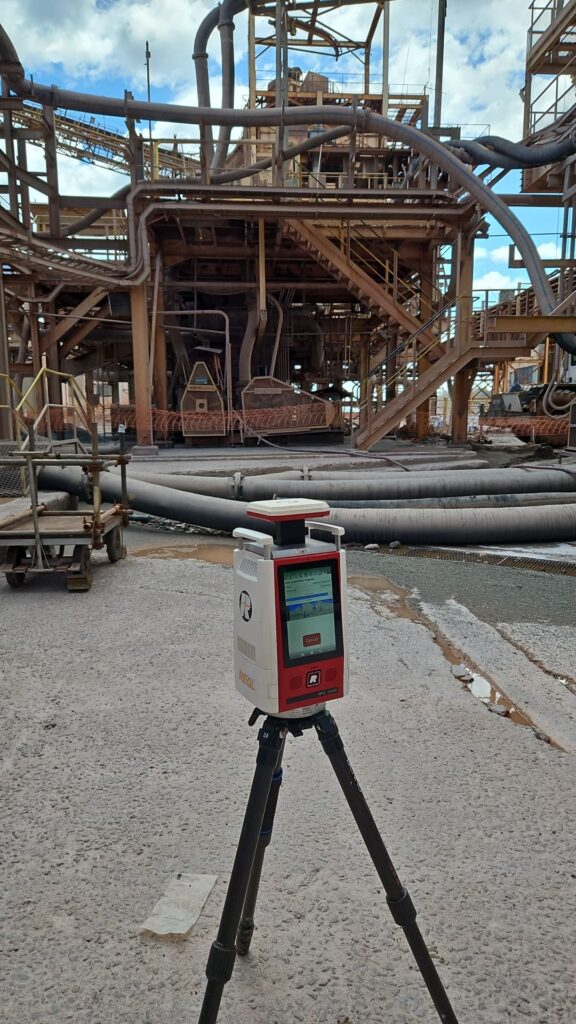
3D laser scanner equipment.
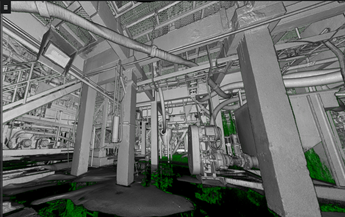
Model obtained from the scan.
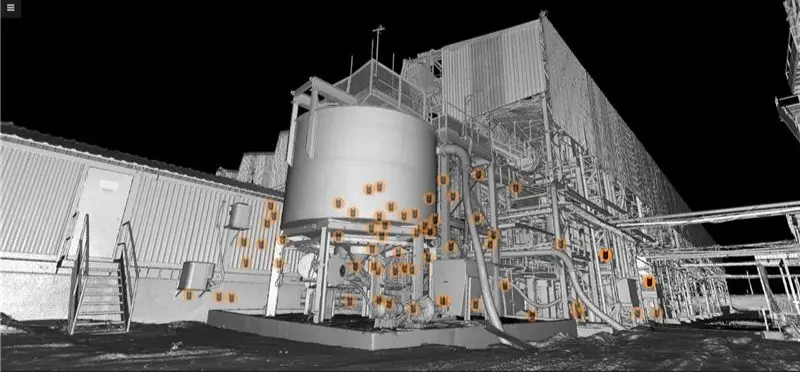
Model obtained from the scan.
8. How structural surveys in the field enable reliable technical decisions
The techniques presented are effective for assessing existing structures, thereby obtaining most of the necessary information with a high degree of reliability. This package of data and information, collected in the field, allows structures to be calculated and assessed for that asset's operating condition, taking into account its situation in the field, from reinforcements to non-visible structural damage.
Therefore, using the appropriate techniques and equipment, by specialist professionals, the necessary and specific information for each of the assets to be evaluated is obtained accurately. This provides clarity and objectivity for any interventions that may be necessary for the efficient and safe operation of the assets.
Structural surveys are done by Kot Engenharia
If you, like our more than 150 clients, are looking for specialized solutions in structural analysis or failure prevention such as deformation, vibration, and corrosion, consult our team and count on Kot Engenharia.
Since 1993, we have been offering engineering consultancy services through technical studies using non-destructive testing, field instrumentation and computer simulations (FEM, DEM and CFD) for highly complex diagnoses of concrete and metal structures and industrial equipment.
Follow our pages onLinkedIn, Facebook and Instagram and keep up with our content.
FAQ
1. O que deve ser feito quando uma planta industrial não possui os projetos estruturais originais atualizados?
Na ausência de documentação técnica confiável, é mandatório realizar um levantamento estrutural de campo. Esse processo consiste em mapear a geometria externa e investigar a composição interna dos elementos estruturais por meio de ensaios físicos. Em vez de realizar demolições às cegas, a engenharia utiliza equipamentos tecnológicos para identificar a presença de armaduras, diâmetro de barras, integridade de fundações e a qualidade mecânica do material, recriando as premissas necessárias para recalcular a estrutura com segurança.
2. Como funciona a tomografia ultrassônica (phased array) no concreto e quais são os seus limites?
A tomografia ultrassônica emite ondas mecânicas de alta frequência através do elemento de concreto e capta os ecos que retornam à superfície. Como diferentes materiais, interfaces e anomalias alteram a velocidade de propagação do som, o equipamento processa os sinais e gera uma imagem interna detalhada. Ela é altamente eficiente para mapear a espessura de paredes e lajes massivas de até 180 cm de profundidade, sendo muito utilizada para identificar vazios internos, falhas de concretagem (ninhos) e descontinuidades.
3. Qual é a diferença prática entre o uso do Georadar (GPR) e da Pacometria no levantamento de armaduras?
Embora ambos localizem elementos embutidos no concreto, eles operam por princípios físicos distintos e para finalidades diferentes:
-
Georadar (GPR): Emite ondas eletromagnéticas e é ideal para varrer grandes áreas. Identifica não apenas a malha de aço, mas também dutos plásticos, vazios e variações de solo, alcançando maiores profundidades.
-
Pacometria (Detecção Magnética): Baseia-se no princípio de correntes parasitas magnéticas. Possui profundidade limitada (geralmente até 20 cm), mas oferece uma precisão muito superior para estimar o diâmetro exato das barras de aço e a espessura do cobrimento superficial.
4. De que maneira a combinação de ensaios não destrutivos (END) e destrutivos otimiza a avaliação da resistência do concreto?
Em vez de extrair dezenas de cilindros de concreto (testemunhos), o que enfraqueceria a estrutura e geraria altos custos, a engenharia adota uma abordagem combinada. Ensaios não destrutivos rápidos, como a esclerometria (dureza superficial) e o ultrassom convencional (velocidade de pulso), são aplicados em larga escala para mapear a homogeneidade do concreto na planta. Com base nesse mapa, realiza-se uma quantidade mínima e estratégica de ensaios destrutivos (extração de testemunhos), utilizando os resultados reais de laboratório para calibrar e validar as leituras não destrutivas.
5. O que é o ensaio PIT e como ele ajuda a avaliar fundações e elementos verticais?
O PIT (Sonic Integrity Testing) mede o tempo de trânsito de pulsos mecânicos/ultrassônicos ao longo de um elemento estrutural vertical, como estacas de fundação ou chumbadores longos. Ao analisar a onda de retorno, o ensaio consegue determinar o comprimento ou profundidade exata do elemento submerso, além de detectar variações geométricas abruptas, trincas internas ou alterações no nível de engastamento da peça com o solo/base de concreto.