Kot recently completed a project to install track on a railroad line connecting two Brazilian states. In this article, you can learn more about this Succes story by the company’s team!
Introduction
First, railroad derailments are serious incidents that must be prevented because, in addition to causing property damage and service disruptions, they can result in fatal accidents. In this regard, the main factors to watch for are increased load on the wheel flange, decreased vertical load, and an increased wheel angle of attack. [1]
In addition, one method for evaluating derailments was proposed by Nadal, which correlates the lateral and vertical load values (L/V). When this coefficient exceeds the Nadal limit, the wheel flange shifts upward on the rail, causing a derailment. [2]
Figure 1 shows the derailment mechanism in which Nadal's condition applies.

Figure 1: Derailment mechanism. [1]
Computer model
Previously, in another study also conducted by Kot, the rail, sleeper, and ballast assembly was modeled computationally, as shown in Figures 2 and 3.
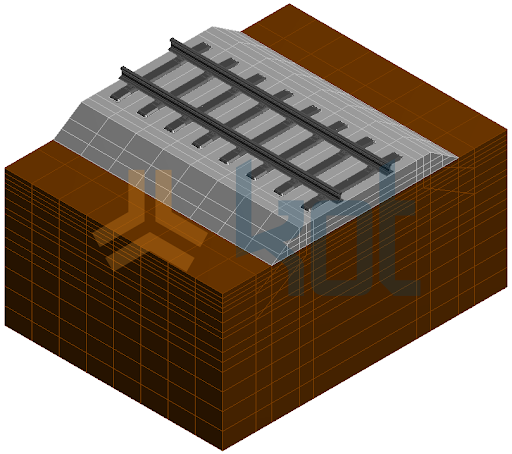
Figure 2: Three-dimensional model of the assembly. [3]
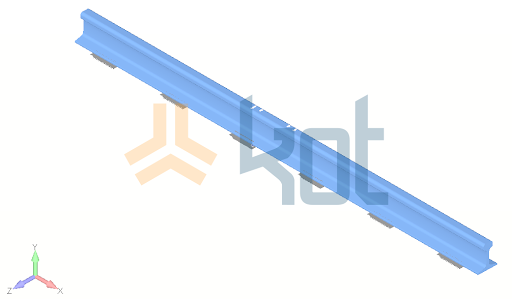
Figure 3: Overview of the three-dimensional model of the assembly. [3]
Subsequently, vertical loads were applied to the model at three different contact points on the sleeper and at three contact points in the region between sleepers, assuming the eccentricity of the vertical load relative to the rail centerline.
In addition, extensometry—the method used in this study—is employed to evaluate surface deformations in materials. If you’d like to learn more about the application of extensometers, check out the articles on the Kot blog:
Instrumentation proposed by Kot
The methodology proposed by Kot for conducting the field tests is described below:
-
- First, to evaluate the vertical load, extensometers were installed on both sides of the rail web, spaced at regular intervals and aligned with the ties immediately below. This made it possible to measure both the lateral and vertical loads. The lateral loads were calibrated using a hydraulic cylinder. Next, the influence of the vertical load on the lateral load region was evaluated, as shown in Figure 4.
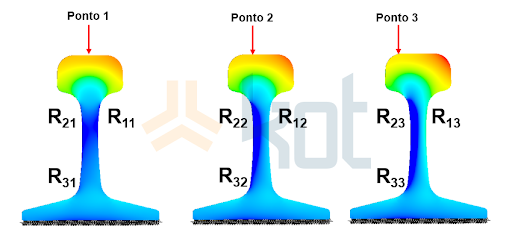
Figure 4: Evaluation of the influence of the vertical load on the lateral load region. [3]
Subsequently, strategic sections of the track were instrumented based on the history of previous failures. Measurements were taken using extensometers to record deformations and LVDTs (linear variable displacement transducers) to measure the vertical displacement of the ties for subsequent evaluation of the ballast stiffness. Some images of the fieldwork can be seen in Figures 5, 6, and 7.
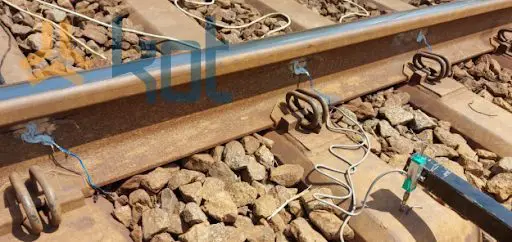
Figure 5: Extensometers attached to the rail core. [3]
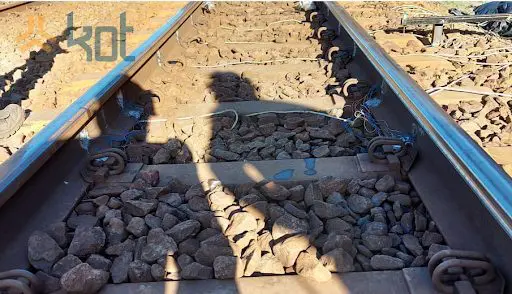
Figure 6: Extensometers attached to the rail core. [3]
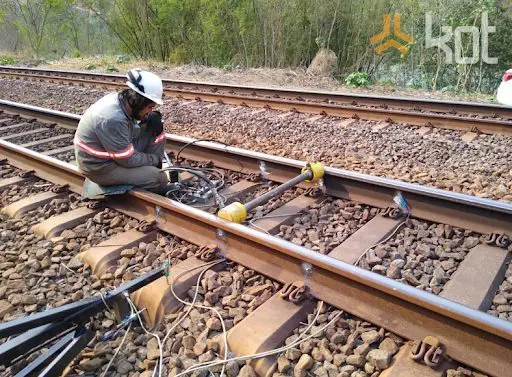
Figure 7: Calibration of the lateral load on the track. [3]
Results
After the tests were conducted, the numerical results obtained were compared with those generated by the Chevron method through computer simulation. As a result, these numerical analyses made it possible to evaluate the effects of the vertical load eccentricity parameters and lateral load values. However, both methods required calibration to accurately evaluate the deformations.
On the other hand, the advantages of the method proposed by Kot lie in its ability to retrieve the desired data in cases of vandalism, cable breaks, and other failures. In addition, the methodology requires less time for instrumentation, since it uses fewer sensors than Chevron had anticipated.
Conclusion
In short, the method suggested by the Kot team offers advantages over the conventional methodology, as it facilitates a more reliable study by analyzing and comparing data from experimental tests with the theoretical computational model. Furthermore, the implementation takes less time, making the study even more beneficial for companies.
Finally, it is worth noting that Kot has extensive expertise in this field, having implemented solutions at hundreds of assets, enabling it to assess different operational contexts and contribute to its clients’ results. Contact our team for more information!
Follow our pages on LinkedIn, Facebook e Instagram to keep up with our content.
FAQ
1. Quais são os principais fatores mecânicos que levam ao descarrilamento de composições ferroviárias?
Os acidentes por descarrilamento ocorrem principalmente devido ao aumento de carga no flange da roda, à diminuição da carga vertical aplicada ao trilho e ao aumento do ângulo de ataque das rodas em relação ao boleto do trilho durante a passagem do trem.
2. O que é o Critério de Nadal e como a razão $L/V$ define a estabilidade da roda?
O Critério de Nadal é a formulação teórica que correlaciona a força lateral ($L$) e a força vertical ($V$) no ponto de contato entre a roda e o trilho através do coeficiente $L/V$. Quando essa razão excede o limite estabelecido por Nadal, a força lateral supera a retenção vertical, fazendo com que o flange da roda suba pelo boleto do trilho (wheel climb) e provoque o descarrilamento.
3. Como foi estruturada a modelagem computacional do sistema ferroviário?
A equipe modelou tridimensionalmente o conjunto integrado formado por trilho, dormente e lastro. As simulações consideraram a aplicação de cargas verticais em três pontos de contato sobre o dormente e em três pontos no vão entre dormentes, avaliando explicitamente a excentricidade da carga vertical em relação à linha central do trilho.
4. Como foram instalados e calibrados os extensômetros durante os testes de campo?
Os extensômetros foram fixados em ambas as faces da alma do trilho, alinhados e intervalados exatamente na direção dos dormentes posicionados abaixo. Para calibrar a medição das forças laterais diretamente na via, a equipe utilizou um cilindro hidráulico, permitindo mensurar também a influência da carga vertical sobre a região de esforço lateral.
5. Qual a função do sensor LVDT na medição de campo?
O LVDT (Linear Variable Differential Transformer ou Transdutor de Deslocamento Variável Linear) foi instalado para medir o deslocamento vertical (recalque) dos dormentes sob a passagem das cargas. Essa medição é fundamental para calcular a rigidez do lastro de brita e identificar trechos com perda de sustentação da via.
6. Quais são as vantagens da metodologia desenvolvida em relação ao método convencional de Chevron?
O método proposto apresentou três grandes vantagens práticas:
-
Menor tempo de execução: Requer menos sensores que o método de Chevron, reduzindo a necessidade de interdição da via;
-
Confiabilidade de dados: A disposição dos sensores permite manter a coleta de informações cruciais mesmo em ocorrências de vandalismo ou rompimento de cabos;
-
Otimização de custos: A redução da quantidade de instrumentos diminui o custo global do teste experimental.
7. De que forma a combinação entre simulação computacional e testes de campo aumenta a segurança da via?
A comparação dos dados coletados em campo com os resultados do modelo numérico permite calibrar as premissas teóricas de excentricidade de carga e rigidez da via. Isso possibilita identificar com exatidão a degradação estrutural em trechos com histórico de falhas e intervir de forma preventiva antes que os limites de segurança de Nadal sejam atingidos.
References
[1] GWALIOR, MAHARAJPUR, A Technical Guide on Derailments, CAMTECH/M/3, April 1998
[2] B. MARQUIS & R. GREIF, "Application of Nadal Limit in The Prediction Of Wheel Climb Derailment", in Joint Rail Conference, [S.I], 2011.
[3] Kot Engenharia archive.