Inspection and testing of concrete OAE structures are essential to ensure the safety, durability, and structural performance of bridges, viaducts, and other special engineering structures throughout their service life. This article presents the state of the art in Brazil, addressing technical standards, types of inspection, non-destructive testing methodologies, and advanced technologies applied to structural assessment, offering a technical and up-to-date overview for managers and professionals in the field. Continue reading to learn more about the topic.
Introduction
Firstly, Special Works of Art (OAEs) are essential load-bearing structures in the composition of infrastructure on roads, in urban centers, industrial plants, and many other applications where it is necessary to overcome physical obstacles. That is, these structures, which can be bridges, footbridges, viaducts, aqueducts, walkways, or similar, have some particularities compared to other structural assets, which must be considered in integrity management to ensure safety and durability.
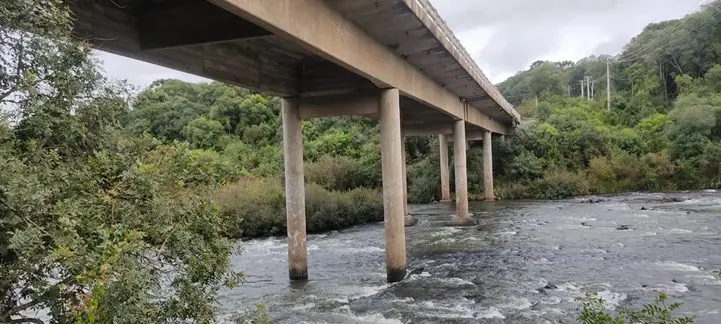
Figure 1: Concrete road bridge over a river in the state of Paraná - SOURCE: Kot Collection.
In this sense, OAEs, due to their very purpose, commonly present some challenging characteristics. For example, there are:
-
- Restricted accessibility in the superstructure and mesostructure;
-
- Regions of the structure with no angle of visibility for direct inspection;
-
- Users of the assets remain in them for only a few seconds or minutes;
-
- The managers or bodies responsible are usually located a long way from the structure;
-
- The stresses are significant and tend to increase over the years;
-
- Geotechnical and/or hydrological interactions are dynamic and undergo changes in the short and medium term;
-
- Maintenance and inspections require complex logistics;
-
- Continuous monitoring systems are more susceptible to vandalism or theft and may require alternative energy sources.
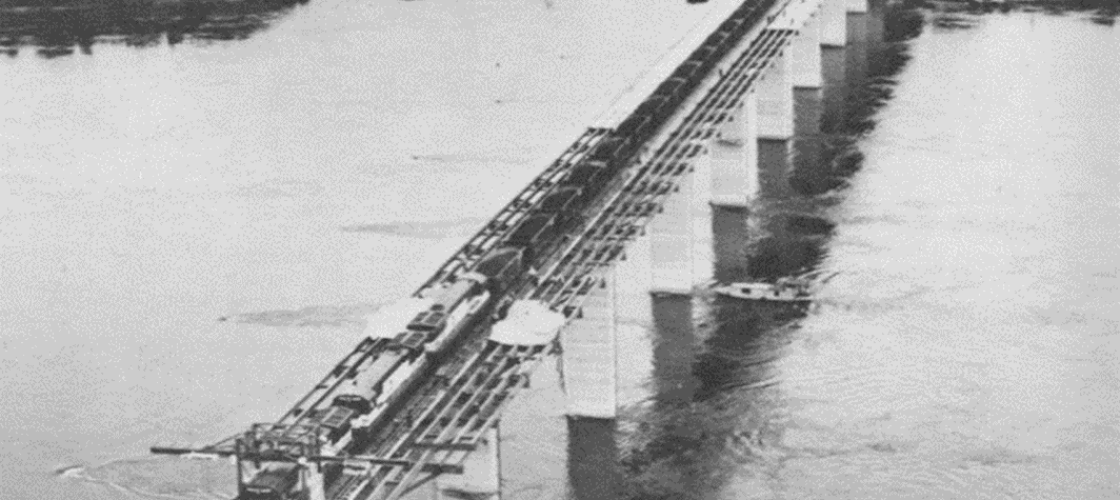
In principle, most works of art were developed around road bridges and, considering the Brazilian road network, were mainly reinforced concrete and/or prestressed concrete structures. In fact, history records that the first reinforced concrete bridge in Brazil was built in 1889, in the city of São Paulo, and the first prestressed concrete bridge in 1940, the Rio Galeão bridge, in the city of Rio de Janeiro, shown in Figure 2.
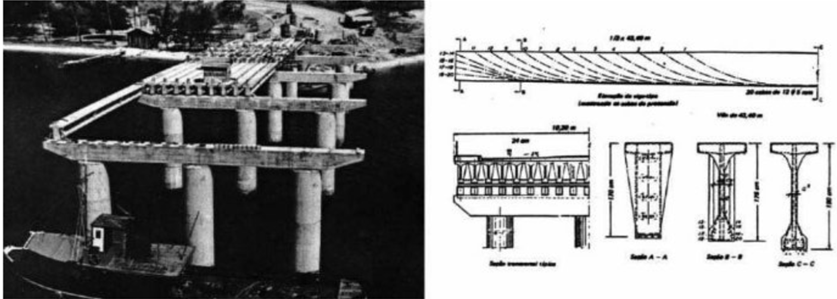
Figure 2: Assembly of the Galeão Bridge (left) and cross-section of the deck with beam profile (right) - SOURCE: Vasconcellos, Juliano; Gomes, Elcio, 2023.
Subsequently, with the evolution of concrete bridge construction in Brazil, technical standards began to be published, the first specific national standard for concrete bridge design being ABNT NB-2, from 1946, currently replaced by ABNT NBR 7187:2022. Specific standards were then developed to ensure the Structural Integrity bridges and other types of OAE during their service life.
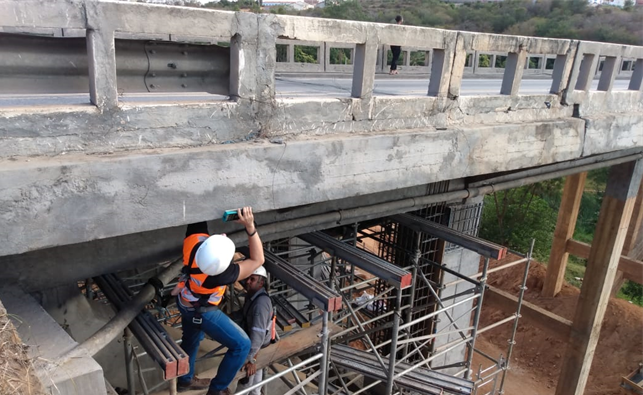
Figure 3: Road bridge under study for strengthening and widening the carriageway - SOURCE: Kot Collection.
In this regard, standard ABNT NBR 7187:2022 recommends the need for numerical verification to understand the behavior of bridges and other OAE when any structural anomaly is found during inspections or when the original structural designs are not available. Therefore, it is recommended that structural analysis be performed by numerical calculation, either to verify the current condition, to dimension a possible reinforcement due to the incapacity of some element, or to determine the need to increase the loads.
In addition, inspections, maintenance, and interventions on these structures within national territory must comply with standards ABNT NBR 9452 – Inspection of bridges, viaducts, and walkways – Procedure and ABNT NBR 16230 – Inspection of concrete structures – Qualification and certification of personnel – Requirements. These and other related standards cover basic aspects of structural safety, durability, and asset management, such as inspection frequency and minimum parameters, standardization of nomenclatures and reports, as well as requiring the training and certification of inspectors who will inspect, test, and analyze these assets.
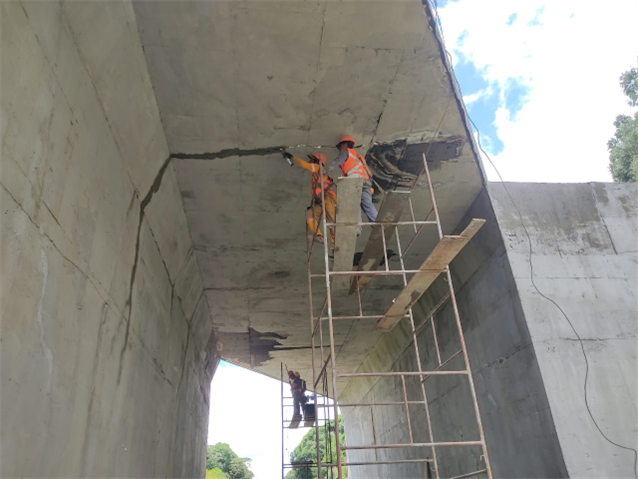
Figure 4: Road bridge undergoing periodic maintenance in the state of Paraná - SOURCE: Kot Collection.
Above all, one of the main practical aspects required by the standards and that can be highlighted for managers responsible for these assets are the types of inspections and their maximum frequency. In summary, the two most common types are: periodic inspection and special inspection, with periodic inspection being minimally tactile-visual in nature, while for special inspection it is highly recommended to perform testing techniques, with the respective deadlines indicated below in Table 1.
| Inspection Level | Maximum periodicity | Extension criteria |
| Routine Inspection | 1 year | - |
| 2 years | OAE railway under concession / Have obtained a good or excellent rating in all items in the last inspection | |
| Special Inspection | 5 years | - |
| 8 years | Have obtained a good or excellent rating on all items in the last inspection / Have full accessibility in the last inspection |
Table 1: Maximum periodicity between inspections for OAEs according to ABNT NBR 9452.
On the other hand, in special inspections, tests and surveys may be necessary and must be defined for the OAE according to the criteria of the professional responsible for the analysis, as recommended in ABNT NBR 9452 and 7187. Therefore, the scope of tests and other investigations is defined considering the structural system, history of the structure, hypotheses of causes of failure, absence of design information, among other parameters that may influence the design of maintenance or corrective actions.
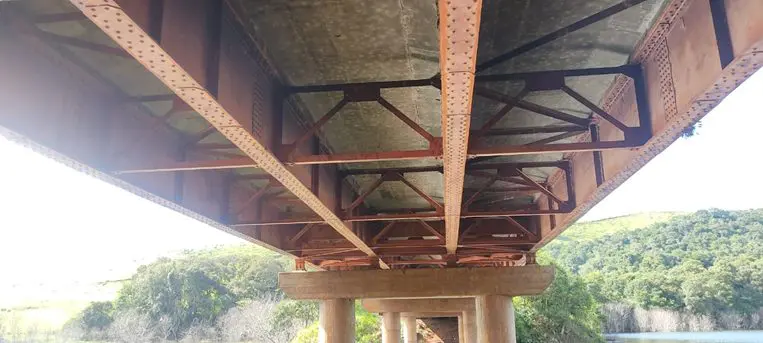
Figure 5: Mixed structure highway bridge over a river in the state of Paraná - SOURCE: Kot Collection.
With an emphasis on concrete bridges, which account for the largest proportion in Portugal, Table 2 shows the main objectives that require further investigation and the most suitable tests, respectively.
| Objectives | Tests and surveys |
| Concrete quality assessment and fault location/characterization/monitoring | Ultrasound / Ultrasound Tomography / Sclerometry / Impact-Echo / Pin Penetration / Movement Instrumentation |
| Assessment of reinforcement conservation / definition of predictive and corrective intervention plan | Depth of carbonation or chloride front, Electrical resistivity of concrete, Corrosion potential and Survey of coverings |
| Structural 'As Is' survey / Mechanical performance check / Parameters for reinforcement design | Detection of reinforcement, laser scanning, static and dynamic load testing, extraction of cores |
| Indirect inspection/removal of inaccessible points | Aerial drone, ground drone, borescope and ROV (underwater) |
Table 2: Scopes of investigation into OAEs.
Concrete quality assessment and fault location/characterization/monitoring
The main tests used for this purpose are ULTRASONOGRAPHY and ULTRASONIC TOMOGRAPHY, which are totally non-destructive tests that do not produce ionizing radiation and are based on the physical principle of the propagation of mechanical, ultrasonic waves, in conventional or phased array form.
Ultrasonic principle tests have a wide range of capabilities, being able to analyze deep areas of the parts, such as a concrete beam 1 meter wide and up to much larger dimensions, with good precision and high sensitivity to voids, cracks and material variation, as shown in Figure 6.
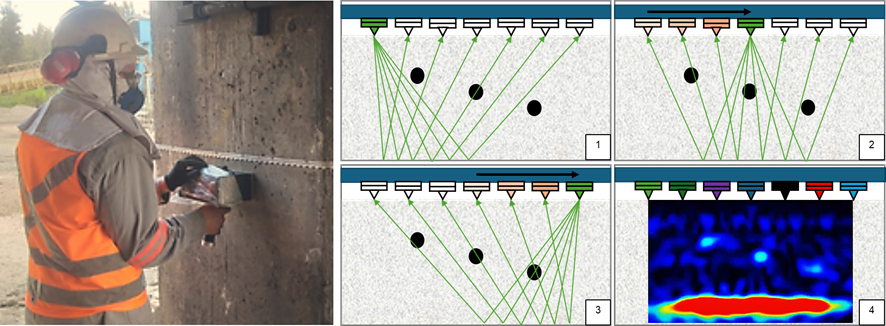
Figure 6: Illustration of the ultrasonic tomography test on concrete - SOURCE: Kot Collection.
Assessment of reinforcement conservation / Definition of the predictive and corrective intervention plan
Physicochemical and electrochemical tests show the condition of the reinforcement and the harmful process that has been installed in the element, or is likely to be installed in the coming years. These tests provide essential parameters for an assertive, rational and specific intervention for each region of the structure, generating savings for the client.
Determining the content of contaminants in the concrete along the depth and determining the average coverages of the reinforcements in each structural element are important for assessing the occurrence of corrosive processes, feeding models to predict the residual useful life of the element without intervention and defining treatment methods with their respective areas of coverage, as shown in Figure 7.
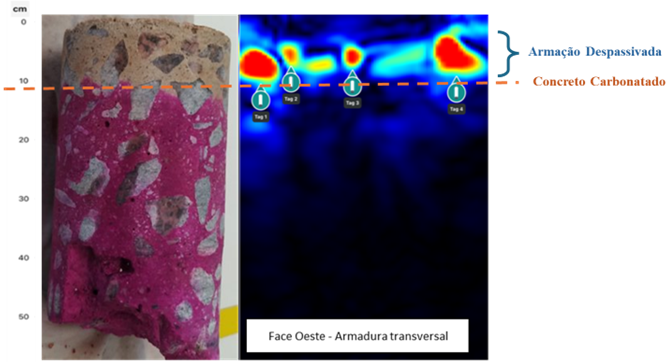
Figure 7: Evaluation of carbonation versus reinforcement cover by GPR - SOURCE: Kot Collection.
Structural 'as is' survey
Computer models that have been properly built with information on reinforcement, concrete properties, geometry and expected loads must still be calibrated with the actual behavior of the structure in order to validate them.
Static and dynamic load tests show the deformations, frequencies and amplitudes of movement, making it possible to check whether these are adequate and being predicted by the computer model. Motion amplification by image is one of the most modern techniques for verifying the behavior of a structure in real time.
In this methodology, Kot Engenharia a system composed of high-resolution, high-speed cameras, lenses, computers, and lighting systems, capable of performing high-precision measurements (see another example of camera application). The camera software transforms the image pixels into "sensors" that measure the amplitude of the movements. The result is the vibration spectrum and waveform over time, as shown in Figure 8.
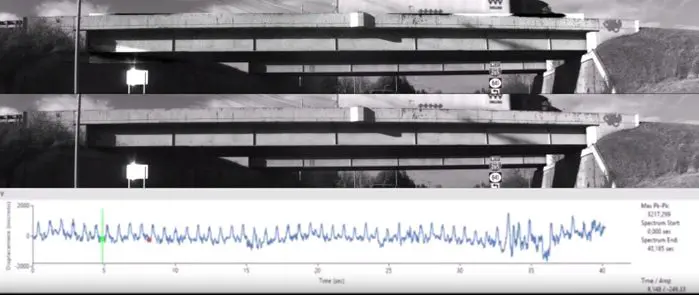
Figure 8: Road bridge under amplified motion monitoring - SOURCE: RDI Technologies adapted.
Indirect/remote inspection of inaccessible points
Having access to all the elements and regions of an ESO is fundamental for structural safety and is an item highlighted in the specific regulations for these structures. This makes it necessary to use remote inspection equipment in certain situations.
Aerial drones are indispensable equipment for inspecting large structures and can be coupled with infrared cameras, liDAR sensors, D-RTK, visible light cameras, among others, bringing greater precision to data collection which is then processed to generate three-dimensional models, as shown in Figure 9.
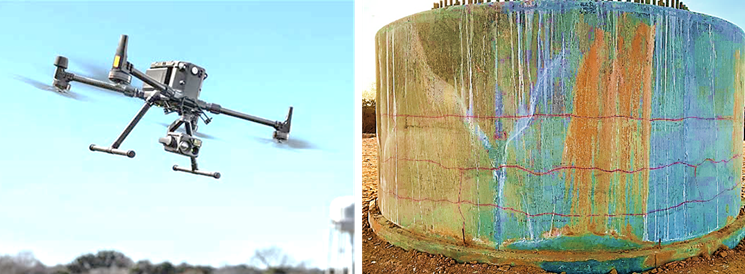
Figure 9: Mapping cracks and generating a three-dimensional model using photogrammetry - SOURCE: DJI Matrice / Kot Collection.
Conclusion
The conservation and management Structural Integrity OAE are regulatory requirements and are of vital importance to the asset and its users. With this in mind, a holistic approach with advanced technological resources is necessary, including following strict standards, inspection techniques, and state-of-the-art non-destructive testing.
In addition, numerical analysis with the expertise of qualified professionals enables the study and understanding of the structural behavior of OAEs. This approach supports and guides assertive decision-making for proposing reinforcements and repairs in the face of degradation, changes in design conditions, or increased structural demands. Therefore, investing in advanced inspection and structural analysis technologies is essential to extend the service life and promote the safety and functionality of OAEs.
Kot has a team of qualified professionals, both for the use of advanced equipment and for the evaluation, selection, and application of the most applicable methodologies and solutions for your business and your assets. Consult our team for more information!
Follow our pages on LinkedIn, Facebook e Instagram to keep up with our content.
FAQ
1. Quais normas técnicas regem a inspeção, projeto e certificação de pessoal em OAEs no Brasil?
As Obras de Arte Especiais de concreto são orientadas por três pilares normativos principais da ABNT:
-
ABNT NBR 7187:2022: Regula o projeto, critérios de verificação numérica e cálculo de reforços para pontes, viadutos e passarelas de concreto.
-
ABNT NBR 9452: Define os procedimentos, prazos, nomenclaturas e requisitos para as inspeções em pontes e viadutos.
-
ABNT NBR 16230: Estabelece os requisitos de qualificação e certificação necessária para o pessoal que realiza inspeções e ensaios em estruturas de concreto.
2. Qual é a diferença entre Inspeção Rotineira e Inspeção Especial segundo a ABNT NBR 9452?
-
Inspeção Rotineira (Periodicidade máxima: 1 a 2 anos): Possui caráter predominantemente tátil-visual. Seu objetivo é identificar anomalias superficiais aparentes, desgaste de junta de dilatação, drenagem e conservação geral.
-
Inspeção Especial (Periodicidade máxima: 5 a 8 anos): Exige um diagnóstico aprofundado com acessibilidade total à estrutura. Inclui obrigatoriamente um plano focado de ensaios não destrutivos (END), levantamentos geométricos detalhados e análise de capacidade resistente para identificar falhas ocultas na mesoestrutura e superestrutura.
3. Como a tomografia ultrassônica atua na identificação de falhas internas do concreto armado?
Diferente da radiografia convencional, a tomografia ultrassônica utiliza arranjos de transdutores (phased array) que emitem ondas acústicas de alta frequência para o interior da peça de concreto. Ao medir a reflexão e o tempo de propagação dessas ondas, o sistema gera imagens em fatias 2D e 3D do elemento. Essa tecnologia permite mapear com precisão vazios internos, ninhos de concretagem, delaminações e profundidade de trincas em peças espessas (como vigas e pilares com mais de 1 metro de largura) sem causar qualquer dano à estrutura.
4. Quais ensaios são fundamentais para diagnosticar o risco de corrosão nas armaduras de uma ponte?
Para prever e interromper a deterioração das armaduras antes que ocorram grandes destacamentos de concreto, utilizam-se os seguintes testes combinados:
-
GPR (Georradar) e Pacometria: Mapeiam a densidade e o cobrimento real do concreto sobre o aço.
-
Profundidade de Carbonatação: Aplicação de indicador químico (fenolftaleína) para medir a perda de alcalinidade do concreto provocada pelo $\text{CO}_2$ atmosférico.
-
Aferição de Cloretos: Análise química em laboratório para medir a migração de íons cloreto (comum em regiões praianas ou sob névoa salina).
-
Potencial de Corrosão e Resistividade Elétrica: Medem o estado de atividade eletroquímica da armadura e a probabilidade de avanço da ferrugem.
5. Como os drones e a tecnologia de amplificação de movimento por imagem resolvem o desafio de locais inacessíveis?
Em pontes sobre grandes rios ou vales profundos, o acesso físico direto a todas as vigas e apoios é logisticamente complexo e custoso:
-
Drones com LiDAR e Fotogrametria: Acessam regiões sem visibilidade direta, capturando imagens de altíssima resolução para a geração de modelos 3D virtuais e mapeamento milimétrico de fissuras.
-
Amplificação de Movimento por Imagem: Câmeras digitais de altíssima velocidade transformam os pixels da gravação em sensores de deslocamento. O software amplifica visualmente microvibrações imperceptíveis ao olho humano, medindo amplitudes, frequências e formas de onda em tempo real durante a passagem de veículos pesados (prova de carga dinâmica), dispensando a instalação mecânica de sensores de deflexão na ponte.