In industrial operations, it is common to see situations in which mass and heat can be exchanged between two or more phases. These processes, which are often multiphase, permeate different sectors such as the steel industry, the automotive industry, the food industry, aerospace and many others. Nowadays, it is impossible to ignore the benefits of understanding these phenomena and getting the best out of processes in order to reduce costs and increase productivity.
Para uma correta interpretação, algumas áreas de estudo são necessárias para o entendimento desses processos, como, por exemplo, os conhecimentos em termodinâmica, cinética química, meios porosos, transferência de calor e mecânica dos fluidos. Além disso, o domínio dos conceitos envolvidos faz-se necessário para o desenvolvimento de projetos e otimização em operações industriais complexas, provendo a compreensão mandatória acerca dos fenômenos de transporte. A utilização correta das disciplinas é primordial para que processos que envolvam calor e fluidos possam desempenhar conforme requerido em projeto, sem quebras de produção e qualidade do produto envolvido.
In addition to industrial applications, fluids such as water and air are essential to everyday life and life on the planet. The effects of these engineering concepts can be seen in everyday life, for example: refrigeration in heat-generating equipment and in food; the thermal comfort provided by air conditioning; food processing in ovens; the effect of aerodynamics on the performance and consumption of cars and airplanes.
What is Thermofluid Dynamics?
Thermofluid dynamics is an area of science responsible for the development of studies, both theoretical and experimental, focused on the dynamic behavior of fluids and the phenomena associated with heat transfer and mass transport.
Thermofluid dynamics studies single-phase and multiphase processes and can be related to specific phenomena such as combustion and thermal radiation.
Combustion is an exothermic and irreversible chemical reaction that occurs between two or more reactants, requiring the presence of fuel and an oxidizer. Thermal radiation, on the other hand, is characterized by the emission and propagation of energy by means of electromagnetic waves.
Além disso, na indústria existem diversos equipamentos e/ou estruturas que contemplam os fenômenos de transferência de calor e massa entre diferentes fases, podendo conter ou não a presença de reação química. Como exemplo, podem ser citados fornos, aquecedores, secadores, filtro de mangas, canais de captação e sedimentação.
Nesse sentido, a evolução operacional e conceitual desses equipamentos, nas últimas décadas, tem sido propulsionada pelo desenvolvimento dos métodos numéricos. A combinação de estudos de termofluidodinâmica com a aplicação desses métodos em simulações de processos multifásicos, permitiu o progresso de uma área muito popular na engenharia, a Fluidodinâmica Computacional.
Como consequência, a Fluidodinâmica Computacional, Dinâmica dos Fluidos Computacional ou CFD (do inglês Computational Fluid Dynamics), possibilita a criação de modelos para análises e estudos através da simulação numérica de escoamentos de fluidos, transferência de calor e fenômenos relacionados.

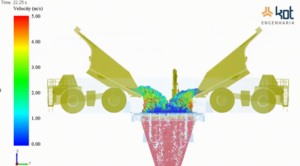
Figure 1: Two-dimensional simulation of free-front flow in the dyke breaking problem - SOURCE: COPPE UFRJ.
What are the applications and benefits of Thermofluid Dynamics?
Atualmente, a Termofluidodinâmica é amplamente utilizada em diferentes segmentos de mercado e auxilia em projetos e na fabricação de centenas de produtos. Sua aplicação se estende da produção de aviões a automóveis, navios, bem como os mais diversos tipos de equipamentos industriais.
Among the main applications of fluid dynamics, it is vale highlighting its usefulness:
-
- in the oil industry,
-
- in the steel industry,
-
- in the food industry,
-
- in mining,
-
- in testing propulsion and power generation system projects in general,
-
- in cooling equipment,
-
- in the aerodynamic and aerothermodynamic analysis of aerospace vehicles and land vehicles (trains, trucks, cars).
Thermofluid dynamics also contributes to environmental issues, helping in the planning and management of water resources (analysis and simulation of the release of pollutants and contaminants) and in gas dispersion characterization studies.
To find out more about the world of engineering, visit our blog with other related articles.
Kot stands out in the national market by offering high-level engineering services to large companies. Contact our team for more information on our solutions!
Follow our pages on LinkedIn, Facebook e Instagram to keep up with our content.
FAQ
1. O que é Termofluidodinâmica e quais áreas do conhecimento a fundamentam?
A Termofluidodinâmica é o ramo da engenharia dedicado ao comportamento dinâmico dos fluidos associado aos fenômenos de troca de calor e transporte de massa. Sua aplicação prática exige o domínio interdisciplinar de cinco ciências fundamentais:
-
Termodinâmica: Estudo dos estados de equilíbrio, energia e transformações térmicas;
-
Mecânica dos Fluidos: Análise do comportamento de líquidos e gases em repouso e movimento;
-
Transferência de Calor: Quantificação dos mecanismos de condução, convecção e radiação;
-
Cinética Química: Avaliação da velocidade das reações e transformações de fases;
-
Meios Porosos: Estudo do escoamento e troca térmica em matrizes sólidas permeáveis.
2. Qual é a diferença entre processos monofásicos e multifásicos na indústria?
-
Escoamentos Monofásicos: Envolvem uma única fase contínua (ex.: escoamento de ar limpo em um duto ou fluxo de água líquida em uma tubulação);
-
Escoamentos Multifásicos: Ocorrem quando duas ou mais fases coexistem e interagem simultaneamente (ex.: líquido-gás, sólido-gás, líquido-sólido). Nesses sistemas, há troca contínua de quantidade de movimento, massa e energia na interface das fases, como na ebulição, atomização de sprays, transporte pneumático de sólidos e purificação de efluentes.
3. Como a combustão e a radiação térmica são abordadas nas análises termofluidodinâmicas?
Muitos processos térmicos operam sob altas temperaturas e dependem de transformações energéticas específicas:
-
Combustão: Reação química exotérmica e irreversível entre combustível e comburente. A análise termofluidodinâmica modela a taxa de reação, a estequiometria, a formação de chamas e a emissão de poluentes;
-
Radiação Térmica: Propagação de energia por meio de ondas eletromagnéticas. Em altas temperaturas (como no interior de fornos e caldeiras), a radiação torna-se o mecanismo dominante de transferência de calor, devendo ser calculada acoplada aos campos de escoamento e temperatura do fluido.
4. Quais equipamentos industriais dependem da análise termofluidodinâmica para operarem com máxima eficiência?
| Equipamento Industrial | Fenômeno Termofluidodinâmico Predominante | Objetivo da Análise Numérica |
| Fornos e Aquecedores | Combustão, radiação térmica e escoamento reativo | Homogeneizar temperatura e reduzir consumo de combustível |
| Secadores Industriais | Transferência simultânea de calor e massa (evaporação) | Otimizar a remoção de umidade sem danificar o produto |
| Filtro de Mangas | Escoamento através de meios porosos e perda de carga | Garantir distribuição uniforme do fluxo e eficiência de filtragem |
| Canais de Sedimentação | Decantação de partículas em meio fluido (multifásico) | Aumentar a taxa de separação sólido-líquido |
5. De que forma a termofluidodinâmica contribui para a engenharia ambiental e sustentabilidade?
Além das aplicações de processo dentro das plantas industriais, as ferramentas de termofluidodinâmica são decisivas para a gestão ambiental:
-
Recursos Hídricos: Simulação do lançamento de efluentes e contaminantes em rios, lagos e oceanos para prever o raio de dispersão e o impacto ecológico;
-
Engenharia Atmosférica: Caracterização e modelagem da dispersão de gases tóxicos, plumas de chaminés e poeira em áreas do entorno de complexos industriais.
6. Quais são os ganhos financeiros e operacionais obtidos ao aplicar simulações CFD em processos térmicos?
A utilização de modelos numéricos em substituição ou complementação a ensaios físicos proporciona:
-
Redução de Custos Operacionais: Otimização da eficiência térmica e redução direta do consumo de insumos e combustíveis;
-
Garantia de Qualidade: Manutenção da homogeneidade de temperatura nos produtos processados;
-
Mitigação de Falhas: Identificação prévia de zonas de estagnação, pontos quentes (hotspots) e desgastes prematuros;
-
Segurança e Viabilidade: Possibilidade de testar cenários extremos de operação que seriam perigosos ou inviáveis de realizar em escala real.