
Quantitative Risk Analysis (QRA) is a scientific methodology that calculates the residual risk of an operation using the mathematical relationship between the probability of failure (P) and the severity of its consequences (C), as represented by the classic equation: R = P × C
In highly complex safety engineering, CFD (Computational Fluid Dynamics) serves as the most accurate tool for consequence analysis. It simulates real-world scenarios involving fires, toxic gas dispersion, and explosions in three dimensions, replacing generic estimates with exact physical data.
Want to understand how to apply computational simulation to mitigate extreme industrial risks? Continue reading the article below.
Introduction
Quantitative Risk Analysis is an essential tool for managing projects and operations across various sectors of the economy, such as mining, oil and gas, construction, infrastructure, and logistics. First and foremost, its main objective is to support technical and strategic decision-making. This is achieved by identifying hazards, assessing the probability of undesirable events, and analyzing the potential consequences associated with these scenarios.
In this regard, Quantitative Risk Analysis (QRA) stands out for its use of numerical and statistical methods. These methodologies allow for the objective and comparable estimation of the risks involved in a facility, process, or operation. Thus, QRA enables the ranking of scenarios, the prioritization of mitigation actions, and the demonstration, in a technical and transparent manner, of acceptable risk levels for people, assets, the environment, and operational continuity.
A key step in AQR is the consequence analysis. This step involves assessing the physical effects resulting from accidental events. Fires are classic examples in this type of study. However, equipment thermal failures, energy releases, ventilation deficiencies, confined spaces, loss of visibility, and evacuation difficulties are also frequently included in the scope of these analyses.
Thus, this article presents the application of numerical simulations—particularly Computational Fluid Dynamics (CFD)—as a tool to support consequence analysis in the context of AQR. Furthermore, it highlights their relevance in various industrial systems and complex infrastructures.
Impact analysis in the context of AQR
Consequence analysis seeks to answer a central question in risk management: what happens if a particular undesirable event occurs? In consequence analysis studies, this step is essential for translating identified hazards into measurable physical impacts. The results can then be compared with tolerability criteria, regulatory requirements, and corporate guidelines.
In industrial facilities, the physical effects of an event rarely remain confined to the point of origin. At the same time, factors such as facility geometry, equipment layout, ventilation conditions, the presence of physical barriers, and interactions between systems can amplify or redirect these effects. As a result, counterintuitive consequences may arise during the assessment of scenarios.
For this reason, approaches based exclusively on simplified methods tend to have limitations. This is particularly true when applied to large-scale systems or confined environments. Consequently, the need to represent more realistic conditions has driven the use of advanced numerical tools to support AQR.
CFD simulations
Computational Fluid Dynamics (CFD) has established itself as a key tool in the analysis of consequences associated with AQR. Through these simulations, it is possible to comprehensively evaluate airflow and gas flow, heat transfer, contaminant dispersion, and the interaction of these phenomena with actual or representative facility geometries.
Currently, CFD simulations are widely used in studies of safety engineering, operational reliability, and risk assessment. This is particularly true when a performance-based approach is sought. According to established technical references, such as the SFPE Handbook of Fire Protection Engineering and the NFPA standards, this type of analysis provides a deeper understanding of accident scenarios and their potential consequences.
Figure 1 shows an example of a three-dimensional geometric model used in consequence analyses. In this case, the model depicts a section of a conveyor belt and its surroundings. Furthermore, models of this kind make it possible to compare different operational and accident scenarios, as well as to identify critical areas from a safety perspective.
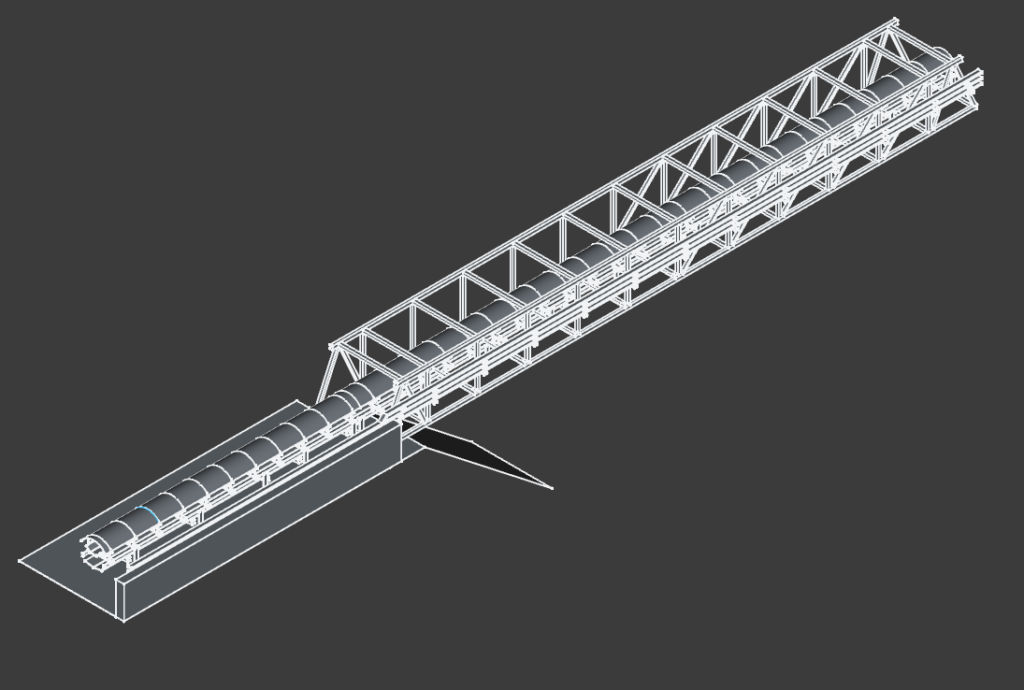
Figure 1 – Three-dimensional geometric model used in the CFD simulations.
Conclusion
In light of the above, it is clear that consequence analysis plays a fundamental role in Quantitative Risk Analysis. This is particularly relevant in industrial facilities and complex infrastructure, where the interaction between geometry, ventilation, equipment, and operating conditions can significantly alter the severity of the scenarios being evaluated.
In this context, CFD simulations are essential tools for gaining a deeper understanding of these phenomena. They make it possible to more realistically model effects related to fluid flow, heat transfer, and gas dispersion under various operational and accident conditions.
Thus, this first part presented the fundamentals of consequence analysis in the context of AQR and the importance of numerical simulations in supporting risk assessment. The second part of this article will address practical applications of these analyses in industrial systems. In addition, it will highlight studies related to linear systems, confined environments, and evacuation simulations developed by Kot Engenharia.
Finally, to learn how these analyses can contribute to the safety and reliability of your operation, please contact our technical team.
Contact Kot Engenharia
Join our more than 150 customers, contact our team and find out how we can assist you with structural and dynamic analyses.
Since 1993, we have specialized in developing engineering solutions through inspections, technical testing, and the use of computational methods to evaluate steel structures and industrial equipment.
Be sure to follow our pages on LinkedIn, Facebook and Instagram and keep following our content.
FAQ 1. What is a Quantitative Risk Analysis (QRA)?
Quantitative Risk Analysis (QRA) is a systematic process that uses statistical data, historical failure records, and mathematical models to objectively measure the frequency and severity of accident scenarios at a facility. Unlike qualitative analyses (which use subjective classifications such as “low, medium, or high”), QRA expresses risk in concrete numerical metrics, facilitating financial, regulatory, and engineering decision-making.
2. What is the importance of Consequence Analysis within AQR?
The consequence analysis is the step responsible for assessing the physical extent and actual impact of an accident (such as the thermal radiation from a fire, the overpressure from an explosion, or the dispersion area of a toxic cloud). Without it, it is impossible to determine whether escape routes are safe, whether nearby equipment will withstand a domino effect, or what the actual impact will be on human lives and the environment surrounding the facility.
3. Why use CFD simulations instead of simplified calculation methods in AQR?
Simplified or empirical mathematical models assume ideal scenarios, such as flat terrain or infinite channels without obstructions. In industrial settings, warehouses, conveyor belts, and piping create barriers that completely alter airflow and heat distribution. CFD simulation numerically solves the mass and energy transport equations while taking into account the site’s exact three-dimensional geometry, providing much more realistic and reliable results.
4. What technical standards govern the use of CFD in safety and fire analyses?
The use of computational fluid dynamics for safety is supported by well-established international standards, notably the guidelines of the NFPA (National Fire Protection Association) and the methods described in the SFPE Handbook of Fire Protection Engineering. These guidelines establish the criteria for physical validation, mesh refinement, and turbulence modeling necessary to ensure the reliability of the simulation results.
5. What physical phenomena can be predicted in a CFD impact study?
CFD modeling makes it possible to simulate a wide range of phenomena critical to industrial safety. Among these are the spread of smoke and toxic gases, the rate of temperature rise in metal structures exposed to fire, the efficiency of emergency ventilation systems, heat confinement in enclosed spaces, and the loss of visibility in escape routes during a fire.